Excavator Forgings: Assembly of Support Base and Supporting Components - Core Components for Equipment Stability
Compared to ordinary castings and ordinary sheet metal processing parts, forged excavator forgings have outstanding comprehensive performance advantages. They are suitable for various harsh construction scenarios, effectively reducing structural deformation, cracking faults, and significantly reducing the frequency of equipment maintenance.
1. Advantages of Forging Process Over Ordinary Processing Parts
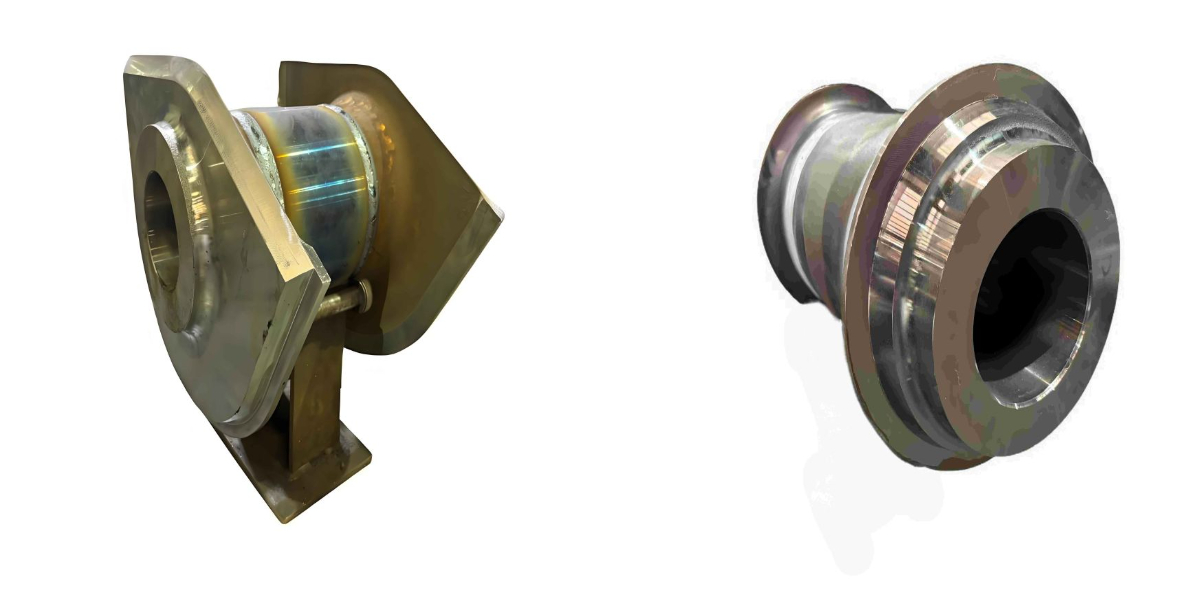
The support base and supporting component welding assembly are exposed to alternating loads throughout the operation, demanding strict requirements for strength, anti-fatigue, and anti-shock. The forging process fundamentally improves product quality.
Structurally dense and high strength
High-temperature forging eliminates internal pores and loose defects, with uniform metal flow distribution, making the forging stronger in compression and torsion, and less prone to fracture and deformation under heavy load excavation.
Long wear resistance and durability
Combined with professional heat treatment processes, the surface hardness meets standards, resisting abrasive friction from crushed stones and high-frequency vibrations, resulting in lower wear during long-term outdoor operations.
Excellent welding adhesion
The plasticity of the forging base material is stable, the welds after welding processing are firm, and the overall welding assembly of the support components is highly integrated, without the problem of weld detachment or loosening.
Precise dimensions and strong adaptability
Precision forging combined with machining ensures small errors in hole positions and installation dimensions, allowing for precise matching with various types of excavators and facilitating easy installation and tight fit.
2. Application Scenarios of Excavator Forgings' Support Base and Welding Assembly
Machine chassis support base
It bears most of the machine's weight, buffering the bumps and impacts during movement, ensuring the stability of the excavator and preventing chassis structure from shifting and damage.
Welding assembly of boom and bucket support components
Connecting the digging operation arm, it withstands the huge tension and impact forces from digging and lifting heavy objects, ensuring smooth and powerful digging actions.
Supporting base for the rotation mechanism
Supporting the vehicle's rotation movement, alleviating rotational vibrations, reducing rotation jamming and abnormal sounds, and improving the overall stability of the machine's operation.
Supporting components for the walking mechanism
Adapting to the track walking system, it can handle complex road conditions such as muddy, rocky, and steep slopes, providing stable support and preventing collapse and damage.
3. Core Points for Selecting Excavator Forgings' Support Base and Welding Assembly
Selecting the right forging base material
Prioritize using alloy forging materials and reject inferior castings to meet the high-strength construction load standards.
Welding process is standardized and reliable
The welding assembly of supporting components must be fully welded for reinforcement, with no slag or cracks in the welds, and the overall force is uniform without deformation.
Strict quality inspection through non-destructive testing
The finished products undergo non-destructive testing to detect internal hidden defects, ensuring factory quality meets standards and is reliable.
Precise specification and model matching
Select corresponding support bases and welding assemblies based on the tonnage and model of the excavator to ensure accurate assembly and balanced force distribution.
4. Conclusion
The support base and support component assembly is an indispensable load-bearing framework for excavators. High-quality excavator forgings ensure the stable operation of the equipment, reduce downtime and maintenance costs, and enhance the efficiency of construction operations.
Our factory specializes in manufacturing various excavator forgings, with a focus on support bases, support component assemblies, and other load-bearing components. We control the entire process of forging, welding, and precision machining independently, offering non-standard customization and batch supply options. We are compatible with multiple engineering models and have solid and durable quality. Customers are welcome to inquire, place orders, or conduct sample inspections.