Forgings for New Energy Vehicles: Analysis of Core Load-Bearing Components of Wheel Hubs and Chassis
The new energy vehicle industry is experiencing rapid development, with lightweighting, high safety, long range, and strong durability becoming the core development directions of the industry. Unlike traditional fuel vehicles, new energy vehicles are equipped with large-capacity battery packs, resulting in a greater vehicle weight. The chassis, wheels, and other load-bearing structures need to withstand higher loads and more frequent alternating stresses. Based on its inherent advantages such as dense material, high strength, resistance to impact, and fatigue resistance, forged parts have now become the mainstream material for the chassis and wheels of new energy vehicles, serving as the core components that ensure stable vehicle operation and extend the overall vehicle lifespan.
1. Why are forged parts the preferred material for the wheels and chassis of new energy vehicles?
Traditional castings and ordinary stampings have lower costs, but they are prone to internal defects such as pores, porosity, and sand holes. In the usage environment of new energy vehicles with heavy loads, frequent start-stop operations, and complex road conditions, they are highly likely to deform, crack, or suffer fatigue damage, not only increasing maintenance costs but also directly threatening driving safety.
Forged parts that have undergone high-temperature forging have achieved comprehensive upgrades in structure and performance, perfectly meeting the usage requirements of new energy vehicles:
Strength and toughness combined
The forging process reshapes the internal structure of the metal, with a continuous and complete metal flow line, and the compressive, torsional, and impact resistance far exceed those of ordinary workpieces. Facing the heavy load brought by the battery pack, chassis forged parts can stably bear the load, and wheel forged parts can also resist the external forces caused by bumps and impacts, and are less likely to deform.
Lightweighting and improved range
Under the same strength standard, forged parts can be more than 20% lighter than cast parts. The chassis and wheels belong to the sprung mass, and the weight reduction effect is particularly significant, effectively reducing vehicle driving energy consumption and directly improving the range of new energy vehicles, addressing users' range anxiety.
Anti-fatigue and longer lifespan
New energy vehicles have frequent start-stop, acceleration, and deceleration, and the chassis and wheels are constantly subjected to alternating loads. The excellent anti-fatigue performance of forged parts can effectively delay metal aging, reduce the probability of faults, and significantly extend the service life of components and even the entire vehicle.
High precision and strong assembly adaptability
Combined with precise machining processes, forged part products have small dimensional tolerances and high positional accuracy. Whether it is the chassis connection support, suspension forged parts, or various specifications of wheels, they can precisely match the vehicle structure, fit tightly, and have lower running noise.
2. Specific applications of forged parts in the chassis and wheels of new energy vehicles
Forged wheel parts for new energy vehicles
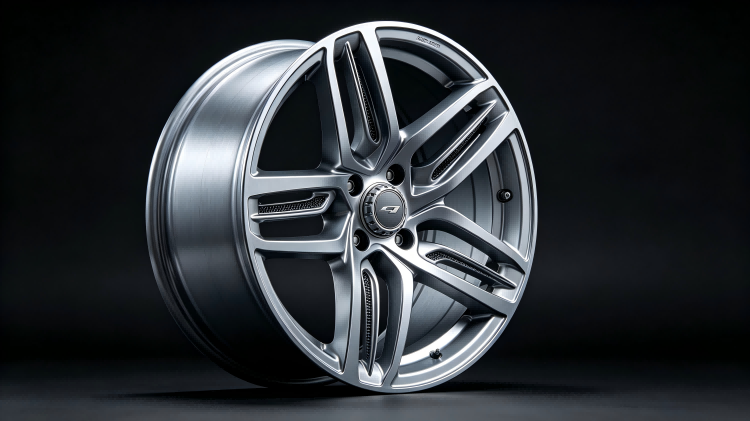
Forged wheels are widely used in pure electric passenger cars, electric SUVs, and new energy commercial vehicles of all categories.
On the one hand, lightweight forged wheels reduce the rotational inertia of the wheels, improving vehicle handling flexibility and braking performance; on the other hand, the high-strength material can withstand wear and impact in various scenarios such as urban roads, suburban roads, and construction sites. Currently, integrated forging and multi-stage forging wheels have become standard equipment for mid-to-high-end new energy models.
Forged chassis parts for new energy vehicles
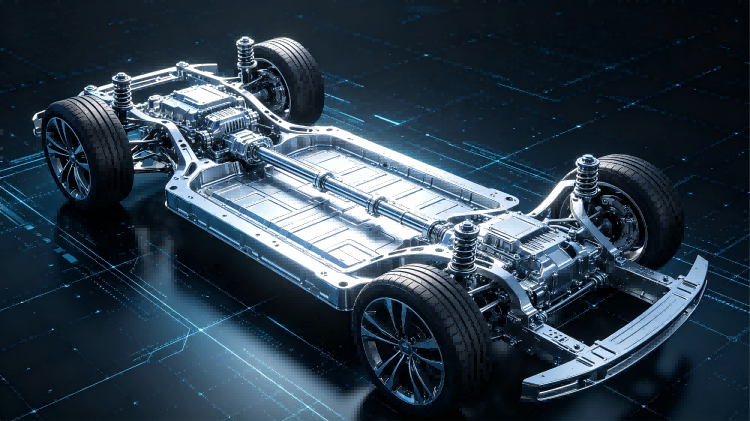
The chassis is the "skeleton" of the entire vehicle and the foundation for the battery pack, suspension, and walking mechanism. A large number of forged parts are used:
Suspension system forged parts: swing arms, steering knuckles, brackets, etc., buffer road vibrations and ensure smooth driving and accurate steering;
Chassis load-bearing supports: support the weight of the vehicle and the battery pack, strengthening the rigidity of the chassis as a whole;
Transmission and connection forged parts: compatible with the electric drive system, transmitting power and reducing transmission losses.
The entire set of chassis forged parts work together to build a stable underlying structure for the vehicle, serving as the first line of defense for safe driving in new energy vehicles.
3.Practical points for selecting forged parts for new energy vehicle chassis and wheels
When purchasing and selecting chassis and wheel forged parts, the following standards can be focused on to control product quality:
Material control: prioritize the use of special alloy steel, aerospace-grade aluminum alloy, and other high-quality raw materials to ensure material performance from the source;
Process and heat treatment: positive-scale forging, rotary forging processes combined with quenching and tempering heat treatment to achieve hard outer and tough inner, balanced performance;
Non-destructive testing: The finished products need to undergo non-destructive inspections such as ultrasonic and magnetic particle testing to thoroughly check for internal cracks and hidden damages;
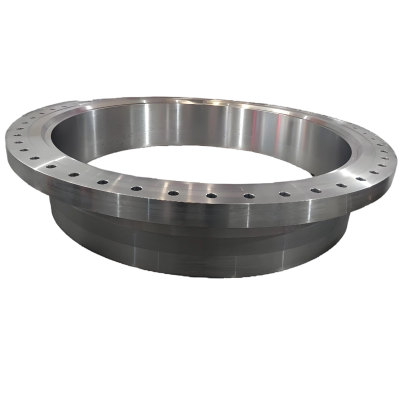
Specification customization: Customized non-standard forging products can be produced according to the load-bearing and size requirements of different vehicle models such as passenger cars, logistics vehicles, and buses;
Industry certification: Compliant with quality system standards such as IATF 16949 of the automotive industry, meeting the vehicle assembly requirements of automakers.
4. Industry Development Trends
As new energy vehicles are developing towards intelligent driving, ultra-long range, and heavy-duty commercial use, the chassis and hub forgings are also constantly evolving. Integrated forging, lightweight composite forgings, and high-strength corrosion-resistant forgings have become the mainstream research directions. In the future, forging components that are lightweight, highly rigid, and intelligent-compatible will further promote the upgrading of the new energy vehicle industry.
5. Conclusion
The hub and chassis determine the safety, range, and driving experience of new energy vehicles, while high-quality forgings are the quality foundation of the two core components. With outstanding comprehensive performance, forging components have deeply integrated into the new energy vehicle industry chain and have become the key choice for automakers to reduce costs, increase efficiency, and enhance product competitiveness.
Our company specializes in researching and producing various new energy vehicle forgings, covering a full range of products such as forged hubs, chassis suspension forgings, and load-bearing supports. It integrates forging, heat treatment, precision processing, and testing, and supports batch supply and personalized customization. The products strictly follow automotive industry quality standards and are compatible with multiple new energy vehicle models. Overseas and domestic customers are welcome to consult for cooperation and sample customization.