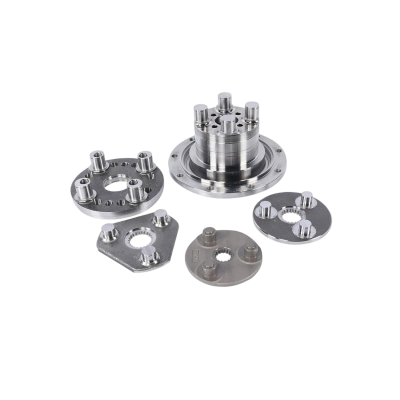
Why heavy-duty railway equipment prefers forgings? Analysis on advantages of driven wheel and coupling accessories for construction machinery
Rail transit and construction machinery operate under harsh working conditions featuring high-speed rotation, heavy load impacts and frequent start-stop cycles. The strength, wear resistance and fatigue resistance of transmission system components directly determine equipment operational safety and service life. Conventional cast railway accessories suffer from defects including pores, internal shrinkage cavities and insufficient toughness, which tend to trigger wear, cracking and deformation failures after long-term service. Thanks to their core merits of continuous and dense metal flow lines, uniform grain structure and outstanding mechanical properties, forgings stand as the preferred base material for high-end railway accessories and transmission systems of construction machinery. As core transmission forgings, driven wheels and couplings are widely compatible with railway locomotives, track engineering vehicles, large construction machinery and other equipment, serving as critical core parts that stabilize power transmission and reduce equipment failure rates.
I. Two core railway component forgings: the value of working conditions
1. Forged driven wheels: Core components of railway and construction machinery movement
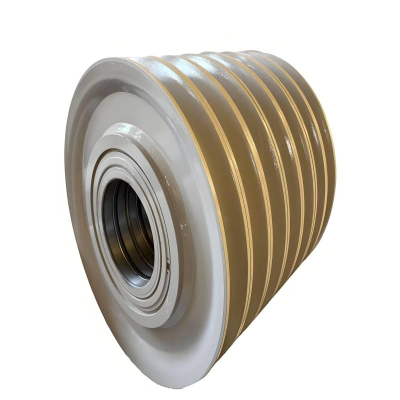
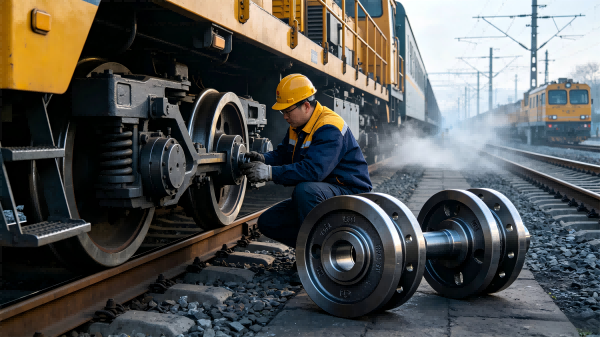
The driven wheel is the core load-bearing transmission component of railway track vehicles, engineering track vehicles, and heavy-duty construction machinery movement systems. It is in continuous friction with the track and transmission structure, and is subjected to high-intensity compression, impact, and alternating loads, requiring extremely high wear resistance and structural strength. Ordinary cast driven wheels have a loose internal structure, and the tread is prone to wear, peeling, and grooves, and long-term heavy-load operation is highly likely to cause jamming, derailment hazards.
Forged driven wheels are formed by integral forging with 42CrMo, 35CrMnSi and other high-strength alloy steel, after quenching and surface hardening treatment, the overall density is significantly increased, without internal defects such as porosity, slag inclusion, and cracks. Not only does the tread hardness meet the standard, but the overall anti-shock and anti-deformation ability far exceeds that of ordinary castings, and can perfectly adapt to railway heavy-load transportation and track engineering machinery high-frequency operation scenarios, significantly extending the component replacement cycle and reducing equipment operation and maintenance costs.
2. Forged couplings: The safety hub of equipment power transmission
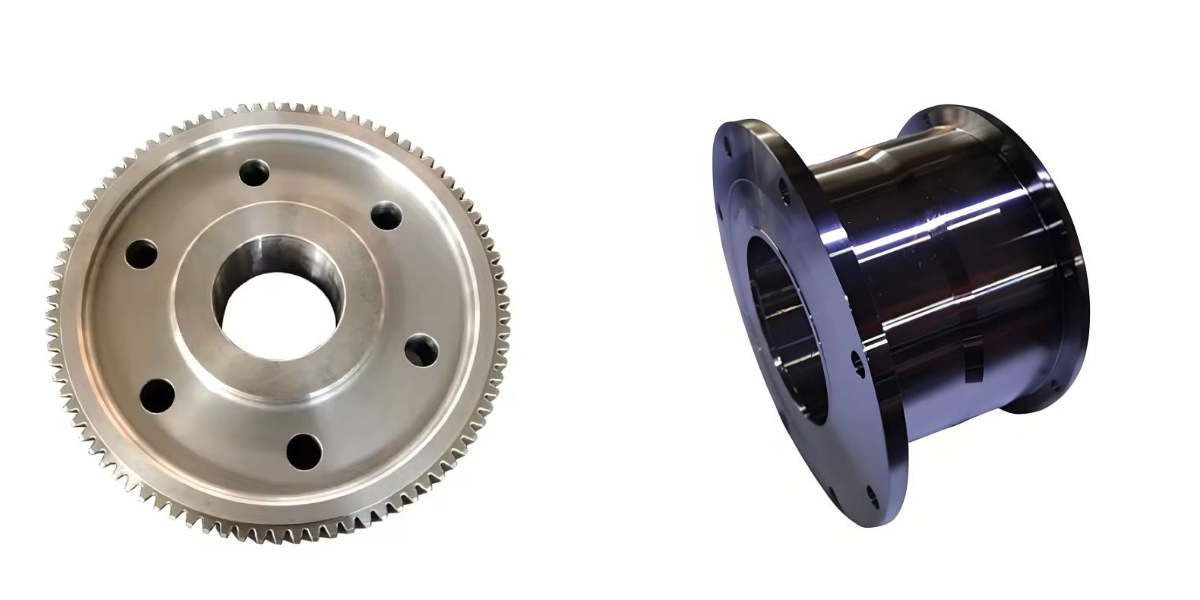
The coupling is the core connecting forging of railway locomotives and construction machinery power systems, mainly used to connect motors with gearboxes and transmission shaft structures, responsible for transmitting torque, buffering start-stop vibrations, and compensating for axis installation deviations, and is a key component for ensuring stable power transmission. The instantaneous impact loads generated during the start-stop and braking processes of equipment are highly likely to cause ordinary welded parts, cast couplings to break, loosen, and fail to transmit power.
Our factory produces forged couplings through precision forging, with high structural strength and balanced toughness, which can adapt to harsh conditions such as low temperatures, dust, and humidity. It can maintain good toughness in low-temperature environments and eliminate brittle fracture problems. At the same time, it can optimize the tooth surface structure to enhance torque carrying capacity and vibration buffering effect, effectively avoiding tooth surface peeling and transmission jamming faults under heavy-load conditions, and is widely adapted to various railway equipment and heavy construction machinery.
II. Forging replaces ordinary components, adapting to dual scenarios of railway and construction machinery
Most purchasing customers have a misconception: railway component forgings are only applicable to railway transit equipment. In fact, relying on a unified heavy-load forging process, driven wheels and couplings, etc., core railway component forgings, can perfectly adapt to various heavy-duty transmission scenarios of construction machinery, achieving multi-purpose use and scene compatibility.
In track engineering vehicles, mining engineering vehicles, and large heavy-duty transportation equipment, the transmission system conditions are highly similar to those of railway locomotives, and require core components with high strength, fatigue resistance, and impact resistance. The driven wheels and couplings produced by the forging process can simultaneously meet railway safety standards and heavy-duty operation requirements of construction machinery, adapt to various types of equipment, and help customers simplify procurement categories and reduce inventory costs.
III. Core advantages of precision forging, solving industry procurement pain points
1. Stable performance: high safety factor: Through high-temperature forging to reshape the internal crystal structure of the metal, the overall strength, fatigue resistance, and wear resistance of the forged parts are increased by more than 40% compared to cast parts. They can withstand heavy and alternating loads for a long time, prevent sudden breakage failures, and meet the strict safety standards of rail transportation.
2. Wide adaptability: flexible customization: Supports non-standard customization of various specifications of railway driven wheels and transmission couplings. The size, hardness, and material can be adjusted according to the model of locomotives and construction machinery. Raw materials, finished products, and precision processing are supplied in one package.
3. Comprehensive quality control: reliable delivery: Full-process control of raw material spectral testing, forging temperature monitoring, heat treatment hardness verification, ultrasonic non-destructive testing, and three-coordinate size verification. The key dimensions have precise control of tolerance. Complete test reports are provided upon delivery.
4. Adapt to harsh working conditions: Optimized heat treatment process can withstand complex conditions such as high and low temperatures, sandstorms, and humidity. It is suitable for outdoor engineering operations, long-distance rail transportation, and other high-frequency usage scenarios.
IV. Application scenarios
1. Rail transportation sector: Special driven wheels and coupling forgings for railway locomotives, freight trains, metro and light rail, and rail engineering vehicles;
2. Construction machinery sector: Forged components for track operation machinery, heavy-duty transportation equipment, and mining engineering vehicles transmission systems;
3. Foreign Trade Supporting Business: We have long undertaken bulk orders from rail transit and construction machinery manufacturers at home and overseas, supporting customized processing, export packaging and full-container shipment.
V. Summary
If you are looking for a high-quality source manufacturer of railway accessory forgings and need to customize wear-resistant heavy-duty driven wheels and precision couplings to adapt to the working conditions of rail transportation or construction machinery equipment, please feel free to send drawings, parameters, and purchase requirements at any time. We support free prototyping, custom process design, and precise quotations, and provide full-process quality inspection to ensure quality, helping customers improve equipment operation stability and reduce maintenance costs!
- Previous : Do lifting equipment parts break frequently? Forged hook assemblies and ear hinges for crawler cranes and truck cranes improve the safety of construction machinery
- Next : Are weld leaks and structural cracking frequent? High-quality welded parts extend the service life of transformer oil tank shells and construction machinery