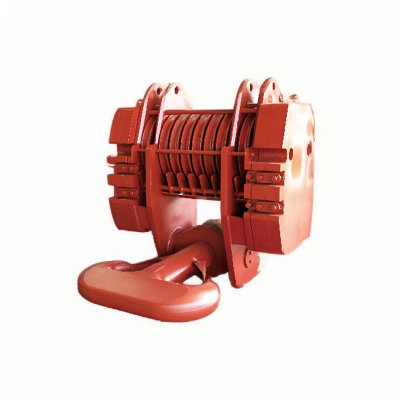
High Reliability Forgings for Nuclear Power Plants and Heavy Engineering Machinery
Nuclear energy equipment stands among the most demanding industrial facilities in the world. Operating under persistent high pressure, extreme temperature changes and long-cycle continuous load, every metal component must maintain stable mechanical performance for decades. This rigorous operating environment makes component reliability the top priority for nuclear power projects. As core structural and load-bearing parts, nuclear power forgings directly influence equipment safety, operational stability and overall service life. High-standard forgings cannot be produced through simple casting or mechanical processing. They rely on mature industrial forging techniques, professional heat treatment procedures and accurate machining work. Beyond nuclear energy applications, this robust forging technology also supports high-strength component production for heavy engineering machinery, delivering consistent quality across multiple heavy industrial fields.
1. Industrial Forging Ensures Dense, Defect-Free Forgings Structure
Forging serves as the foundational process that determines the fundamental quality of all forgings. Unlike ordinary cast parts that often contain tiny pores, shrinkage gaps and loose internal grain structures, die forging and hot forging processes reshape metal materials under extreme temperature and pressure. During the forming procedure, coarse metal grains are refined, internal structural defects are eliminated, and continuous metal flow lines are formed inside the workpiece.
This dense and uniform internal structure greatly improves tensile strength, impact resistance and fatigue performance. For nuclear-grade components that require long-term stable operation, this structural advantage is irreplaceable. Every nuclear forging blank we produce strictly follows industrial-grade forging standards to avoid hidden structural risks that commonly appear in low-grade metal parts.
2. Professional Heat Treatment Eliminates Residual Stress & Stabilizes Performance
After hot forging forming, work pieces inevitably carry residual internal stress. If left untreated, this hidden stress will gradually cause component deformation, surface cracking or structural failure during subsequent processing and long-term field operation. This makes standardized heat treatment an essential step for qualified nuclear forgings.
We adopt customized heat treatment solutions including stress relief annealing, quenching and tempering according to different material types and usage scenarios. The whole process balances surface hardness and internal toughness of each forging, stabilizes material mechanical properties, and eliminates potential structural risks. All heat treatment records are fully documented to meet the strict traceability requirements of nuclear energy and heavy industrial equipment manufacturing.
3. Precision Machining Guarantees Assembly Accuracy & Operational Safety
Forged and heat-treated blanks still require fine machining to meet the strict dimensional standards of nuclear power equipment. Nuclear energy systems allow almost no tolerance errors in core components, as inaccurate size matching may lead to poor assembly, local stress concentration or reduced equipment safety coefficients.
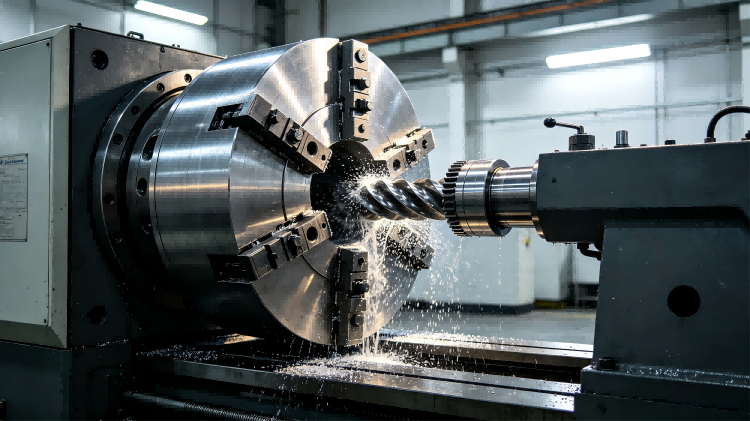
Our precision machining workshop conducts professional turning, milling, boring and surface finishing for all nuclear forgings. Each dimension is strictly controlled within customer drawing tolerances, ensuring smooth assembly, stable operation and consistent mechanical transmission performance. High-precision machining not only improves the fitting effect of finished parts but also extends the overall service cycle of nuclear power equipment.
4. Wide Application for Nuclear Power and Engineering Machinery Fields
Our high-standard forging, heat treatment and machining technologies are not limited to nuclear energy equipment production. They are also widely applied in the manufacturing of heavy engineering machinery components. Large load-bearing parts, connecting structural parts and heavy transmission components for construction machinery and mining equipment share similar high-strength and anti-fatigue requirements with nuclear power forgings.
With unified strict production standards, we provide reliable custom forgings for both nuclear energy projects and heavy engineering industries. Whether customers need nuclear-grade high-precision parts or heavy-duty mechanical forgings, we can deliver one-stop finished component solutions with complete inspection reports.
Conclusion
High-quality nuclear power forgings depend on three indispensable core processes: standardized forging to optimize metal structure, professional heat treatment to stabilize material performance, and precise machining to ensure final assembly accuracy. These mature industrial processes guarantee the safety, stability and long service life of nuclear energy equipment components. Meanwhile, the same technical advantages support high-quality component manufacturing for heavy engineering machinery. If you are looking for a reliable supplier for custom nuclear power forgings and industrial forged parts with full-process processing capability, feel free to contact us for professional technical support and customized quotations.