Sourcing Forgings for New Energy Vehicles: Hub and Base Parts You Can Trust
If you’ve worked on new energy vehicle development, you know the pressure. Every kilogram counts for range, yet structural parts must hold up under constant vibration, heavy loads and sudden torque spikes. Many sourcing teams learn the hard way: regular cast parts often fail long-term fatigue tests. That’s why they turn to forgings for core load-bearing pieces such as the hub and base.
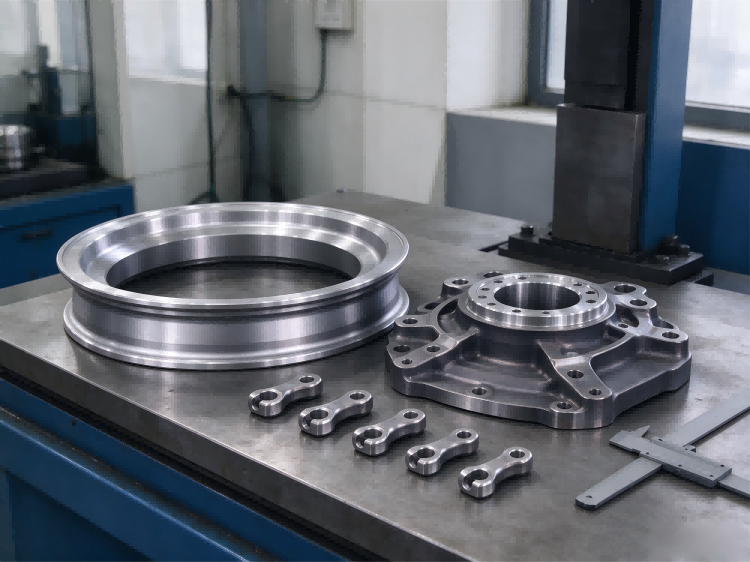
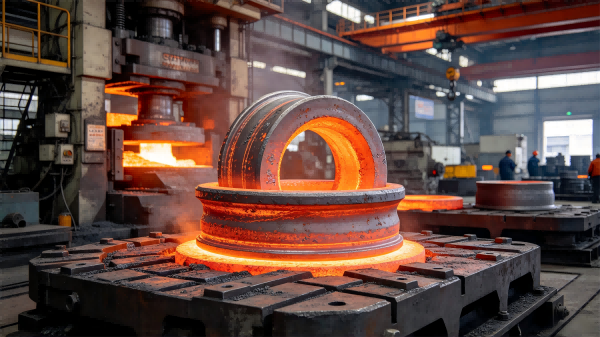
Forging shapes solid metal billets under heat and pressure. It rearranges the internal grain flow to follow the direction of force the part will carry. This simple difference changes everything for an EV hub. The hub absorbs road impacts and motor torque every time the car accelerates or hits rough pavement. Bad forging work leaves weak spots, and cracks start showing after limited running hours. The same rule applies to the base, commonly used as the mounting seat for drive motors or battery assemblies. It needs rigid support without adding unnecessary mass.
Heat treatment cannot be treated as an afterthought once forging wraps up. Hot-forged parts lock in uneven internal stress. If that stress stays trapped inside, components may shift shape during later machining, or warp once assembled on the vehicle. We tune quenching and tempering cycles to match each material grade and customer drawing requirements. This step locks in target hardness, toughness and fatigue resistance. For automotive Tier 1 projects, we log every heat treatment batch. Most buyers ask for these records during factory audits, and traceability is non-negotiable.
After heat treatment, we move on to precision machining. The forging blank leaves controlled stock for final finishing. Machining brings mounting holes, sealing surfaces and hub run out down to tight tolerances. Even tiny dimensional drift here triggers vibration, noise and uneven wear at highway speeds. Our engineering team prefers reviewing tolerance stacks with buyers early. This lets us set proper forging stock and cut expensive rework down the line.
We’ve seen buyers split this workflow across multiple vendors. One shop handles forging, another runs heat treatment, and a third takes care of machining. When defects pop up, everyone points fingers. A single supplier managing forging, heat treatment and machining in-house makes troubleshooting far smoother. If machining shows unstable stock allowance, we adjust forging parameters directly. If hardness test results fall outside spec, we tweak heat treatment schedules quickly.
When you compare quotes for new energy vehicle forgings, don’t only look at unit price. Ask for process flow sheets, material certificates, heat treatment logs and first article inspection reports. Check whether the supplier has delivered hub and base forgings for real NEV platforms, instead of only general mechanical parts. Small prototype runs help validate design, but you also need to confirm they can hold stable quality as your production orders ramp up.
Send over your drawings if you need hub, base or other custom new energy vehicle forgings. We will walk through your specs, discuss material choices and process plans, and share a clear quotation with confirmed lead time. Our team delivers tailored forging, heat treatment and machining solutions for your EV projects.