What to Check When Sourcing Forged Output Gear Shaft for Wind Power
Sourcing durable output gear shaft forgings for wind turbine gearboxes? Learn practical knowledge about forging, heat treatment and precision machining to avoid premature component failure on wind farms.
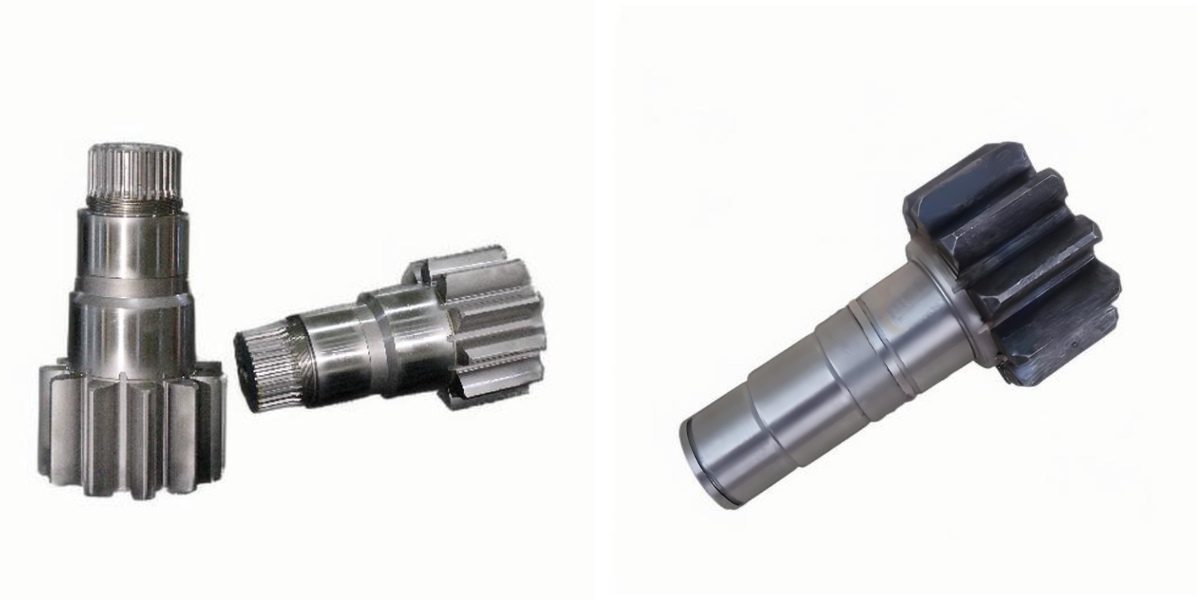
Introduction
Anyone sourcing wind turbine transmission components knows how harsh the on-site working environment can be. Wind gearboxes endure constantly fluctuating torque around the clock, and the output gear shaft sits right at the core of power transmission. Even tiny material defects or dimensional deviations can trigger costly shutdowns and replacement work on wind farms. That’s why experienced wind power OEMs and gearbox manufacturers tend to pick solid output gear shaft forgings, instead of cast alternatives.
A qualified forging is never just a simple shaped steel part. It relies on stable forging processes, well-controlled heat treatment, and meticulous machining to satisfy the multi-decade service life requirement of wind power equipment. If you’re actively sourcing these parts, learning the real production logic behind output gear shaft forgings helps you screen qualified manufacturers and prevent expensive field failures later.
Forging: Building dense grain structure for output gear shaft forgings
Production starts with forging. We select premium alloy steel bars, heat them up to the target forming temperature, and then shape them under heavy hydraulic forging presses. This physical compression shrinks internal voids in the steel and arranges metal grain flow to follow the actual load path the shaft will bear in operation.
Casting cannot achieve this continuous grain alignment. Forged output gear shafts deliver far better fatigue resistance and impact toughness — a critical advantage for wind power, where sudden wind gusts create constantly changing loads. Our forging team runs deformation simulation and adjusts pressing passes on-site, making sure every rough forging maintains consistent internal quality before moving to the next production step.
Heat Treatment: Tune mechanical performance for wind service
Once forging completes, the rough forging goes into heat treatment, mainly quenching and tempering. This procedure balances hardness, tensile strength and impact toughness to fit wind farm operating conditions.
Wind turbines face dramatic temperature changes, continuous vibration and cyclic stress day after day. Poorly executed heat treatment causes uneven hardness and hidden residual stress, which may lead to unexpected cracking after years of running. All heat treatment cycles are carried out in temperature-stabilized furnaces, with complete batch records reserved for traceability. This keeps the output gear shaft forging stable for long-term wind power operation.
Precision Machining: Hit tight tolerances for assembly
After heat treatment, the workpiece enters machining. Rough turning first removes oxide layers and excess raw material. Next comes CNC finishing, gear hobbing, bearing journal grinding and keyway cutting, strictly following customer technical drawings.
For output gear shafts, surface roughness, run out and gear tooth tolerances leave little room for error. Even minor dimensional inaccuracies bring vibration, noise and accelerated wear inside gearboxes. Our machining workshop strictly sticks to drawing requirements and conducts full dimensional inspection once processing finishes. The finished forging can be directly assembled into wind turbine gearboxes.
Quality control & application in wind power
Every batch of output gear shaft forgings keeps full material traceability documents. We perform NDT inspection, mechanical property testing and dimensional verification before delivery. These forgings are widely used in both onshore and offshore wind power gearboxes, reliably transferring torque between gear stages and generators.
Many purchasing teams only compare unit prices while ignoring how forging quality, heat treatment stability and machining accuracy work together. A flaw in any single link can compromise the whole shaft. When evaluating suppliers, ask about their forging capacity, furnace control for heat treatment, machining capability and past delivered wind power project cases.
Conclusion
Output gear shaft forgings serve as key load-bearing parts for wind turbine gearboxes. Proper forging creates dense, grain-aligned metal structure; customized heat treatment improves fatigue resistance and toughness; precise machining meets strict assembly tolerance standards.
For wind power projects, cooperating with a manufacturer that completes forging, heat treatment and machining all in-house cuts down supply chain risks and guarantees long-term operational reliability. Feel free to contact us to discuss custom output gear shaft forgings matching your gearbox specifications.