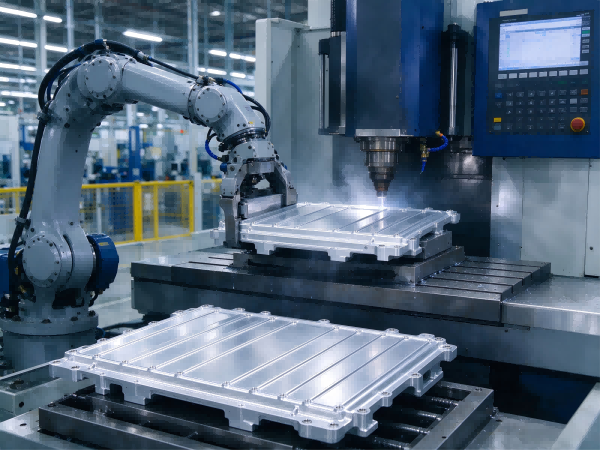
How to Choose Liquid Cold Plate Forgings with Forging, Heat Treatment & Machining?
Struggling to source dependable liquid cold plate forgings for big data center cooling? Read real-world procurement guidance to assess forging, heat treatment and machining quality for leak-proof cold plate assemblies.
Many operators running big data centers and AI compute clusters are upgrading server cooling hardware these days. Air cooling hits limits quickly when servers draw heavy power, so liquid cooling has become the go-to solution. The liquid cold plate sits at the heart of this thermal system. Its build quality decides whether your cooling setup runs reliably year after year. Sourcing teams and design engineers know they need to examine liquid cold plate forgings closely. When evaluating vendors, there are three critical production stages you need to verify: forging quality, heat treatment routines and precision machining tolerances.
Check Forging Quality to Avoid Hidden Structural Defects
Many low-quality cold plates on the market adopt casting or stamping processes, which are prone to loose internal structure, tiny pores and poor pressure resistance. In contrast, qualified forgings for liquid cold plates rely on mature forging technology to reshape metal materials under high temperature and high pressure. This manufacturing method can refine internal metal grains, eliminate internal gaps, and form a dense and uniform overall structure.
For continuous working scenarios of big data center equipment, liquid cold plates need to bear long-term fluid pressure and frequent temperature changes. Only high-standard forged blanks can effectively avoid micro-leakage and structural deformation in later use. When selecting suppliers, purchasers should prioritize manufacturers with independent forging production capacity, so as to avoid unstable blank quality caused by secondary outsourcing processing.
Focus on Heat Treatment Process to Eliminate Residual Stress
After hot forging is completed, every metal work piece will produce different degrees of residual internal stress. If there is no standardized heat treatment, the stress will remain inside the liquid cold plate forgings. After long-term equipment operation, gradual deformation, warping or local cracking will easily occur, which will directly affect the sealing performance of the cooling plate.
Reliable manufacturers will formulate targeted heat treatment schemes according to different material characteristics. Through stress relief annealing, tempering and other processes, the internal stress of the forgings is completely released, while balancing the hardness and toughness of the work piece. This processing step ensures that the finished liquid cold plate can adapt to the high-load and long-cycle working environment of big data center cooling systems, greatly improving product stability and service life.
Confirm Precision Machining Accuracy for Perfect Assembly & Sealing
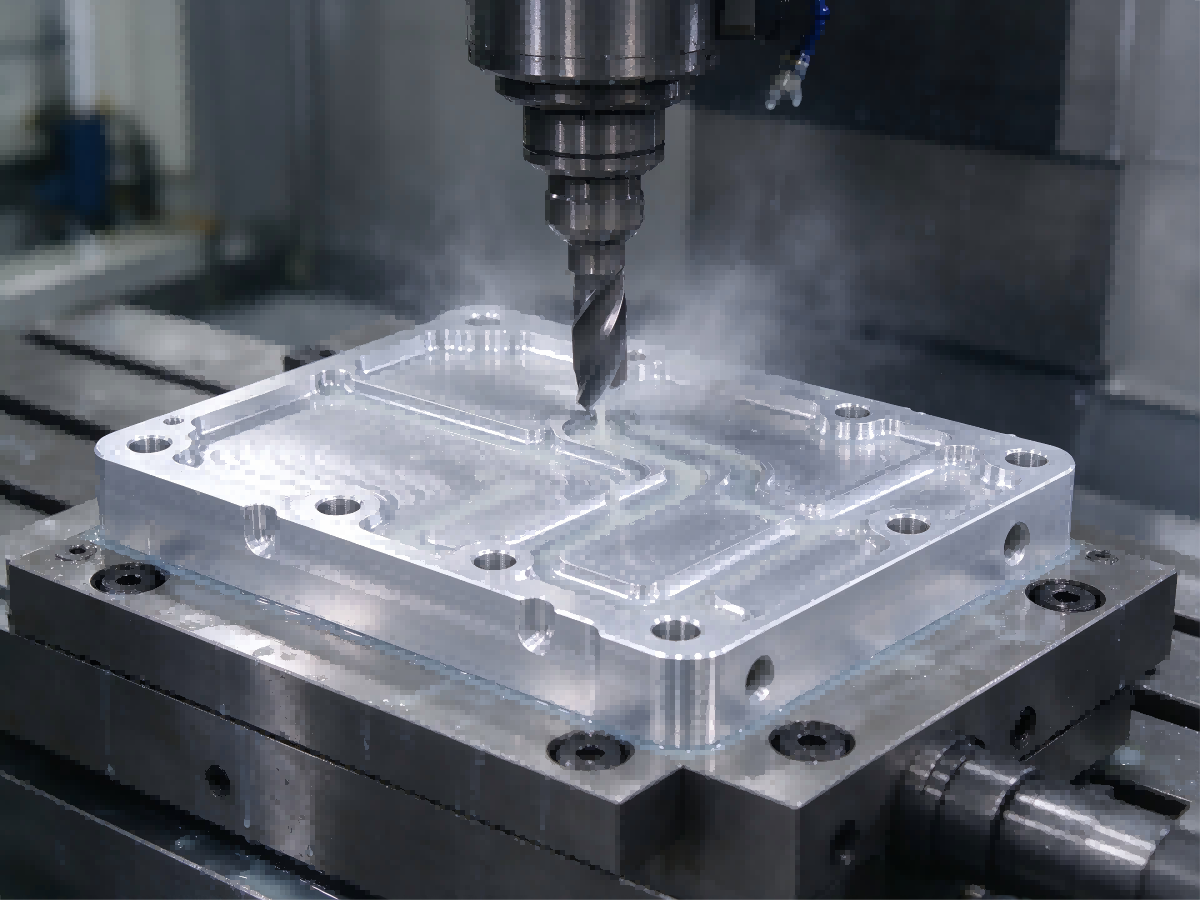
Forging and heat treatment only complete the blank production. The final dimensional accuracy, flow channel smoothness and assembly flatness of liquid cold plates all depend on fine machining. In the cooling system of large data centers, the matching tolerance of each component is extremely strict. Even minor dimensional errors may lead to poor assembly fit, liquid leakage and reduced heat exchange efficiency.
Professional CNC machining can accurately complete turning, milling, drilling and surface finishing of liquid cold plate forgings according to customer drawings. Standardized machining can ensure flat mounting surface, smooth internal flow channel and consistent hole position accuracy. For customized cold plate products for special data center equipment, precise machining capability is the key to guaranteeing stable installation and long-term safe operation.
Choose One-Stop Manufacturer with Full Process Capability
At present, many suppliers can only provide a single processing link, and the separation of forging, heat treatment and machining will lead to uncontrollable product quality and inconsistent process standards. As a professional manufacturer of liquid cold plate forgings, we integrate core processes such as independent forging, standardized heat treatment and high-precision machining.
We have long-term supporting experience in big data center cooling projects. From raw material incoming inspection, forging forming, stress relief treatment to finished precision processing and pressure testing, every link implements strict quality control. We support various customized liquid cold plate forging parts, and can provide complete test reports and technical documents to meet the strict procurement standards of large data center engineering projects.
Conclusion
When purchasing high-quality liquid cold plate forgings, you cannot only focus on appearance and price. The three core factors that really determine product quality are precise forging technology, standardized heat treatment process and high-standard machining accuracy. Only products with integrated full-process manufacturing can adapt to the long-term stable operation requirements of big data center liquid cooling systems. If you have custom drawing processing and bulk procurement demands for liquid cold plate forgings, welcome to contact us for professional technical solutions and accurate quotations.