Wind Turbine Gearbox Forging Process: Forged and Finished Sun Gear, Planet Gear and Planet Shaft Solutions for Construction Machinery
The wind turbine gearbox serves as the core transmission hub of wind power equipment and a key assembly for wind power supporting systems in heavy-duty construction machinery. It relies on a planetary gear system to convert low-speed high-torque wind power into high-speed rotation, directly determining overall power generation efficiency and operational stability. As the main load-bearing forged parts of wind gearboxes, sun gears, planet gears and planet shafts operate under extreme conditions including ultra-high torque, alternating loads, high-frequency fatigue, temperature difference corrosion and continuous vibration. They are the most vulnerable components prone to wear, pitting, tooth breakage, shaft fracture and transmission failure.
Conventional gear and shaft parts manufactured by casting and rolling processes have inherent defects such as coarse grains, loose structure, internal pores, sand holes and large residual stress. Under the rigorous 20-year long-term operation of wind turbines and frequent heavy-duty start-stop cycles of construction machinery, these parts easily suffer from sun gear tooth surface peeling, planet gear deviation and wear, planet shaft bending and fracture, and gearbox abnormal noise and stalling. High downtime and maintenance rates severely reduce wind power generation efficiency and construction progress.
To fundamentally solve frequent failures and short service life of wind turbine gearboxes, leading wind power and heavy equipment projects universally adopt forging technology to produce core blanks. Combined with precision heat treatment and CNC finishing, this process manufactures high-strength, high-precision, fatigue-resistant and long-life sun gears, planet gears and planet shafts. This article elaborates on the process advantages, full processing standards and construction machinery application scenarios of forged wind gearbox parts.
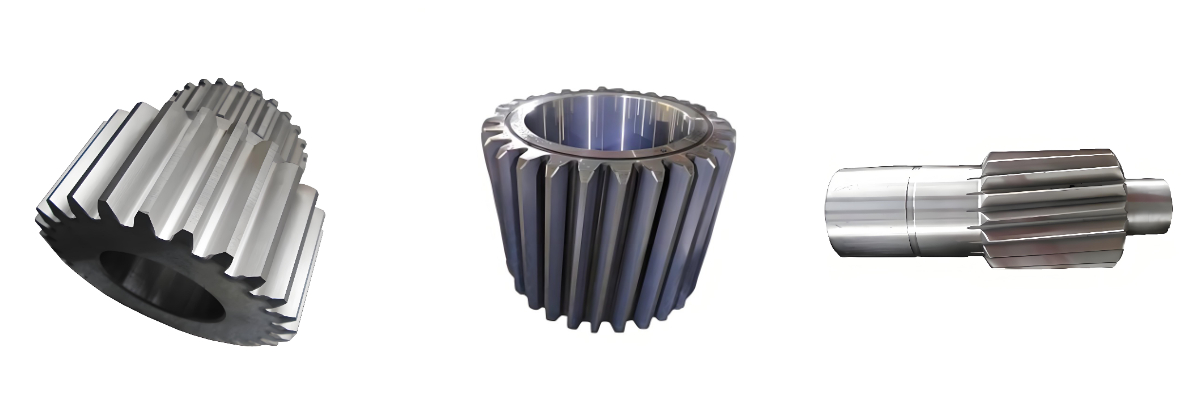
1. Working Condition Pain Points and Functions of Core Wind Gearbox Forged Parts
The planetary transmission system of wind turbine gearboxes consists of sun gears, planet gears, planet shafts and planet carriers. The three core forged parts bear all transmission torque under extremely harsh working conditions with ultra-low fault tolerance, which ordinary mechanical parts cannot adapt to:
Sun Gear (Core Driving Component): Located at the center of the planetary mechanism, it runs at the highest speed with frequent torque alternation. Long-term high-frequency torsion and bending stress easily cause pitting corrosion, tooth breakage and unbalanced transmission in ordinary parts.
Planet Gear (Balanced Load-Bearing Transmission Component): Multiple planet gears engage and transmit power simultaneously with complex force conditions and high friction loss. Cast gears often suffer from uneven wear, edge chipping and tooth deformation, resulting in gearbox jitter and reduced efficiency.
Planet Shaft (Core Supporting Component): Bearing all radial and axial pressure from planet gears, ordinary shafts easily bend, deform and fatigue fracture under continuous heavy loads, becoming the leading cause of wind gearbox downtime.
Different from standard mechanical parts, wind power and construction machinery gearbox components require 20-year fatigue resistance, zero internal defects and ultra-high assembly precision. Only forged parts with precision finishing can meet these strict industry standards.
2. Core Advantages: Forged Parts vs Cast & Rolled Parts
2.1 Forging Densifies Material Structure and Eliminates Internal Defects
Forged sun gears, planet gears and planet shafts for wind gearboxes are produced through multi-fire and multi-pass high-temperature die forging with high-strength alloy steel. High-pressure forging crushes coarse grains and compacts internal looseness, pores, microcracks and inclusions to form a uniform and dense metallographic structure without weak sections. This completely eliminates sudden tooth breakage, shaft fracture and cracking caused by inherent defects in cast and rolled parts, meeting the long-term safety operation standards of wind power equipment.
2.2 Continuous Metal Flow Line Improves Fatigue and Impact Resistance
The forging process forms complete and continuous metal flow lines according to the force direction of sun gear teeth, planet gear structures and planet shafts. Unlike disordered and disconnected flow lines in castings, forged flow lines perfectly fit stress trajectories. Under alternating wind torque, heavy construction machinery impact and long-term high-frequency fatigue, forged parts resist hidden cracks and metal fatigue effectively. Their impact resistance, creep resistance and wear resistance far exceed ordinary components, extending service life by 2–3 times.
2.3 Stable Forged Blanks Support Ultra-High Precision Finishing
Forged blanks feature uniform material, stable hardness and controllable internal stress. After professional stress-relief heat treatment, no deformation or warping occurs in subsequent processing, making them the optimal base materials for high-precision gears and shafts. Multi-process CNCfinishing accurately controls tooth profile precision, tooth surface roughness, shaft coaxiality, keyway tolerance and end face parallelism. It ensures precise gear meshing, silent transmission and low power loss, fully meeting the precision transmission requirements of wind turbine gearboxes.
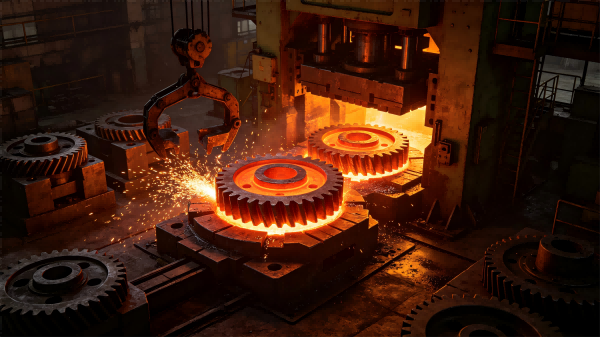
3. Full Processing Technology of Wind Gearbox Forged Parts
3.1 Precision Forging: High-Strength Forged Blank Preparation
Custom forging parameters including temperature, forging ratio and forming rhythm are formulated for the high-load and high-safety requirements of wind gearbox parts. Special die forging is adopted for special-shaped gear blanks of sun/planet gears and long-shaft structures of planet shafts. It ensures uniform wall thickness, symmetrical structure and consistent mechanical properties without stress concentration, guaranteeing overall strength and load-bearing capacity from the source.
3.2 Professional Heat Treatment: Balance Hardness and Toughness for Long-Term Stability
All wind gearbox forged parts undergo complete heat treatment including normalizing, quenching and tempering, and stress relief annealing. The process refines metallographic structures, eliminates residual forging stress, and balances high tooth surface hardness and matrix toughness. It enhances tooth surface wear resistance and pitting resistance while preventing brittleness and fracture under heavy loads, adapting to complex wind power and construction machinery working conditions.
3.3 CNC Precision Finishing: Meet Wind Power High-Precision Assembly Standards
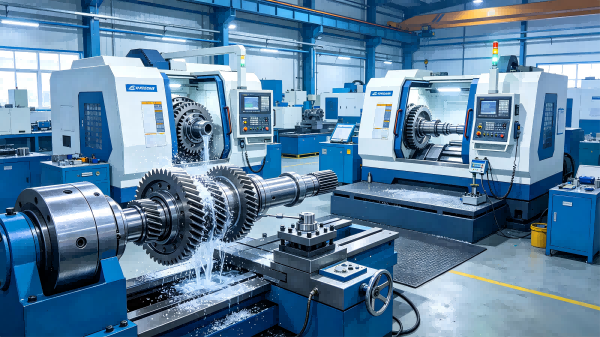
Equipped with CNC turning-milling centers, gear hobbing machines, gear grinders and precision grinding equipment, we conduct full-dimensional finishing forsun gears, planet gears and planet shafts. Strict control over tooth profile error, tooth direction error, shaft roundness, coaxiality and assembly tolerance enables finished products to reach advanced industrial precision standards. With smooth meshing, uniform clearance and stable transmission, our parts can directly replace original wind gearbox components and adapt to various heavy-duty construction machinery transmission systems.
4. Product Application Scenarios
Our series of forged and finished wind gearbox parts are widely applied in onshore and offshore wind power equipment as well as heavy-duty construction machinery wind supporting systems, covering new equipment assembly, old part replacement and equipment upgrading:
Wind Power Equipment: Core gearbox parts for 1.5MW–5MW and higher onshore and offshore wind turbines
Heavy-Duty Construction Machinery: Forged parts for speed-increasing systems of wind lifting equipment, large engineering cranes and heavy transmission machinery
Industrial Transmission Equipment: Heavy-duty reducers, planetary transmission mechanisms and precision power output gear shaft components
We support mass production of standard models, non-standard custom processing based on drawings, and reverse engineering of old samples. Complete qualification documents including spectrum material testing, mechanical property testing, NDT non-destructive testing and heat treatment reports are available for wind project acceptance. Export anti-rust packaging and full-container sea shipment are supported.
5. Conclusion
The operational stability and service life of wind turbine gearboxes depend entirely on the quality of core forged parts such as sun gears, planet gears and planet shafts. Limited by material and process defects, ordinary cast and rolled parts cannot withstand long-term wind fatigue loads and heavy construction machinery impact, resulting in frequent failures and high operation costs. Forged blanks combined with high-precision finishing fundamentally improve component strength, wear resistance and fatigue resistance, effectively reducing gearbox failure rates, extending equipment service life and minimizing downtime losses.
If you are purchasing high-quality wind turbine gearbox core components or customizing precision forged and finished sun gears, planet gears and planet shafts for wind power and construction machinery transmission systems, please provide drawings, models, working condition parameters and procurement quantity. As an integrated manufacturer of forging, heat treatment and precision machining, we provide free process solutions, accurate quotations and sample trial production. Factory visits are welcome. We offer one-stop customized and bulk procurement solutions for heavy-duty wind power forged parts.