Solutions for Railway Accessories Failures: Forged Parts and Finishing to Improve Construction Machinery Transmission Stability
Railway and construction machinery operates continuously under extreme working conditions including heavy load impact, high-frequency vibration, alternating torque and outdoor corrosion. Transmission, load-bearing and connecting accessories require far higher standards in strength, toughness, wear resistance and safety than ordinary mechanical parts. Among all railway accessories, couplings and driven wheels are core force-bearing transmission components, as well as the most vulnerable parts prone to wear, cracking, loosening and failure.
To thoroughly solve the problems of short service life and high failure rate of railway construction machinery parts, high-end railway projects universally adopt forging technology to produce various railway forged parts, combined with CNC finishing processes to manufacture high-strength, high-precision and fatigue-resistant premium railway accessories. This article comprehensively analyzes the process advantages, processing procedures and working condition adaptability of forged railway parts, couplings and driven wheels.
1. Core Working Conditions and Industry Pain Points of Railway Construction Machinery Parts
Different from ordinary mechanical equipment, railway and track construction machinery features continuous heavy load, long-term vibration, non-stop day and night operation and extremely high safety standards, placing strict requirements on core forged parts such as couplings and driven wheels:
High-torque transmission demand: Railway traction and track walking transmission systems generate huge torque, causing ordinary parts to deform and fracture easily.
High vibration fatigue resistance requirement: Long-term high-frequency vibration induces metal fatigue and hidden cracks in cast parts, leading to potential safety hazards.
Strict assembly precision standards: Insufficient fitting precision of couplings and driven wheels results in unbalanced transmission, equipment jitter and accelerated bearing wear.
Outdoor weather resistance and wear resistance: Exposed to alternating dust, rainwater and temperature changes, ordinary parts wear and rust rapidly with frequent replacement required.
Therefore, formal railway and track construction projects prohibit the application of ordinary cast and welded parts, and uniformly adopt the solution of integral forged parts with precision finishing to ensure equipment safety and long-term operational stability from the source.
2. Core Advantages: Forged Railway Parts vs Ordinary Cast Parts
2.1 Dense Forged Structure Eliminates Internal Safety Defects
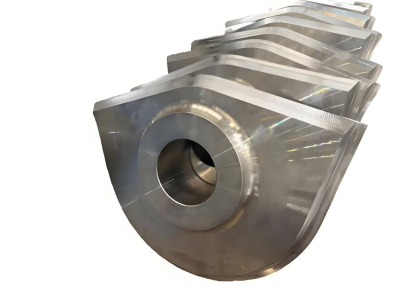
All professional railway forged parts are manufactured by high-temperature die forging and open forging of high-quality alloy steel. High-pressure forging crushes coarse metal grains and compacts inherent internal defects including looseness, pores, sand holes and microcracks, forming a uniform and dense metallographic structure. Compared with cast railway accessories, forged parts have no internal cavities, slag inclusions or weak sections, with significantly improved overall strength, toughness and impact resistance, fully meeting railway heavy-load safety standards.
2.2 Continuous Metal Flow Line Enhances Vibration and Fatigue Resistance
The forging process shapes parts according to the force structure of couplings and driven wheels, forming complete and continuous metal flow lines that fit the force direction perfectly, avoiding the disordered and fractured flow lines of castings. Under long-term high-frequency vibration, alternating loads and instantaneous impact of railway equipment, forged parts hardly generate fatigue cracks or edge chipping. Their service life is far longer than ordinary castings, greatly reducing the maintenance and replacement frequency of railway equipment.
2.3 Stable Forged Blanks Support High-Precision Finishing
Forged blanks feature uniform material, stable hardness and minimal deformation. After professional stress relief heat treatment, no subsequent deformation risks exist. Multi-process CNC finishing accurately controls aperture, end face flatness, parallelism, coaxiality, keyway precision and surface finish, ensuring coaxial transmission of couplings and stable operation of driven wheels, eliminating transmission abnormal noise, jitter and deviation failures.
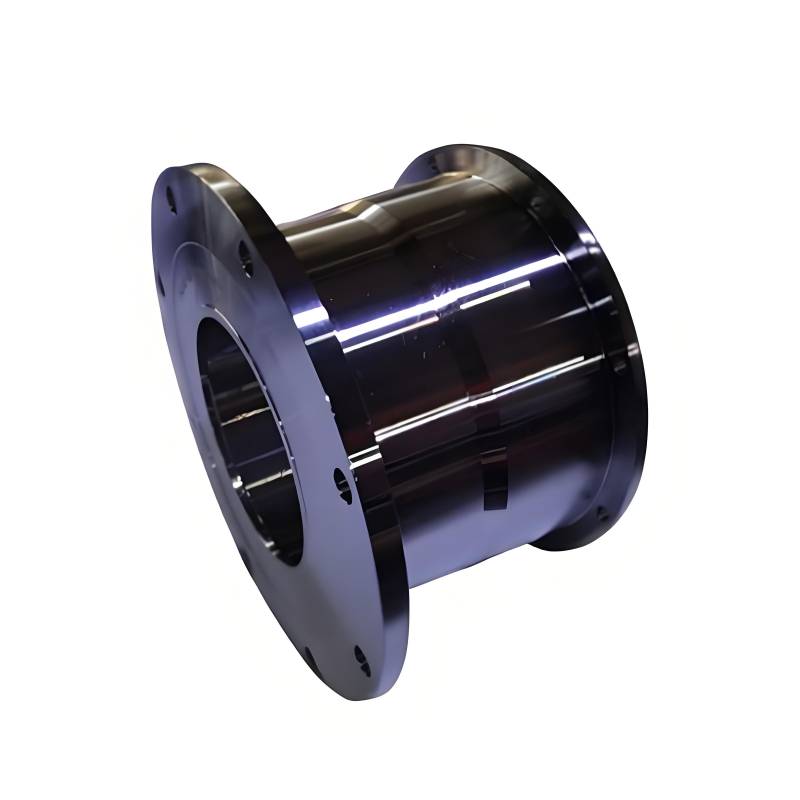
3. Process Analysis of Core Railway Forged Parts: Couplings & Driven Wheels
3.1 Forged Couplings (Core Transmission Parts for Railway & Construction Machinery)
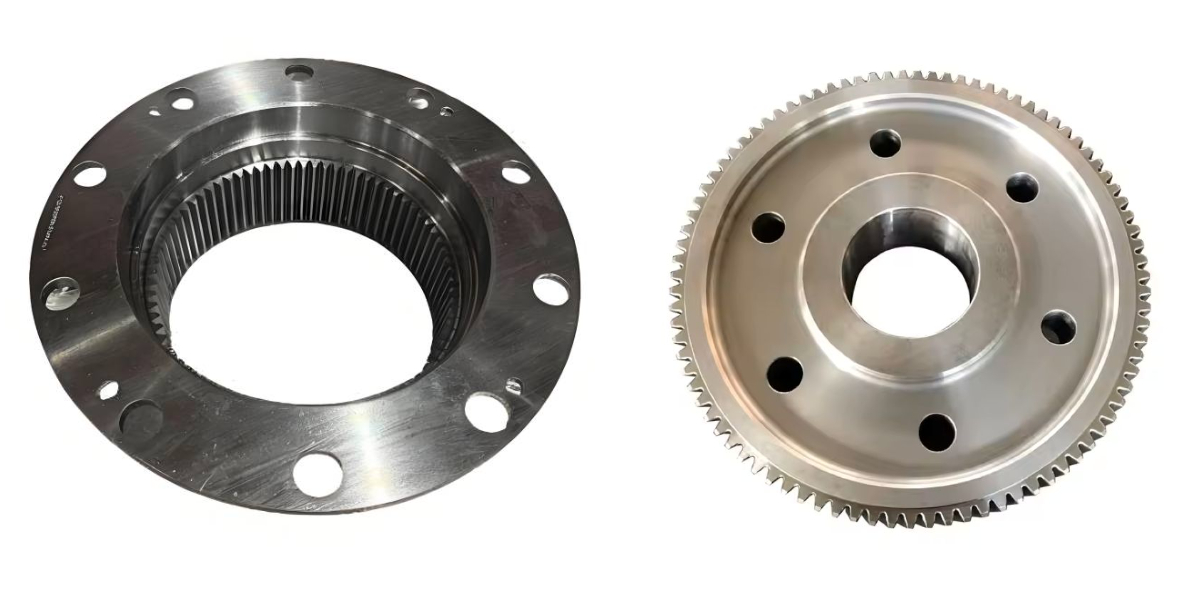
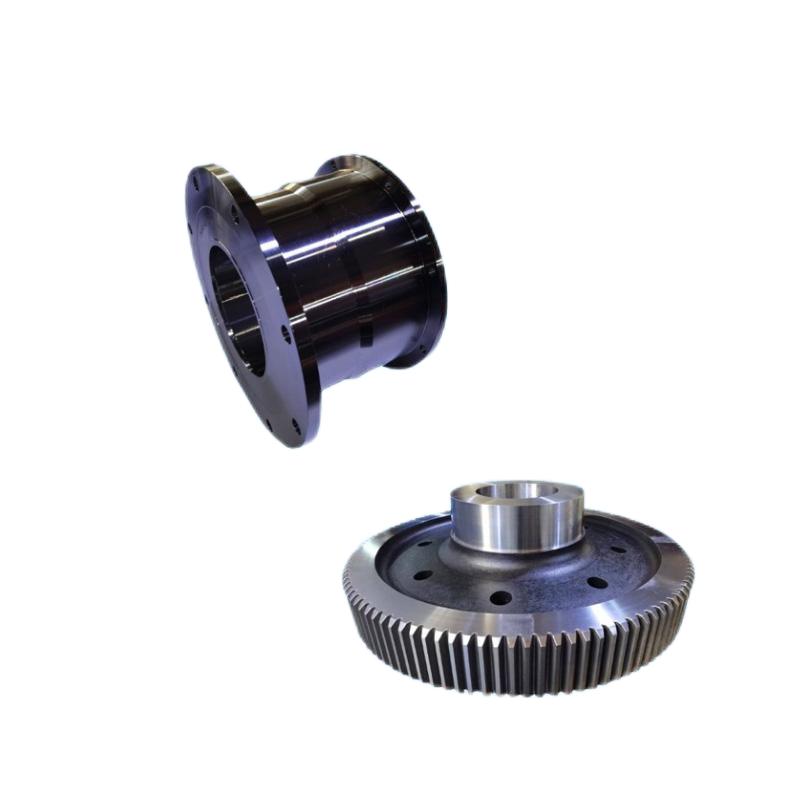
As core forged parts for power connection of railway construction machinery and track traction equipment, couplings undertake torque transmission, shock absorption and coaxial transmission functions. Traditional cast couplings have poor toughness and high brittle fracture risk, and are prone to breaking under heavy-load startup conditions.
Integrally one-piece forged couplings require no splicing or welding with zero stress concentration points. Quenching and tempering heat treatment improves comprehensive mechanical properties, and subsequent finishing corrects end faces, keyways, mounting holes and positioning shoulders to achieve high assembly precision, stable transmission and excellent shock absorption. They adapt to continuous heavy-load startup and high-frequency vibration working conditions of railway equipment and completely avoid fracture failure risks.
3.2 Forged Driven Wheels (Key Load-Bearing and Walking Parts for Railway Equipment)
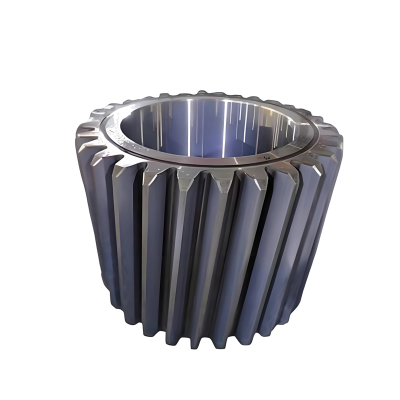
Driven wheels are widely applied in the walking and transmission systems of railway track equipment and construction machinery, undertaking load-bearing, guiding and driven transmission functions. Ordinary processed driven wheels have uneven surface hardness and poor wear resistance, prone to wear, out-of-roundness and slipping under long-term walking friction, resulting in equipment walking deviation and reduced transmission efficiency.
Forged driven wheels adopt high-strength alloy forged blanks with uniform overall hardness and strong structural rigidity. Finished wheel surfaces, grooves, shaft holes and positioning structures feature precise roundness, excellent wear resistance, strong impact and compression resistance and non-deformation performance, adapting to complex track conditions and long-term heavy-load walking operations of railway equipment.
4. Full-Process Quality Assurance: Forging + Heat Treatment + Precision Finishing
4.1 Precision Forging Forming: Manufacture High-Strength Railway Forged Blanks
Custom forging temperature and forging ratio are formulated according to the high-safety and heavy-load characteristics of railway accessories, refining grains and compacting structures for every coupling and driven wheel. Uniform overall mechanical properties without weak local sections meet the long-term safe operation requirements of railway equipment.
4.2 Professional Heat Treatment: Balance Hardness and Toughness for Material Stabilization
All railway forged parts undergo normalized treatment, quenching and tempering, and stress relief annealing to eliminate residual forging stress, balance hardness and toughness, prevent post-finishing deformation and operational cracking, and improve the comprehensive performance of parts in fatigue resistance, impact resistance and wear resistance.
4.3 CNC Precision Finishing: Meet Railway High-Precision Assembly Standards
Equipped with CNC turning and milling centers, precision grinders and keyway processing equipment, we conduct high-precision finishing for all railway forged parts, strictly controlling dimensional tolerance, flatness, coaxiality and surface roughness. The finished products feature accurate assembly clearance, stable transmission and reliable sealing, which can directly replace original factory railway and construction machinery parts.
5. Product Application Scenarios
Our series of forged railway accessories and precision-finished forged parts are widely applicable to various railway equipment and construction machinery:
Railway Track Construction Machinery: Transmission parts for tamping machines, screeners, sleeper machines and track maintenance equipment
Railway Traction and Walking Mechanism: Heavy-duty forged couplings and driven wheels for railway engineering vehicles and track vehicles
Heavy-Duty Construction Machinery: Transmission forged parts and precision finishing parts for mining and infrastructure heavy-duty equipment
We support mass supply of standard models, non-standard customization based on drawings and reverse engineering of old parts. Complete qualification documents including spectrum material testing, mechanical property reports, NDT non-destructive testing reports and heat treatment curves are available for railway project acceptance. Export packaging and bulk overseas orders are fully supported.
6. Conclusion
Under the harsh working conditions of railway and construction machinery, ordinary cast parts are limited by low strength, poor fatigue resistance, insufficient precision and short service life, failing to meet railway safe operation standards.Forged railway parts, couplings and driven wheels feature dense metal structure and excellent impact and fatigue resistance. Combined with high-precision finishing technology, they fundamentally reduce equipment failure rates, improve transmission stability and greatly extend the service life of railway and construction machinery.
If you are purchasing high-quality railway accessories or customizing forged parts, precision-finished couplings and driven wheels for construction machinery, please provide drawings, models, working condition parameters and purchasing quantity. As an integrated manufacturer specializing in forging, heat treatment and precision processing, we provide free process solutions, accurate quotations and sample trial production. Factory visits are welcome. We offer one-stop customized and bulk procurement solutions for railway construction machinery forged parts.