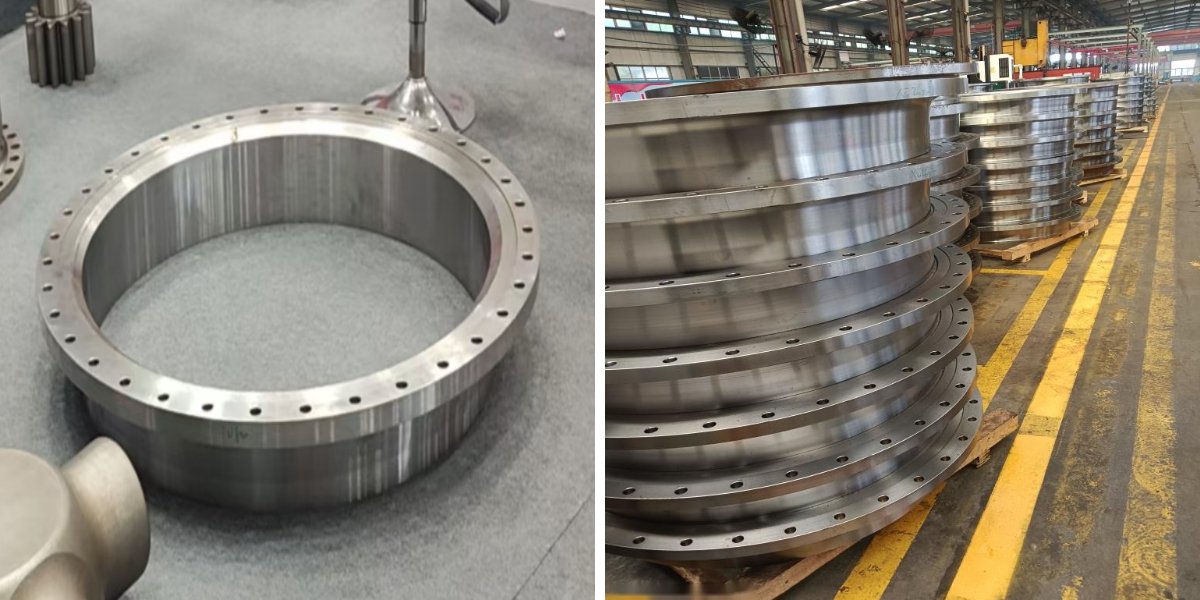
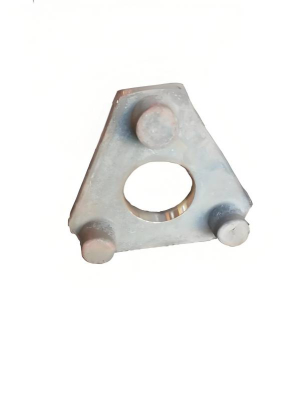
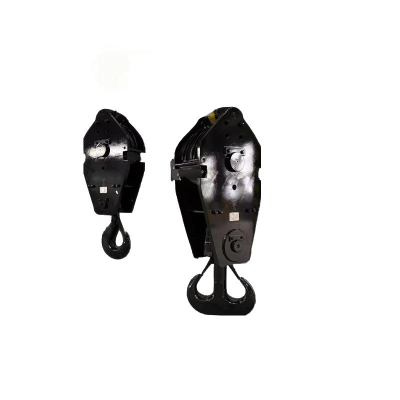
Excavator & Construction Machinery Seat Ring Upgrade: Integral Forged Blank Replaces Castings for Doubled Service Life
The seat ring is a core load-bearing and wear-resistant component of the slewing mechanism in construction machinery and excavators. It is mainly applied to excavator slewing bearings, slewing motors, chassis connections and rotary connection structures, undertaking key functions of positioning support, wear resistance buffering and stable rotation. As a high-frequency moving and high-pressure bearing core excavator part, the seat ring operates long-term in harsh outdoor environments with dust, muddy water and heavy impact loads, enduring continuous rotational friction, axial pressure and radial impact force. It is one of the most vulnerable and failure-prone wearing parts of construction machinery.
Ordinary cast and stamped seat rings on the market generally have inherent defects including loose material structure, uneven hardness, poor wear resistance, internal pores and insufficient precision. Long-term operation of excavators easily causes excessive wear clearance, slewing abnormal noise, body shaking, rotation stalling, oil leakage and other faults. Frequent maintenance and replacement greatly increase equipment operation and maintenance costs and seriously reduce construction efficiency.
To fundamentally solve excavator seat ring failures and extend equipment service life, high-end working conditions universally adopt forging technology to produce seat ring blanks, combined with CNC finishing technology to optimize dimensional accuracy and surface finish, manufacturing high-strength, wear-resistant and highly adaptable seat rings specially for construction machinery. This article elaborates on the process advantages, full processing procedures and application scenarios of forged seat rings.
1. Core Functions and Working Condition Pain Points of Construction Machinery Excavator Seat Rings
As a key supporting component of the excavator slewing system, the seat ring directly determines the slewing accuracy, operational stability and overall service life of the equipment. Different from ordinary mechanical parts, seat rings for construction machinery work under extremely harsh conditions with prominent failure pain points:
Severe wear loss: The equipment performs 360° high-frequency slewing operations, and the contact surface of ordinary seat rings suffers continuous friction, easily causing grooves, peeling and wear depression.
Deformation under heavy impact: Excavating, arm lifting and steering generate huge instantaneous loads. Ordinary seat rings lack sufficient rigidity and are prone to compression deformation and surface warping.
Overall equipment failure caused by low precision: Insufficient machining precision leads to excessive fitting clearance, resulting in slewing jitter, body shaking, walking deviation and seal failure oil leakage.
Short service life due to poor material quality: Cast seat rings have numerous internal defects and poor toughness, making them easy to crack and edge chipping under heavy-load working conditions with extremely high failure rates.
Therefore, heavy-duty construction machinery and large and medium-sized excavators all prioritize the solution of forged seat rings with precision finishing to replace traditional cast and stamped seat rings and reduce failure risks fundamentally.
2. Core Advantage Comparison: Forged Seat Rings vs Ordinary Seat Rings
2.1 Forging Technology Densifies Materials to Eliminate Internal Defects
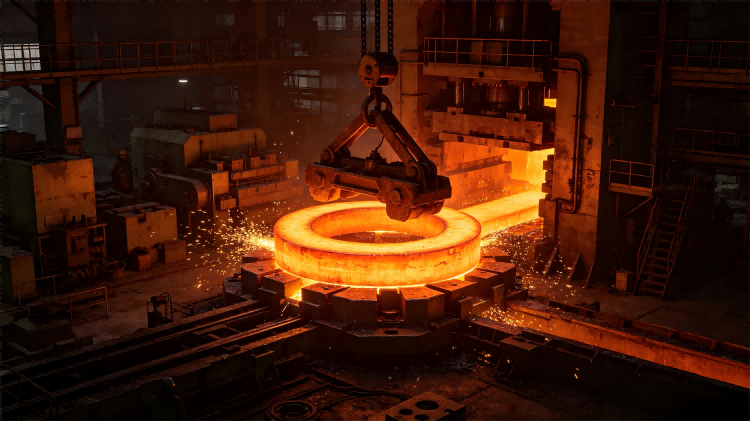
Forged seat rings are manufactured by high-temperature forging of high-quality alloy steel. High-pressure forging crushes coarse grains and compacts internal metal defects such as looseness, pores, sand holes and microcracks, forming a uniform and dense metal structure without inherent casting flaws. The overall structural strength, density and pressure bearing capacity are far superior to ordinary cast and stamped seat rings, effectively avoiding deformation, cracking and collapse under heavy-load conditions.
2.2 Complete Metal Flow Line Greatly Improves Wear and Impact Resistance
Integral forging forms a continuous and complete metal flow line that fits the stress and friction direction of the seat ring. It significantly enhances surface wear resistance, impact resistance and fatigue resistance. Under long-term high-frequency slewing friction and heavy impact, it is not easy to have surface peeling, uneven wear and local depression. Its service life is 2-4 times that of ordinary seat rings, perfectly adapting to long-term outdoor heavy-duty operation of construction machinery.
2.3 Stable Blanks Support High-Precision Finishing
Forged seat ring blanks feature low internal stress, stable material quality and non-deformation. After professional stress relief heat treatment, they can undergo high-precision CNC finishing. Strict control over seat ring flatness, parallelism, roundness, thickness tolerance, surface roughness and mounting hole accuracy ensures perfect fitting with assembly standards and uniform matching clearance, eliminating slewing abnormal noise, shaking, oil leakage and other faults.
3. Integrated Processing Technology: Forging + Heat Treatment + Finishing
3.1 Precision Forging Forming: Manufacture High-Strength Wear-Resistant Blanks
According to the structural characteristics of construction machinery seat rings including annular structure, planar pressure bearing and end face wear resistance, we customize exclusive forging parameters and accurately control forging temperature, forging ratio and forming rhythm. This ensures uniform wall thickness, symmetrical structure and balanced hardness of the seat ring without weak stress concentration points, comprehensively improving its overall rigidity, wear resistance and pressure bearing performance.
3.2 Professional Heat Treatment Modification: Balance Hardness and Toughness
All forged seat rings undergo complete heat treatment processes including normalizing, quenching and tempering, and stress relief annealing. The processes refine metallographic structures and eliminate residual forging stress, enabling the seat rings to possess both high hardness and high toughness. It guarantees excellent wear resistance of the contact surface while avoiding brittleness, edge chipping and cracking, adapting to complex and variable heavy-load working conditions of construction machinery.
3.3 CNC Finishing Forming: Meet OEM Assembly Precision Standards
Equipped with CNC lathes, precision grinders and surface grinding equipment, we conduct refined processing on the end faces, wear-resistant surfaces, mounting holes and positioning shoulders of forged seat rings, strictly controlling dimensional tolerance, surface flatness and finish. The finished seat rings feature high fitting degree, accurate clearance, smooth slewing and reliable sealing, which can directly replace original factory excavator parts for lossless installation and stable operation.
4. Application Scenarios of Forged and Finished Seat Rings
As core excavator parts, our forged and finished seat rings are widely applicable to various large and medium-sized construction machinery, supporting new equipment matching, old part replacement and equipment upgrading:
Excavation Machinery: Slewing seat rings and support seat rings for full series of large and medium-sized excavators such as Komatsu, Caterpillar, Sany, XCMG and LiuGong
Heavy-Duty Construction Machinery: Slewing support seat ring parts for crawler cranes, tunneling machines and mining construction machinery
Engineering Modified Equipment: Custom non-standard rotary structure seat rings and thickened wear-resistant forged seat rings for construction machinery
We support mass production of standard models, non-standard customization based on drawings and reverse engineering of old parts. Complete qualification reports including material testing, mechanical property testing and NDT non-destructive testing are available, with export anti-rust packaging and bulk sea shipment services provided.
5. Conclusion
Under the working conditions of high-frequency slewing and heavy-load wear of construction machinery, ordinary cast and stamped seat rings are prone to wear, deformation and frequent failures, seriously affecting construction efficiency. With dense metal structure and excellent wear and impact resistance, forged seat rings combined with high-precision finishing technology can fundamentally solve common problems such as looseness, abnormal noise, shaking, oil leakage and excessive wear of excavator seat rings, greatly reducing equipment maintenance costs and extending the overall service life of construction machinery.
If you are purchasing high-quality excavator parts seat rings or customizing non-standard forged construction machinery seat rings with high-precision finishing, please provide drawings, models, working condition parameters and purchasing requirements. As an integrated manufacturer integrating forging, heat treatment and precision processing, we provide free process solutions, accurate quotations and sample trial production. Factory visits are warmly welcomed. We offer one-stop customized and bulk procurement solutions for all types of construction machinery seat rings.