Solving Gear Shaft Fracture and Wear Issues: Forging and Finishing to Improve Construction Machinery Transmission Stability
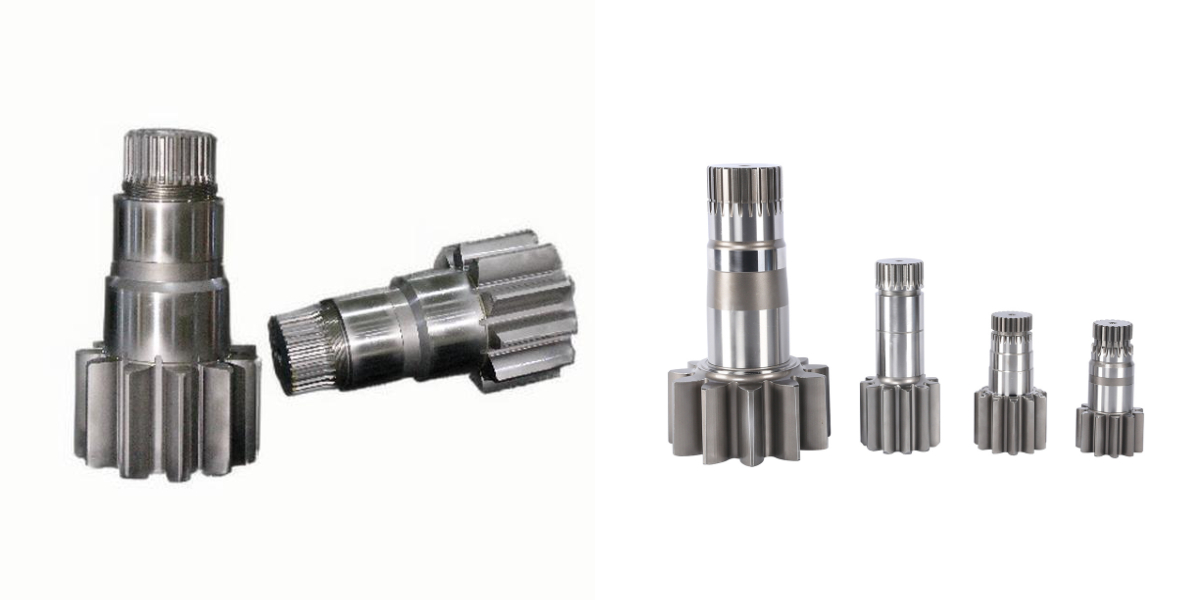
The output gear shaft is the core power output component of the construction machinery transmission system. As a key carrier for torque transmission and power output, it is widely applied in the gearboxes, travel reducers, and slewing reducer assemblies of excavators, loaders, crawler cranes, road rollers, and mining construction machinery. During operation, the output gear shaft continuously withstands high torque, alternating loads, frequent start - stop impacts, and high - speed friction and wear, making it one of the most failure - prone core transmission parts for construction machinery.
Conventional rolled and cast gear shafts available on the market have inherent defects such as loose material structure, coarse grains, insufficient strength, poor wear resistance, and fatigue fracture susceptibility. Under heavy - duty and high - frequency operating conditions of construction machinery, they are prone to shaft fracture, spline wear, tooth surface peeling, transmission stalling, and power attenuation, directly causing equipment shutdown and maintenance and greatly increasing construction costs.
To completely solve transmission failures and extend the service life of construction machinery, output gear shaft blanks must be formed through professional forging processes, combined with professional heat treatment modification and high - precision finishing technology, to manufacture high - strength, wear - resistant, fatigue - resistant, and impact - resistant premium output gear shafts. This article comprehensively analyzes the process advantages, complete processing procedures, and working condition adaptability of forged output gear shafts for construction machinery.
1. Working Characteristics and Core Pain Points of Construction Machinery Output Gear Shafts
The output gear shaft undertakes the core functions of power output and torque transmission for construction machinery. The stability, power efficiency, and service life of the entire equipment depend entirely on the quality of the gear shaft. Compared with ordinary mechanical gear shafts, output gear shafts for construction machinery operate under harsher conditions with prominent core pain points:
· Shaft fracture under high torque load: Construction machinery generates huge instantaneous torque during heavy - duty operation. Ordinary gear shafts lack sufficient rigidity and are prone to bending and fracture.
· Wear failure under high - speed friction: Long - term high - speed meshing transmission causes wear and peeling on tooth surfaces and splines, resulting in increased transmission clearance and power slipping.
· Metal fatigue under alternating loads: Frequent start - stop and positive - negative torque switching induce metal fatigue in ordinary materials, leading to hidden cracks and sudden shaft fracture after long - term operation.
· Transmission abnormal noise caused by insufficient precision: Low machining precision causes uneven gear meshing clearance, resulting in abnormal noise, vibration, and reduced transmission efficiency.
· Therefore, ordinary rolled and cast gear shafts are prohibited for heavy - duty construction machinery. Forged output gear shafts with precision finishing have become the mandatory optimal solution for the industry.
2. Core Advantages: Forged Output Gear Shafts vs Ordinary Gear Shafts
2.1 Forging Process Eliminates Internal Defects Fundamentally
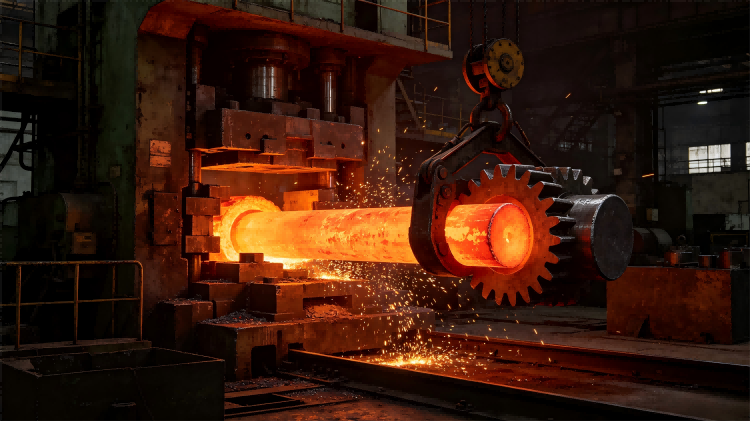
Forged output gear shafts are manufactured by high - temperature forging of high - quality alloy steel ingots. High - pressure forging crushes coarse as - cast grains and compacts internal defects such as pores, porosity, microcracks, and slag inclusions to form an extremely dense metal structure. Compared with cast and rolled gear shafts, the integral structure has no weak points, with significantly improved pressure bearing capacity and structural strength, fundamentally eliminating shaft bending and fracture under heavy - load conditions.
2.2 Continuous Metal Flow Line Ensures Superior Fatigue and Impact Resistance
The forging process forms continuous and uniform metal flow lines along the structural stress direction of the shaft body, gear teeth, and splines, perfectly adapting to high - frequency impact and alternating torque working conditions of construction machinery. It effectively improves the fatigue resistance, creep resistance, and impact resistance of the gear shaft, greatly reducing the fracture risk during long - term operation. The service life is 2 - 3 times that of ordinary gear shafts.
2.3 Stable Forged Blanks Support High - Precision Finishing
Forged blanks feature uniform material, controllable internal stress, and minimal deformation. After stress relief heat treatment, no processing deformation or operational deformation occurs in subsequent applications. It supports high - precision finishing of gear profiles, splines, shaft diameters, and end faces, with strict control over assembly tolerances and meshing accuracy to ensure smooth, silent, and efficient transmission.
3. Full - Process Precision Technology: Forging + Heat Treatment + Finishing
3.1 Custom Forging Forming for High - Strength Shaft Blanks
Aiming at the composite structure characteristics of long shafts, splines, and gears of construction machinery output gear shafts, we customize exclusive forging parameters including forging temperature, forging ratio, and forming rhythm. This ensures uniform overall hardness, symmetrical structure, and no stress concentration points, comprehensively improving shaft rigidity and load - bearing capacity to adapt to extreme working conditions of various heavy - duty construction machinery.
3.2 Professional Heat Treatment for Hardness and Toughness Balance
All forged output gear shafts undergo complete heat treatment processes including quenching and tempering, hardening, and stress relief annealing. The processes refine metallographic structures and eliminate residual forging stress, enabling the shaft to balance high hardness and high toughness. It guarantees excellent wear resistance of gear teeth and splines while avoiding brittleness and fracture under force, fully meeting the long - term heavy - duty operation requirements of construction machinery.
3.3 CNC Precision Finishing Reaches OEM Assembly Standards
Equipped with CNC lathes, gear hobbing machines, gear grinding machines, and five - axis processing equipment, we conduct high - precision finishing on shaft diameters, positioning steps, splines, gear profiles, end faces, and threads of output gear shafts. Strict control over roundness, coaxiality, tooth surface accuracy, roughness, and assembly tolerances enables finished products to perfectly replace original factory parts, realizing gap - free assembly, precise meshing, and silent transmission.
4. Application Scenarios of Forged and Finished Output Gear Shafts
Our forged and finished output gear shafts are widely applicable to the transmission systems of various heavy - duty construction machinery, supporting new equipment matching, old part replacement and maintenance, and equipment upgrading:
· Excavation Machinery: Output gear shafts for travel and slewing reducers of medium and large excavators
· Lifting Machinery: Output gear shafts for winch and luffing gearboxes of crawler cranes and truck cranes
· Road Construction Machinery: Transmission output gear shafts for road rollers, graders and pavers
· Mining Heavy Machinery: Transmission gear shafts for mining loaders, tunneling machines and heavy - duty engineering equipment
· We support mass supply of standard models, non - standard customization based on drawings, and reverse engineering of old parts. Complete qualification documents including material spectrum inspection, mechanical property testing, and NDT non - destructive testing reports are available. We also provide export anti - rust treatment, fumigated packaging, and full - container sea shipment services.
5. Conclusion
In heavy - duty transmission scenarios of construction machinery, ordinary gear shafts cannot withstand long - term high torque, high impact, and high wear conditions and are prone to frequent failures. With dense metallographic structure, excellent strength and fatigue resistance, and matched with high - precision finishing technology, forged output gear shafts fundamentally reduce equipment failure rates and maintenance downtime costs, and greatly extend the service life of construction machinery transmission systems.
If you are sourcing professional output gear shafts for construction machinery and need customized forged high - strength gear shafts and high - precision finished products, please provide your drawings, model parameters, working condition requirements and purchasing quantity. As an integrated manufacturer specializing in forging, heat treatment and precision finishing, we provide free process solutions, accurate quotations and sample trial production. Factory visits are welcome. We offer one - stop customized and bulk procurement solutions for construction machinery output gear shafts.