New Energy Construction Machinery Forgings: Forged and Precision-Machined Base and Hub Wear-Resistant Parts Solutions
With the comprehensive popularization of new energy engineering equipment, new energy wind power equipment and electric construction machinery, new energy equipment has raised qualitative upgrading requirements for the performance of core load-bearing, supporting and walking parts. Traditional ordinary cast and welded parts feature low precision, insufficient strength and easy deformation, which can no longer adapt to the new energy equipment design standards of lightweight, high stability, long service life and zero failure.
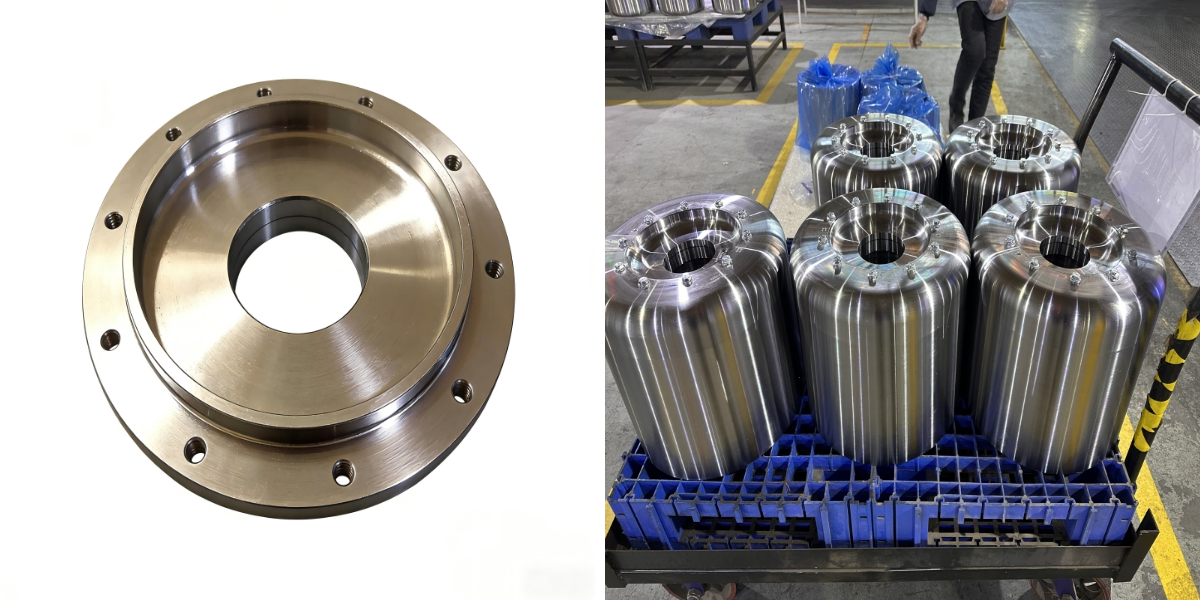
In the overall structure of new energy equipment, bases and hubs are the core load-bearing and stress-bearing forging components. The base undertakes the functions of whole-machine fixing, shock absorption and load bearing, while the hub is responsible for walking, transmission, support and buffering. These two core components operate long-term under alternating loads, high-frequency vibration, heavy impact and outdoor corrosion conditions, serving as the most critical wearable and load-bearing parts of new energy construction machinery.
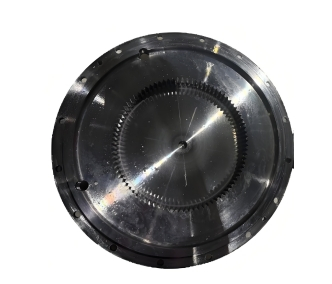
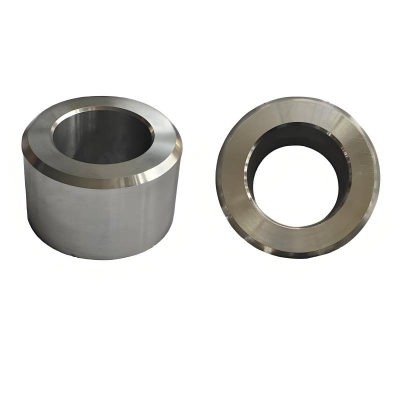
At present, all high-end new energy equipment brands in the industry adopt forging technology to produce base and hub blanks, combined with CNC precision finishing technology to improve dimensional accuracy and assembly fitting degree, fundamentally solving deformation, fracture, wear and looseness problems. This article elaborates on the process advantages, processing procedures and equipment adaptation value of forged bases and forged hubs for new energy construction machinery.
1. Industry Pain Points of Bases and Hubs for New Energy Construction Machinery
Featured by electrification, lightweight design, low noise, long endurance and high stability, new energy construction machinery has far higher requirements for part strength, flatness, wear resistance and fatigue resistance than traditional fuel-powered equipment. Ordinary cast parts have numerous drawbacks:
Cast bases are prone to deformation and fracture: Cast structures are loose with multiple internal pores. Under the high-frequency start-stop and vibration working conditions of new energy equipment, cast bases are easy to warp, deform and crack, resulting in whole-machine inclination and assembly misalignment.
Ordinary hubs suffer from rapid wear and out-of-roundness: Non-forged hubs have uneven material hardness, which easily causes out-of-round deformation, uneven wear and loose bearing positions under long-term rolling pressure, leading to equipment jitter, deviation and excessive noise.
Insufficient precision leads to poor assembly performance: Ordinary machined parts have large deviations in flatness and coaxiality, failing to meet the precision assembly requirements of new energy equipment and easily causing poor sealing, failed shock absorption and uneven stress.
Short service life and high operation and maintenance costs: New energy equipment is designed with a longer service life, while ordinary forgings and castings have poor fatigue resistance. Frequent part replacement seriously affects equipment attendance rate.
Therefore, high-end new energy construction machinery and wind power new energy equipment uniformly adopt the solution offorged bases and forged hubs with precision finishing to realize long-term and stable equipment operation.
2. Core Advantage Comparison: Forged Forgings vs Ordinary Castings
2.1 Forged materials feature dense and uniform structure without internal defects
New energy dedicated forged bases and forged hubs are die-forged at high temperature with high-quality alloy steel. High-pressure forging refines grains and compacts internal defects such as looseness, pores, sand holes and microcracks, forming a uniform and dense metallographic structure without weak stress points. Compared with ordinary castings, forged parts have their strength increased by more than 50% with greatly improved toughness and impact resistance, completely solving fracture and deformation problems of new energy equipment under heavy-load vibration conditions.
2.2 Continuous metal flow lines adapt to long-term fatigue-resistant working conditions of new energy equipment
The forging process forms complete and continuous metal flow lines according to the stress structure of base plates and the annular load-bearing structure of hubs. The flow lines fit the force direction perfectly without the fracture and disorder problems of cast flow lines. Under the long-term high-frequency vibration, continuous load and repeated start-stop conditions of new energy construction machinery, forged forgings possess stronger fatigue resistance, hardly producing hidden cracks and plastic deformation, which greatly extends the overall service life of equipment.
2.3 Stable forged blanks support high-precision finishing
Forged base and hub blanks feature low internal stress, stable material and anti-deformation performance. After stress relief heat treatment, their flatness and structural stability are far superior to castings. Multi-process CNC precision finishing accurately controls flatness, parallelism, hole position accuracy, coaxiality and surface finish, perfectly meeting the precision assembly standards of new energy equipment and achieving tight fitting, stable transmission and reliable shock absorption.
3. Full Process of New Energy Forgings: Forging + Heat Treatment + Precision Finishing
3.1 Precision Forging: Preparation of High-Strength Base and Hub Blanks
Custom forging parameters including temperature, forging ratio and forming rhythm are formulated for the lightweight, high-load and high-stability requirements of new energy construction machinery. Special die forging is adopted for the large-area plate structure of bases and annular load-bearing structure of hubs, ensuring uniform overall hardness, symmetrical structure, consistent bearing capacity and no stress concentration areas, improving the comprehensive mechanical properties of forgings from the source.
3.2 Professional Heat Treatment: Balance Hardness and Toughness for Material Stability
All new energy forgings undergo complete heat treatment processes including normalizing, quenching and tempering, and stress relief annealing to refine metallographic structures and eliminate residual forging stress, balancing hardness and toughness. It ensures high wear resistance and compression resistance of hub surfaces, as well as high toughness, deformation resistance and crack resistance of bases, adapting to all-weather complex working conditions of new energy equipment.
3.3 CNC Precision Finishing: Meet New Energy Precision Assembly Standards
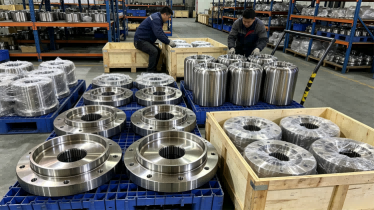
Equipped with CNC gantry machining centers, precision lathes, surface grinders and boring equipment, we conduct all-round precision finishing on forged bases and forged hubs. We strictly control base plate flatness, mounting hole accuracy, hub coaxiality, bearing position tolerance and end face flatness. The finished products are deformation-free, burr-free and high-precision, which can be directly applied to the assembly, replacement and maintenance of various new energy construction machinery.
4. Product Application Scenarios
Our series of new energy forged and precision-finished forgings are widely applicable to various new energy equipment and heavy-duty construction machinery, supporting new equipment matching, old part replacement and equipment upgrading:
New Energy Construction Machinery: Bases and hub parts for electric excavators, electric loaders, electric forklifts and new energy compaction machinery
Wind Power New Energy Equipment: Support bases, transmission hubs and fixed load-bearing forged parts for wind power equipment
Industrial New Energy Equipment: Frame bases, walking hubs and load-bearing support forgings for automated new energy equipment
We support mass production of standard models, non-standard customization based on drawings and reverse engineering of old parts. Complete qualification documents including spectrum material testing, mechanical property reports, NDT non-destructive testing and heat treatment reports are available. We provide export anti-rust packaging, full-container sea shipment and bulk foreign trade order services.
5. Conclusion
New energy construction machinery has put forward higher standards for equipment stability, service life and precision. Ordinary cast bases and hubs have low precision and are prone to deformation and fracture, failing to meet the long-term operation requirements of new energy equipment. High-strength forgings (bases and hubs) produced by forging technology, combined with high-precisionfinishing technology, fundamentally improve the load-bearing capacity, vibration resistance and wear stability of equipment, greatly reducing the failure rate and operation and maintenance costs of new energy equipment.
If you are purchasing professional forged bases and forged hubs for new energy construction machinery, or customizing various high-precision machined forging parts, please provide drawings, models, working condition parameters and procurement quantity. As an integrated manufacturer integrating forging, heat treatment and precision machining, we provide free process solutions, accurate quotations and sample trial production. Factory visits are welcome. We offer one-stop customized and bulk procurement solutions for new energy construction machinery forgings.