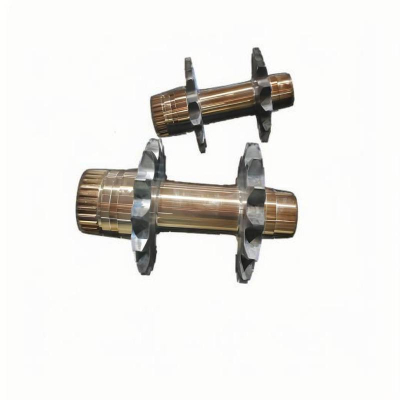
Why Forged Pulleys Are Preferred for Crawler Cranes and Truck Cranes? Forgings Replace Castings to Improve Lifting Safety
In the field of construction machinery lifting operations, the pulley serves as the core transmission component of the lifting mechanism for crawler cranes and truck cranes. It works in coordination with the hook assembly to undertake key functions including steel wire rope guiding, torque transmission, and load lifting, directly determining the operating efficiency, load capacity, and construction safety of lifting equipment. As a core wearable component under frequent stress and friction, the material and processing technology of pulleys are critical to equipment stability. Traditional cast pulleys and ordinary rolled pulleys feature loose internal structures, numerous pores and inclusions, and poor impact and fatigue resistance. Under heavy-duty lifting, frequent start-stop, and bumpy working conditions, they are prone to wheel cracking, groove wear, deformation and jamming. These defects not only reduce lifting accuracy but also cause potential safety hazards and greatly increase equipment operation and replacement costs. Currently, high-end engineering lifting equipment has fully upgraded production processes, adopting forging technology to produce forged pulley parts. With superior mechanical properties, forged parts adapt to all-weather heavy-duty operation of crawler cranes and truck cranes and comprehensively improve the overall operational stability of hook assemblies.
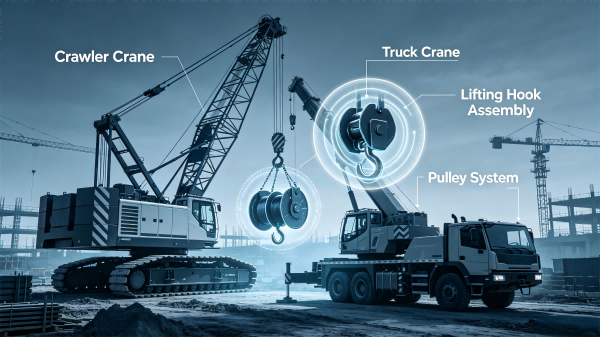
1. Core Defects of Traditional Pulleys for Crawler Cranes and Truck Cranes
Conventional cast and stamped pulleys are only suitable for light-duty lifting scenarios. They cannot meet the heavy-load, high-frequency, and complex outdoor working conditions of crawler cranes and truck cranes. Long-term application leads to prominent drawbacks and seriously affects the coordinated operation of hook assemblies:
Cracking under heavy loads, poor safety: Castings have inherent internal defects such as looseness, microcracks and inclusions. During heavy-tonnage lifting of crawler cranes, concentrated stress easily causes pulley fracture and triggers lifting safety accidents.
Poor wear resistance and fast loss: Ordinary pulley grooves lack sufficient hardness. Long-term high-intensity friction with steel wire ropes leads to rapid groove wear, deformation and edge warping, resulting in rope slipping, aggravated abrasion and frequent part replacement.
Low fatigue resistance and short service life: Truck cranes require frequent relocation and start-stop lifting. Pulleys bear continuous alternating and impact loads, causing metal fatigue and hidden cracks in ordinary parts with high risk of sudden failure.
Low precision and poor assembly compatibility: Ordinary machined pulleys have large dimensional errors and poor coaxiality, resulting in uneven assembly gaps with hook assemblies. This causes operation jitter, abnormal noise and reduced lifting accuracy.
To fundamentally solve pulley failures and improve the overall stability of hook assemblies, replacing traditional parts with forged pulley components is the optimal industrial upgrade solution.
2. Core Advantages of Forged Pulleys (Forging vs Casting)
2.1 Dense Metallographic Structure with Zero Internal Defects
Professional forged pulley parts for lifting equipment are integrally formed through multi-pass high-temperature and high-pressure forging with high-quality alloy steel such as 42CrMo. High-pressure forging crushes coarse grains and compresses internal pores, looseness and microcracks, forming a uniform and dense metallographic structure without weak stress sections. Compared with cast pulleys, the overall tensile strength, impact toughness and surface hardness are increased by more than 50%. The forgings perfectly withstand heavy impacts from crawler cranes and truck cranes and completely eliminate pulley fracture risks.
2.2 Continuous Metal Flow Lines for Enhanced Fatigue Resistance
The forging process forms complete and continuous metal flow lines that fit the annular stress structure and groove friction trajectory of pulleys. The flow lines are highly consistent with the force direction without fracture or disorder common in castings. For crawler cranes with fixed-site high-frequency heavy lifting and truck cranes with mobile and changeable working conditions, forged pulleys resist metal fatigue and hidden damage effectively. Their service life is 2 to 3 times that of ordinary cast pulleys, perfectly matching the long-term stable operation requirements of hook assemblies.
2.3 Wear and Corrosion Resistance for Harsh Outdoor Conditions
After professional heat treatment,forged pulley parts feature high groove surface hardness and excellent wear resistance, effectively resisting long-term high-strength friction from steel wire ropes and reducing groove wear, deformation and edge defects. Meanwhile, the dense forging structure delivers superior corrosion and oxidation resistance, adapting to complex outdoor environments with humidity, dust and alternating temperatures, fully suitable for field engineering operations.
2.4 High Structural Stability for Precision Assembly
Forged blanks feature low internal stress and stable structure without subsequent deformation or warpage. After CNC precision finishing, the pulleys achieve accurate coaxiality, standard groove radian, precise mounting hole tolerance and high surface finish. They are perfectly compatible with all types of hook assemblies with uniform assembly gaps, smooth and silent operation, no jitter or stalling, greatly improving the lifting accuracy and working efficiency of crawler cranes and truck cranes.
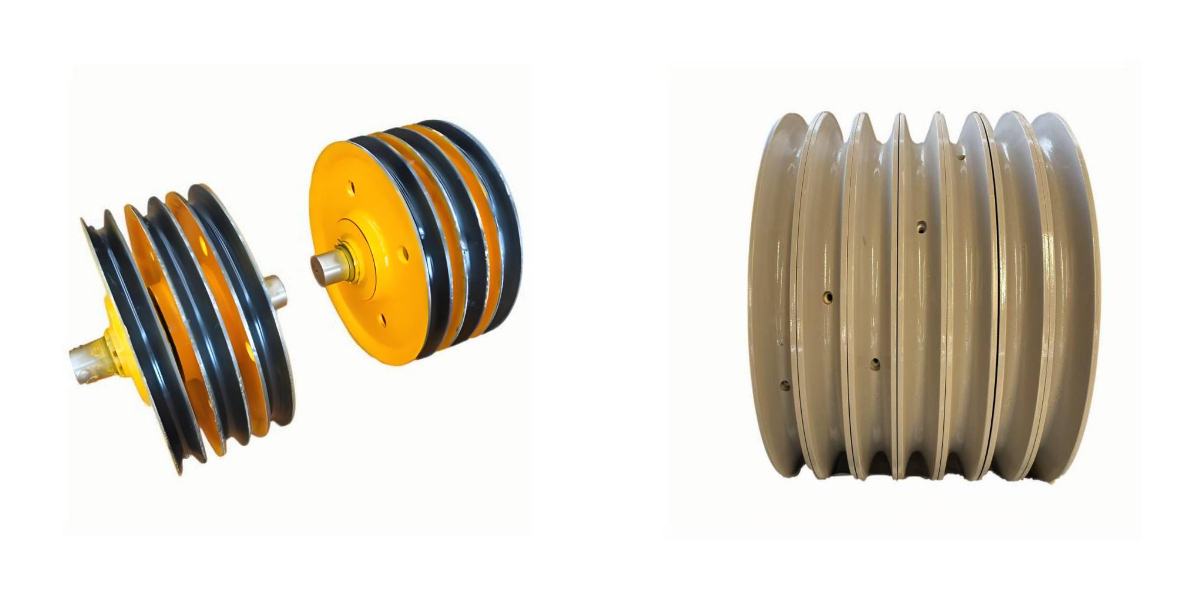
3. Production Process of Forged Pulleys and Matching Hook Assemblies
We adopt standardized customized forging procedures for pulley forgings dedicated to crawler cranes and truck cranes, implementing strict quality control to meet stringent heavy-duty lifting equipment standards:
Precision Cutting and Constant-Temperature Heating: Select materials accurately according to pulley tonnage and dimensions, with uniform constant-temperature heating to ensure consistent and stable forging forming.
Integral Die Forging: Custom integral die forging ensures uniform overall pulley structure, no stress concentration and enhanced load-bearing capacity.
Heat Treatment and Performance Optimization: Adopt quenching, tempering and stress-relief annealing to refine metallographic structure, balance hardness and toughness, and achieve dual performance of wear resistance and fracture resistance.
Non-Destructive Testing: 100% inspection for each batch of forgings to eliminate internal defects such as cracks, inclusions and looseness, ensuring lifting operation safety.
Precision Finishing: Numerically process rope grooves, mounting holes and end faces with strict dimensional tolerance control to meet assembly standards of various hook assemblies.
Final Inspection and Anti-Corrosion Treatment: Conduct full dimensional inspection and mechanical performance sampling test, with professional rust and corrosion protection, supporting mass production and export supply.
4. Product Application Scenarios
Our series of forged pulleys, lifting forgings and matched hook assembly forged parts are widely applicable to various construction lifting machinery, supporting new equipment assembly, old part replacement and equipment upgrading:
Crawler Crane Supporting Parts: Forged lifting pulleys, guide pulleys and heavy-duty hook assembly parts for large-tonnage crawler cranes
Truck Crane Supporting Parts: Forged travelling pulleys, lifting pulleys and lightweight hook assembly parts for all-tonnage truck cranes
General Lifting Equipment: High-strength forged pulleys and hook matching parts for tower cranes, truck-mounted cranes and port cranes
Custom Non-Standard Parts: Custom special-shaped pulley forgings and non-standard hook assembly forgings based on drawings or old part mapping, supporting small-batch trial production and mass customization.
5. Conclusion
For heavy-duty lifting equipment such as crawler cranes and truck cranes, the quality of pulleys and hook assemblies directly determines lifting safety and equipment service life. Traditional cast pulleys have obvious defects, while forged parts manufactured by professional forging technology solve frequent pulley failures such as cracking and abrasion under heavy loads. Featuring high strength, superior wear resistance, excellent fatigue resistance and high precision, they serve as the core solution for lifting equipment upgrading and operation cost reduction.
If you need customized forged lifting pulleys, high-precision crawler crane and truck crane dedicated pulley forgings, or matched hook assembly forged parts, please provide drawings, tonnage parameters and procurement requirements. Equipped with mature forging production lines and complete industrial-grade quality inspection systems, we support non-standard customization, precision processing and bulk export. We provide free process solutions, accurate quotations and sample production, offering one-stop customized processing services for all kinds of lifting equipment forged parts.