Robot Welding vs Laser Welding: The Ultimate Choice for High-Precision Connection of Forgings, Which One Is More Suitable for High-End Manufacturing?
Robot Welding vs Laser Welding: The Ultimate Choice for High-Precision Connection of Forgings, Which One Is More Suitable for High-End Manufacturing?
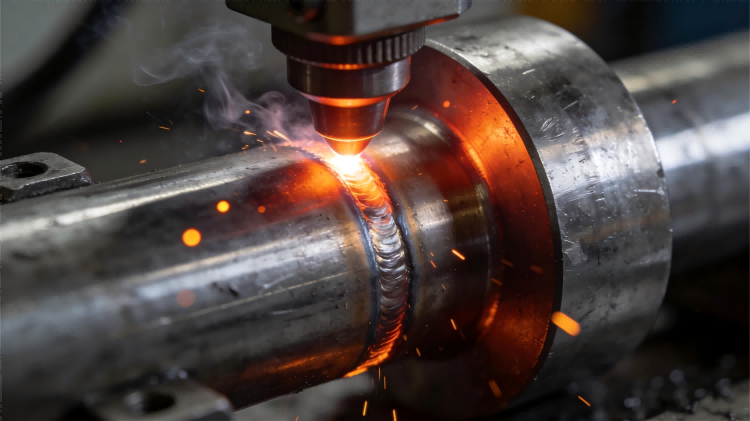
In the fields of high-end equipment such as coal mining machinery, excavators, and new energy vehicles, forgings serve as the core load-bearing components, and their connection methods directly determine the strength, durability, and safety performance of the products. With the upgrading of manufacturing technology, robot welding and laser welding have become the two main mainstream solutions for forging connections - the former takes the lead in batch production scenarios due to its high efficiency and stability, while the latter leads in high-end customization demands with its high-precision advantages. However, for manufacturing enterprises, confusion has always existed: What are the core differences between robot welding and laser welding in forging processing? Which process is more suitable for high-strength forgings? How to select the right welding solution based on the type of forging? This article dissects the application secrets of the two welding technologies from three dimensions: process characteristics, forging adaptation scenarios, and selection logic.
I. Core Clash: Robot Welding vs Laser Welding, Key Differences Are Clearly Visible
Although both robot welding (with arc welding as the core) and laser welding are forms of automated welding technology, they differ significantly in principles, performance, and applicable scenarios. Especially when it comes to the high strength and hardness of forged parts, the compatibility gap between the two is even more pronounced:
Comparison Dimension | Robot Welding (Arc Welding/Gas Shielded Welding) | Laser Welding | Core Advantages in Forging Processing |
Welding Precision | Weld width: 3-5mm, Deformation: ±0.5mm | Weld width: 0.5-1.5mm, Deformation: ±0.1mm | Laser welding is suitable for precision forgings, avoiding assembly accuracy issues caused by deformation |
Welding Speed | 300-500mm/min, High mass production efficiency | 1000-3000mm/min, Significant high-speed welding advantage | Laser welding shortens the processing cycle of large forgings and improves production capacity |
Heat-Affected Zone (HAZ) | Large (5-8mm), Prone to coarse grains in forgings | Minimal (1-2mm), Low heat input | Laser welding protects the internal structure of forgings and prevents strength reduction |
Joint Strength | Tensile strength reaches 80%-85% of the base metal | Tensile strength reaches over 95% of the base metal, weld integrated with base metal | Suitable for heavy-load requirements of coal mine machinery and excavator forgings with better fatigue resistance |
Applicable Materials | Mainly carbon steel and low-alloy steel forgings, suitable for medium-thick plates (≥3mm) | Applicable to carbon steel, alloy steel, and aluminum alloy forgings; universal for thin, medium, and thick plates (0.5-20mm) | Laser welding covers the processing of lightweight forgings (aluminum alloy) for new energy vehicles |
Automation Level | Program-controlled welding path, manual parameter fine-tuning required | Full digital control with visual positioning for unmanned operation | Laser welding reduces human intervention and ensures consistent forging welding quality |
Cost Investment | Medium equipment cost (100,000-300,000 RMB/unit), Low operation and maintenance cost | High equipment cost (500,000-2,000,000 RMB/unit), Low consumable cost | Robot welding is more cost-effective for mass production scenarios; laser welding is more economical for high-end customization |
II. Adaptation of Forging Process Scenarios: The "Battlefields" of Two Welding Technologies
1. Robot Welding: The "Efficiency Champion" for Batch Production of Forgings
Robot welding, with its stable batch processing capabilities, has become the preferred solution for mid-range and standard forgings, especially suitable for the following scenarios:
Forging assembly of thick plates: For example, coal machine middle-section forging parts, excavator track plate forgings (thickness ≥ 8mm). The arc penetration force of robot welding is strong, enabling single or multiple passes of welding, uniform weld formation, and meeting the strength requirements under heavy-load conditions;
Assembly welding of standardized forgings: For example, new energy vehicle chassis bracket forgings, and mechanical equipment pin connections. The robot repeats welding actions according to preset programs, with an error control within ±0.3mm, suitable for batch orders of over 100,000 pieces;
Low-cost mass production requirements: For carbon steel forgings (such as 45# steel, Q355B forgings), robot welding has low equipment investment and controllable costs of consumables (welding wire, shielding gas), ensuring basic strength while reducing processing costs.
Case Study: A coal machine enterprise uses robot welding to produce scraper conveyor middle-section forging parts (thickness 12mm), with a single production line daily capacity of 50 pieces. The weld seam qualification rate is stable at 98%, which is 3 times more efficient than manual welding, and avoids the uneven welds caused by manual operation.
2. Laser Welding: The "Quality Benchmark" for Precise Connections of High-End Forgings
Laser welding, with its high precision and low heat input advantages, has become the core solution for high-end forgings and complex structural forgings, especially suitable for the following scenarios:
Precise forging connections: For example, new energy vehicle motor shaft forgings, excavator steering gear forgings. The weld seam of laser welding is narrow and has little deformation, ensuring the dimensional accuracy of the forgings (IT9 level or above), avoiding excessive machining allowance in the subsequent processing;
High-strength / High-hardness forgings welding: For example, 42CrMo, 35CrMo alloy steel forgings (tensile strength ≥ 1000MPa). Laser welding has a small heat affected zone, avoiding the formation of hardened structures and cracks after welding, and the joint strength is close to the base material;
Lightweight forging processing: For aluminum alloy, magnesium alloy forgings (new energy vehicle battery pack brackets, robot joint forgings), laser welding can quickly melt the base material, reducing oxidation, and ensuring the sealingity and corrosion resistance of the weld seam;
Complex structure forging welding: For integrated chassis forgings, and specially stressed forgings, laser welding can achieve narrow gap welding, deep melting welding, and is suitable for complex weld paths, without the need for excessive tooling and fixtures.
Case Study: A new energy vehicle enterprise uses laser welding to produce aluminum alloy battery pack shell forgings (thickness 3mm), with a weld seam width of only 0.8mm, deformation ≤ 0.1mm, tensile strength of the weld seam reaching 380MPa (consistent with the base material), and the salt spray corrosion test lasts for over 1000 hours, fully meeting the safety protection requirements of the battery pack.
III. Welding Process Selection Guide for Forgings: 3 Core Points to Avoid Decision Misperceptions
For manufacturing enterprises, the core of selecting the right welding process is "matching the forging characteristics and production requirements", rather than blindly pursuing advanced technologies. When purchasing, the following three points should be given priority attention:
Selecting based on forging material and strength grade:
For ordinary carbon steel, low alloy steel forgings (tensile strength < 800MPa), and batch production of thick plates: prefer robot welding, with higher cost-effectiveness;
For high-strength alloy steel, aluminum alloy, magnesium alloy forgings (tensile strength ≥ 800MPa), and precision parts: must choose laser welding to avoid strength reduction or deformation;
Forgings for corrosive environments (such as excavator chassis forgings in coastal areas): laser welding has good weld seam density, combined with subsequent anti-corrosion treatment, providing better durability. Decide based on production scale and precision requirements
For annual production of over 50,000 pieces and standardized forgings: The equipment for robot welding has a short payback period (1-2 years) and is suitable for large-scale production;
For annual production of less than 10,000 pieces and customized forgings: Although the equipment for laser welding has a high investment, it can reduce the rework rate and ensure product consistency;
For forgings with high assembly precision (tolerance ≤ ±0.2mm): Laser welding is the only option, as the deformation of robot welding cannot meet the requirements.
Pay attention to the heat treatment adaptability after welding
After forging welding, heat treatment such as quenching and normalizing is required: The heat affected zone of robot welding is large, and the heat treatment time needs to be increased; otherwise, stress concentration is prone to occur;
For forgings that do not require complex heat treatment (such as precision forgings): Laser welding has a small heat affected zone, and it can directly enter the next process, shortening the production cycle.
IV. Industry Trends: Two welding technologies towards "combinatorial" integration
With the upgrading of forging processing to "high precision, high efficiency, low cost" integration, robot welding and laser welding are no longer in a "either-or" competitive relationship, but are moving towards "combinatorial application":
Laser - Arc Composite Welding: Combining the high precision of laser and the high penetration of arc welding, it is suitable for thick plate forgings (thickness 20-50mm), with a 2-fold increase in welding speed and weld strength reaching 90% of the base material;
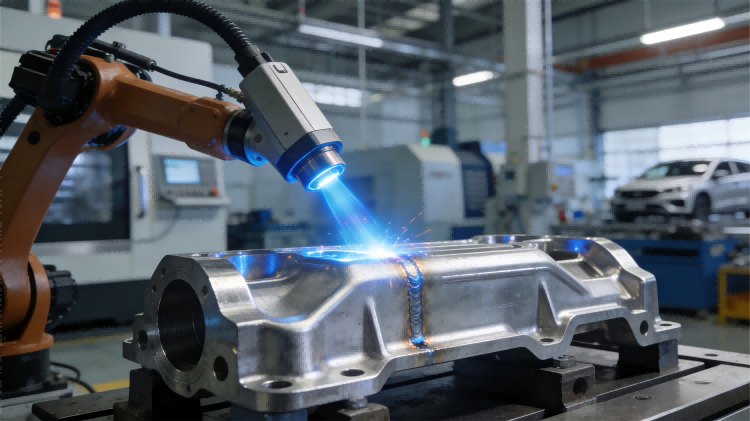
Robot + Laser Hybrid Solution: The robot is equipped with a laser welding head, and complex forgings can be precisely welded automatically through the visual positioning system, balancing efficiency and quality;
Digital Welding Management: Both processes are connected to the MES system, real-time monitoring of welding parameters (temperature, speed, current), achieving full-process traceability of forging welding, and meeting the quality control requirements of high-end equipment.
Summary
Robot welding and laser welding correspond to the "efficiency requirements" and "quality requirements" of forging processing respectively - the former is the "cost-effective choice" for batch production, and the latter is the "quality benchmark" for high-end customization. For manufacturing enterprises, the core of choosing the right welding process is to clearly define the material, strength, precision requirements and production scale of the forgings, rather than blindly following high-end technologies.
If you need to further understand the welding process parameters, equipment selection schemes for different forgings (such as coal mining forgings, new energy vehicle forgings), or obtain a cost comparison table for laser welding and robot welding, please feel free to contact us! We will provide you with targeted welding technology solutions and equipment support to help forge processing reduce costs, increase efficiency and improve quality.
- Previous : New energy vehicle chassis vs. traditional fuel vehicle chassis: Forgings are the core of the gap, with dual breakthroughs in lightweighting and safety!
- Next : Railway driven wheels + coupling forging parts: The "core" of the transmission system, ensuring safety in heavy-load and high-speed scenarios!