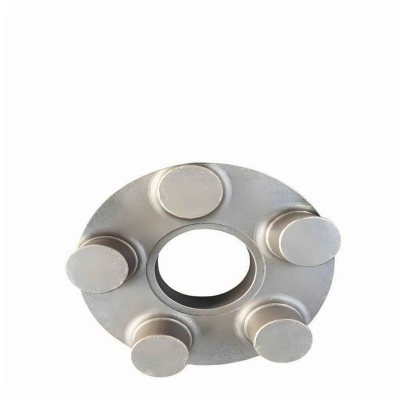
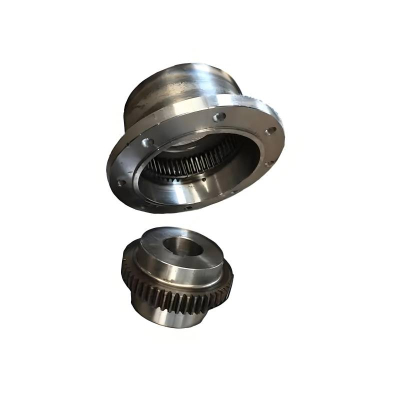
Railway driven wheels + coupling forging parts: The "core" of the transmission system, ensuring safety in heavy-load and high-speed scenarios!
Railway driven wheels + coupling forging parts: The "core" of the transmission system, ensuring safety in heavy-load and high-speed scenarios!
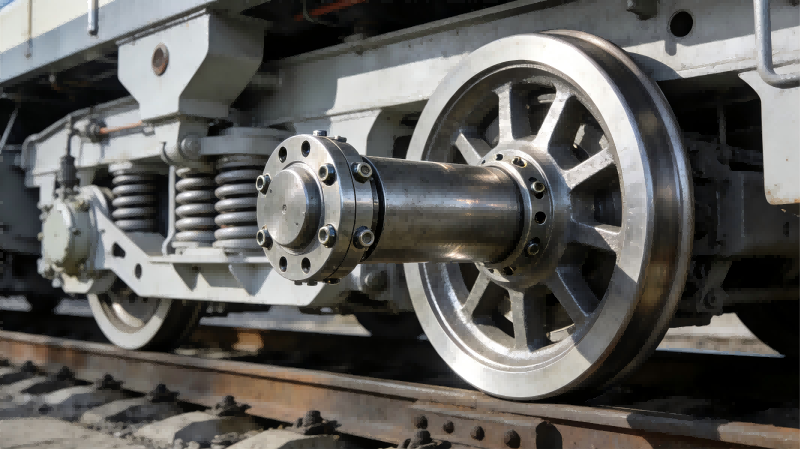
In the upgrading wave of "high-speed and heavy-load" in railway transportation, the smooth operation of trains and the efficient transmission of power cannot be achieved without the precise cooperation of the transmission system. The driven wheels and couplings, as the core transmission components, require bearing tremendous torque, high-frequency vibrations, and complex stresses. The quality of these components directly determines the stability of train operation - both of which rely on the high strength, high toughness, and high precision characteristics of the forgings, making them indispensable "performance players" in high-speed rail, conventional rail, and heavy-load railways. Many railway engineering personnel and component purchasers often wonder: Why must railway driven wheels and couplings use forgings? How can high-quality forgings enable these two components to withstand high-frequency impacts and long-term wear? How should different line scenarios be selected? This article dissects the key roles of railway driven wheel and coupling forging parts from three dimensions: core value, process advantages, and selection guidelines.
1. Forging Empowerment: Driven Wheels and Couplings, the "Golden Pair" of Railway Transmission
In the power transmission process of railway trains, the driven wheels are responsible for converting power into driving force, and the couplings are responsible for connecting the shaft system and buffering the tasks. Both need to withstand huge torque, high-frequency vibrations, and complex stresses. Forging is the core guarantee for achieving stable performance:
1. Railway driven wheel forgings: The "foundation for travel" of the train
The driven wheel is the core component that comes into contact with the track, needing to bear the weight of the train + passenger/cargo load, as well as the impact and long-term friction at the track joints. The quality of these forgings directly affects the safety of train operation:
Using 42CrMo, 25CrNiMo, etc. high-strength alloy steel for die forging, through 1200℃ high-temperature forging + multiple passes of fine forging, the metal grains are fine and uniform, with a density of 99.9%, completely eliminating pores, sand holes, etc., with tensile strength of over 1100MPa and yield strength of ≥850MPa, capable of easily withstanding the pressure impact of heavy-load trains (≥20,000 tons);
The wheel rim surface is quenched + tempered, with a hardness of HRC45-50, the wear resistance is more than 3 times that of ordinary castings, the wheel rim wear is controlled within 0.1mm/100,000 kilometers, the service life is up to 20 years, which is 1 times longer than cast driven wheels;
Digital simulation optimization of the wheel rim and spokes structure, through variable-section forging technology to balance strength and lightweight, the weight of a single wheel is reduced by 8%-10% compared to the traditional structure, reducing train running energy consumption, and adapting to the "high-speed and low-consumption" requirements of high-speed rail.
2. Railway coupling forgings: The "flexible hub" of power transmission
The coupling connects the motor shaft of the train with the transmission shaft and needs to achieve precise power transmission while buffering vibrations and deviations during operation. The performance of these forgings determines the efficiency of power transmission and the safety of the shaft system:
Using 35CrMo, 40CrNiMoA alloy steel for integrated die forging, avoiding structural weaknesses caused by welding, with tensile strength of over 1000MPa and torsional fatigue life of 10⁷ cycles, capable of withstanding high-speed train (350km/h) torque impact;
Key parts such as flanges and spline are precision forged + precision machining, with dimensional tolerances controlled within ±0.05mm and coaxiality error ≤0.02mm, ensuring a power transmission efficiency of over 98%, reducing energy loss;
Structures are optimized for different line scenarios: For high-speed rail coupling forgings, an elastic pin connection design is adopted to improve vibration buffering effect by 40%, reducing running noise; for heavy-load railway coupling forgings, the hardness of the tooth surface (HRC55-60) is strengthened to enhance impact resistance and wear resistance, avoiding tooth surface spalling in heavy-load conditions. 3. Synergy of the two: forging the "safe transmission loop"
The performance matching between the driven wheel and the coupling forging components forms the "safe loop" of the railway transmission system: The buffering and vibration-damping effect of the coupling can reduce the impact on the driven wheel during power transmission, and lower the wheel-rail contact stress; while the high strength and wear resistance of the driven wheel can stably receive the power transmitted by the coupling, ensuring continuous and uninterrupted power transmission during complex working conditions such as starting, braking, and steering of the train, with the failure rate reduced to below 0.05%.
II. Forging process: The "performance upgrade code" of the driven wheel and coupling forging components
The harsh working conditions of railway driven wheels and couplings determine that they must adopt forging technology instead of casting or stamping. The core advantages are reflected in three points:
Dual advantages of fatigue resistance and impact resistance: The forging process enables the continuous distribution of metal fiber streams in line with the force direction of the component, increasing the tensile strength by 40%-60% compared to castings, and the impact toughness (αk) reaches over 80J/cm², effectively avoiding fracture and deformation risks under high-speed and heavy-load conditions - this is crucial for stress concentration areas such as the rim of the driven wheel and the tooth root of the coupling;
High dimensional accuracy and strong adaptability: The precision die forging technology realizes "near-net shape formation", with the thickness tolerance of the driven wheel rim being ±0.5mm, and the tooth profile precision of the coupling spline reaching the GB/T 10089-2018 6-level standard, allowing for direct assembly without extensive subsequent processing, reducing vibration and wear caused by the fitting clearance;
Wide environmental adaptability: Through surface anti-corrosion treatment (galvanizing, phosphating, anti-rust paint spraying), the corrosion resistance to salt spray is over 1000 hours, and the low-temperature performance is -40℃ without cracking, suitable for complex climate lines such as coastal salt spray and high-altitude frozen soil, ensuring stable operation in the range of -40℃ to 60℃.
III. Selection guide: Selecting the right driven wheel and coupling forging components for 3 key points
For railway engineering parties and component suppliers, selecting the right driven wheel and coupling forging components requires precise matching based on line type and working conditions, with particular attention to three points:
Verification of process and testing qualifications: Prioritize suppliers that adopt die forging + electro-hydraulic hammer forging, and require them to provide complete test reports - material analysis reports, ultrasonic testing (UT), magnetic particle testing (MT), to ensure that the forging components have no cracks or inclusions, with the inspection qualification rate reaching over 99.8%; at the same time, confirm that the products comply with TB/T 2945 (railway driven wheel standard), TB/T 3025 (railway coupling standard), or EN 13260, AAR M-101, etc. international standards.
Selection of materials and structure based on line scenarios:
High-speed railway lines: Forged driven wheel components select 25CrNiMo alloy steel, aiming for lightweight and low noise; coupled forging components select elastic structure to enhance buffering and vibration damping;
Heavy-duty railway lines: Forged driven wheel components select 42CrMo alloy steel, enhancing the hardness and strength of the rim; coupled forging components select rigid gear-type structure to improve impact resistance;
Coastal / High-altitude lines: Both require special anti-corrosion treatment (such as stainless steel substrate + passivation), with low-temperature impact strength of ≥ 47J at -40℃, suitable for complex climate lines such as coastal salt spray and high-altitude frozen soil, ensuring stable operation in the range of -40℃ to 60℃.
Attention to manufacturer capacity and cases: Prioritize suppliers with a complete industrial chain (smelting - forging - heat treatment - precision processing) to ensure material consistency and process stability; focus on whether the manufacturer has cooperation cases with the National Railway Group, CRRC Group, or international railway operators, and whether the products have been verified through 100,000 kilometers of actual lines, and confirm their batch delivery capacity (monthly production capacity ≥ 500 sets), meeting the centralized procurement requirements of railway engineering. IV. Industry Trends: Railway Upgrades Drive the Evolution of Forgings to "High Precision and Advanced"
With the "going global" of high-speed rail and the expansion of heavy-haul railway networks, the market size of drive wheel and coupling forging parts in China is expected to exceed 8 billion yuan by 2025. The industry presents three major upgrading trends:
Precision: Through digital twin technology to simulate the forging process, the dimensional accuracy will reach the micrometer level, and the error of the coupling spline tooth shape will be ≤ 0.01mm;
Lightweighting: Using lightweight alloys such as aluminum alloys and titanium alloys, the weight of the drive wheel will be reduced by 10%-15%, and the weight of the coupling will be reduced by 5%-8%, further reducing the energy consumption of the train;
Intelligence: Implanting micro sensors inside the forgings to achieve full life cycle health monitoring, real-time warning of wear, cracks and other fault risks, and reducing operation and maintenance costs.
Currently, domestic drive wheels and coupling forgings have achieved over 95% import substitution. Some high-end products have reached the international advanced level, becoming the cost-effective choice for global railway construction.
Summary
Drive wheels and couplings for railways are the "core components" of the transmission system - the former bears the weight of the entire vehicle and ensures stable operation, while the latter precisely transmits power and buffers vibration and shock. The high-quality forging characteristics of these components directly determine the safety, efficiency and low cost of railway transportation. Under the development trend of "high-speed, heavy-haul and intelligence" of railways, choosing high-quality forgings suitable for specific scenarios has become the key to enhancing the core competitiveness of railway engineering enterprises.
If you need further information on customized solutions for drive wheels and couplings, adaptation cases for different railway line scenarios, or technical parameter comparison tables, please feel free to contact us at any time! We will provide you with high-quality forging products and professional technical support in line with industry standards.