Why is the forged output gear shaft the preferred choice for rotary reducers?
Why is the forged output gear shaft the preferred choice for rotary reducers?
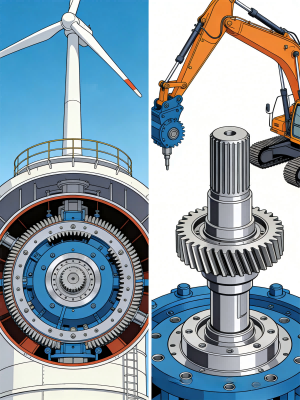
In the fields of wind power and heavy machinery, the rotary reducer plays a crucial role in torque transmission, posture adjustment, and heavy-load support. The output gear shaft, as the key transmission component at the end of the reducer, directly determines the reliability, load-bearing capacity, and service life of the entire machine. The output gear shaft produced by forging technology, with its advantages of high strength, high toughness, and resistance to fatigue, has become a standard component for scenarios such as wind turbine yaw and pitch control, and construction machinery rotation mechanisms. It is also an important guarantee for the stable operation of the equipment.
1. Forged Output Gear Shaft: More Suitable for Heavy Load Scenarios
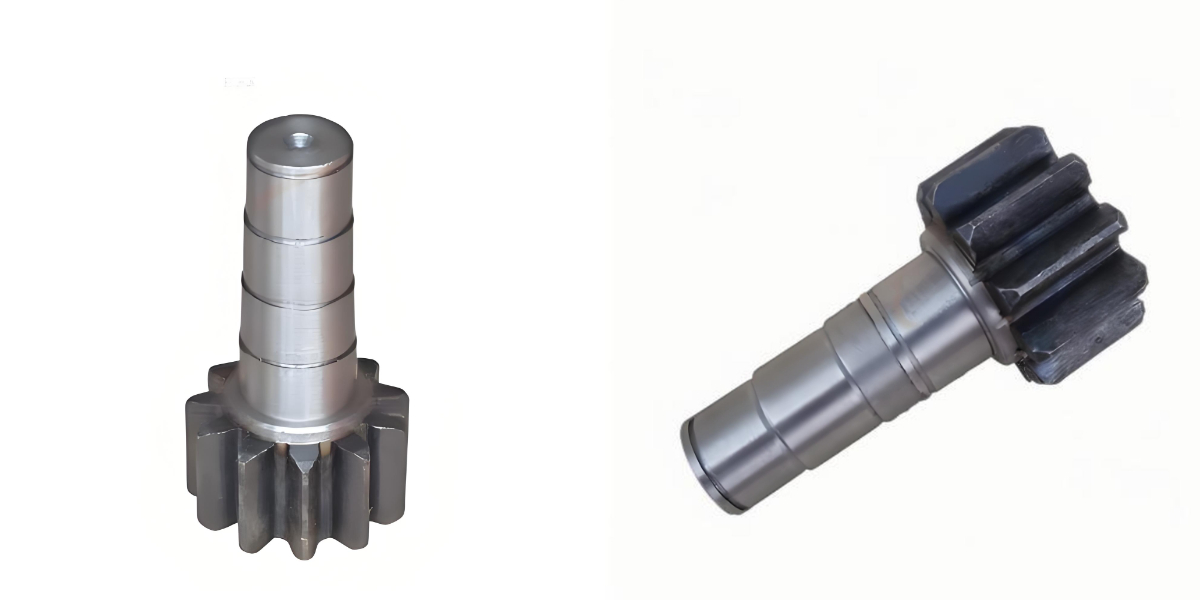
Ordinary cutting or casting output gear shafts often have issues such as loose structure, insufficient strength, and susceptibility to fracture, making them difficult to adapt to continuous heavy-load and impact-vibration conditions in wind power and construction machinery. The forged output gear shaft, through precise forging to optimize the metal grain structure, enhances the material density and mechanical properties, and has stronger bending, torsion, and impact resistance. It can work stably in high-load, high-speed, and harsh environments for a long time, effectively reducing the frequency of reducer failures and maintenance costs.
At the same time, the forging process can achieve near-net shape, combined with subsequent precision machining, ensuring the accuracy of tooth shape, shaft diameter tolerance, and assembly coaxiality, and perfectly matching the reducer housing, bearings, and gear sets, improving transmission efficiency and reducing noise and wear.
2. Core Application Scenarios: Wind Power + Construction Machinery, Output Gear Shaft Essential for Rotary Reducer
(1) Wind Power Field
Wind power equipment is often deployed in harsh environments such as highlands, coasts, and low temperatures. The yaw and pitch control rotary reducer needs to frequently start and stop and withstand alternating loads. The forged output gear shaft has excellent low-temperature toughness and fatigue life, can withstand strong wind impacts and long-term alternating stress, ensuring the precise and reliable actions of wind turbine yaw and pitch angle adjustment, and is an indispensable core forging part in the wind power transmission system.
(2) Construction Machinery Field
The rotation mechanisms of excavators, cranes, pump trucks, and rotary drilling rigs rely on the rotary reducer to achieve vehicle rotation and operation posture adjustment. The forged output gear shaft can withstand extremely large instantaneous torque and continuous heavy loads, is wear-resistant and impact-resistant, and is suitable for complex working conditions such as dust, vibration, and oil contamination on construction sites, significantly improving the stability and equipment attendance rate of construction machinery.
3. Key Selection Points for Forged Output Gear Shaft
Process Priority: Select mature processes such as precision die forging and free forging to ensure continuous grain structure and no internal defects, meeting the requirements of heavy-load transmission.
Material Matching to Conditions: Use alloy structural steel and combine heat treatment methods such as quenching and tempering, and carburizing and quenching to enhance hardness, wear resistance, and fatigue strength.
Precision Adaptation to Reducer: Tooth runout tolerance, shape tolerance, and surface roughness must comply with the assembly standards of the rotary reducer to ensure smooth meshing and efficient transmission.
Certification and Testing Complete: Possess non-destructive testing, mechanical property tests, and full-size inspection reports, meeting industry standards and customer customization requirements.
4. Conclusion
Although the output gear shaft is a basic transmission component, it is the "power output throat" of the rotary reducer. Especially in high-demand fields such as wind power and construction machinery, the performance improvement brought by the forging process directly affects the safety and efficiency of the entire machine. Choosing high-quality forged output gear shafts can not only enhance equipment reliability but also extend service life and reduce the total life cycle cost. It is a wise choice for heavy equipment manufacturers and maintenance personnel.
We focus on the research and production of customized forged output gear shafts, and can provide a one-stop solution from forging, heat treatment to precision machining for different models, torque, and working conditions of wind power and construction machinery rotary reducers, helping high-end equipment transmission systems to be more stable, more durable, and more efficient.