Why is the supporting shaft of the rotary reducer made of forged parts?
Why is the supporting shaft of the rotary reducer made of forged parts?
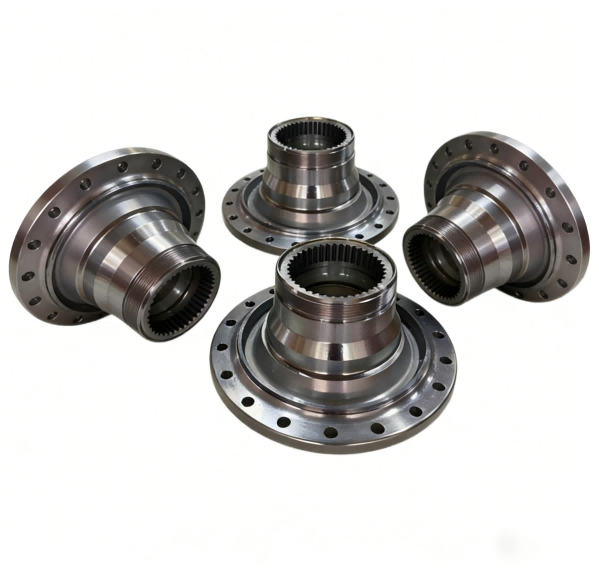
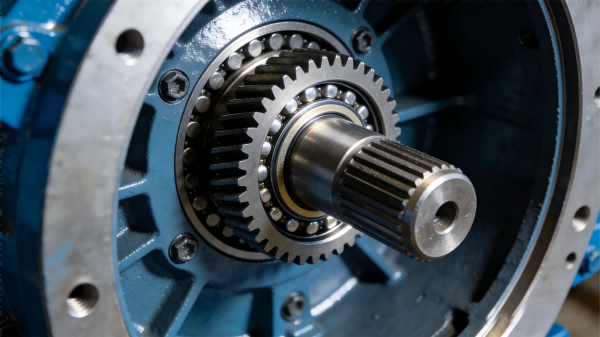
In the fields of wind power and heavy machinery, the rotary reducer is the core transmission device for achieving actions such as rotation, pitch adjustment, yaw rotation, and vehicle rotation. The support shaft, as a key load-bearing component inside the reducer, directly bears the load, transmits torque, and performs functions such as centering and guiding.
The support shaft manufactured by forging process, with its dense structure, high strength, fatigue resistance, and impact resistance, has become an indispensable core part in wind power and heavy machinery rotary reducers. It is also a key component for ensuring the long-term stable operation of the entire machine.
1. Forged support shaft: More suitable for heavy-duty reducers
The support shaft directly processed from ordinary steel bars has discontinuous metal flow lines and insufficient internal density. Under long-term alternating loads, it is prone to bending, fatigue cracks, and even fracture, making it difficult to meet the strict working conditions of wind power and heavy machinery.
However, the forged support shaft, after forging, has remarkable advantages:
The metal flow lines are continuous and complete, significantly enhancing tensile, bending, and torsional strength;
There are no defects such as porosity or gas holes inside, providing stronger bearing capacity and longer service life;
The heat treatment performance is stable, allowing for surface hardening and quenching to achieve hardness on the outside and toughness on the inside, making it wear-resistant and impact-resistant;
The dimensional accuracy is high, ensuring better compatibility with the bearings, gears, and housing of the rotary reducer.
For rotary reducers that require high reliability, the forged support shaft has become the industry standard.
2. Core application: Two main scenarios in wind power and heavy machinery
(1) Wind power sector
Wind power equipment operates in the wild, on highlands, and in coastal areas, and the yaw and pitch rotation rotary reducers need to perform frequent actions and withstand strong wind impacts.
The forged support shaft plays a crucial supporting role in the wind turbine rotary reducer, capable of:
Withstanding huge overturning moments and alternating loads;
Adapting to harsh environments such as low temperatures, sandstorms, and corrosion;
Ensuring precise and stable pitch and yaw actions, reducing the risk of turbine shutdown.
(2) Heavy machinery sector
The rotary mechanisms of excavators, cranes, pump trucks, and rotary drilling rigs rely heavily on the output power of the rotary reducer.
The forged support shaft in heavy machinery reducers:
Supports the weight of the upper part of the machine, withstanding impact and vibration;
Adapts to heavy loads, frequent start-stop, and dusty and oily environments;
Reduces wear and deformation, improving equipment availability and operational safety.
3. Selection points for forged support shafts (for rotary reducers)
When selecting support shafts for wind power and heavy machinery, the following points should be focused on:
Material and forging process: Prefer alloy steel forgings such as 42CrMo and 20CrMnTi, using die forging or free forging to ensure quality;
Heat treatment: Complete heat treatment including quenching and tempering, balancing strength, toughness, and wear resistance;
Accuracy and form tolerance: Strictly meet coaxiality, round runout, and roughness standards, matching the high-speed and heavy-load requirements of the reducer;
Non-destructive testing: UT/MT flaw detection must be qualified, eliminating internal hazards, and meeting industry standards for wind power and heavy machinery;
Customization capability: Can be customized according to the drawings of different brands of rotary reducers to achieve perfect replacement and upgrade.
4. Conclusion
Although the support shaft is small, it is the "supporting backbone" of the rotary reducer. In the wind power and heavy machinery industries, only high-quality forged support shafts can withstand long-term heavy loads, impacts, and harsh environments, ensuring the stable, safe, and efficient operation of the equipment.
We specialize in manufacturing various forged support shafts, covering products such as yaw and pitch rotation rotary reducers for wind power and rotary reducers for heavy machinery, delivering from forging, heat treatment to precision finishing, with stable quality and reliable delivery, and being long-term partners for equipment manufacturers and maintenance enterprises both at home and abroad.