What is the core of the chassis of new energy vehicles?
What is the core of the chassis of new energy vehicles?
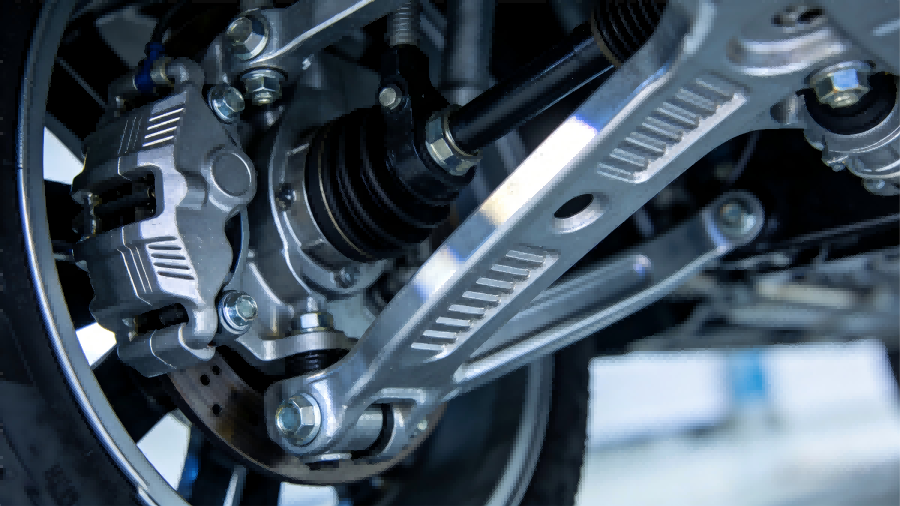
In today's era of rapid popularization of new energy vehicles, range, safety, and handling have become the top three most concerned indicators by automakers and users. What determines these three aspects is the three core structural components in the chassis and walking mechanism - forgings, bases, and wheels. Together, they form the "load-bearing skeleton + walking foundation" of electric vehicles, supporting the battery, motor, suspension, and the vehicle's load, and becoming the standard configuration for high-end new energy models.
I. Forgings: The "core strength" of structural components in new energy vehicles
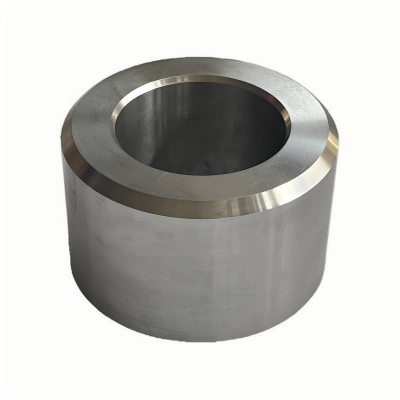
New energy vehicle batteries are heavy, have high torque, and have more stringent working conditions. Ordinary castings and stampings cannot meet long-term reliability, so forgings have become the preferred process for structural components.
1.The metal grain is denser, without pores or porosity, and has a much higher fatigue and impact resistance than castings.
2.Higher strength, lighter weight, and a 15%-30% reduction in weight at the same strength, directly improving range
3.High dimensional accuracy, good assembly consistency, suitable for the modularization and integration trend of the vehicle chassis
In new energy vehicles, forgings are widely used in chassis bases, subframes, steering joints, control arms, and wheels, serving as the core process for ensuring collision safety and long-term durability.
II. Base: The "load-bearing centering disc" of battery and chassis
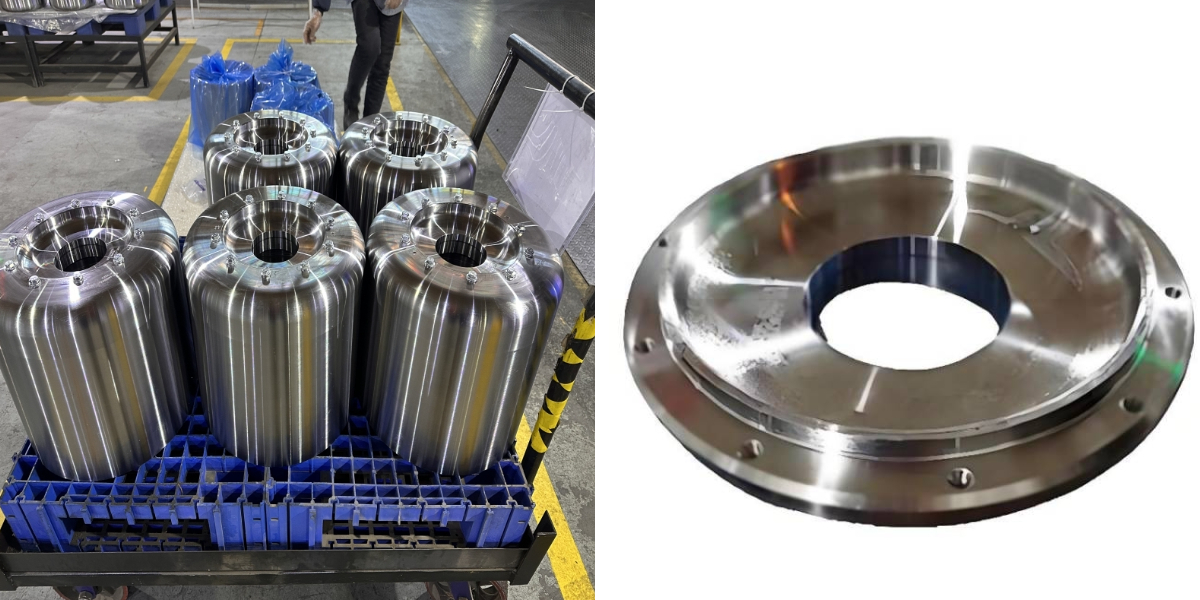
The base (chassis base / battery pack base / motor base) is the core load-bearing component of new energy vehicles, connecting the battery pack, electric drive system, and the body, and is irreplaceable.
1.It bears the concentrated load of the battery + electric drive system, resisting bumps, impacts, and lateral forces
2.Ensuring the installation accuracy and sealing reliability of the battery pack, indirectly affecting battery lifespan and safety
3.High-end models generally adopt integral forged bases, with greater rigidity, less deformation, and higher safety
Forged bases compared to welded or cast bases:
1.Continuous structure without welds, fatigue life increased by several times
2.Lighter weight, helping to achieve vehicle lightweighting
3.Stronger resistance to vibration and torsion, more stable at high speeds and on bumpy roads
III. Wheel hub: The "lightweighting gold component" of new energy vehicles
For electric vehicles, the wheel hub is not only an exterior component but also a core functional component affecting range, handling, and safety.
1.Each 1 kg reduction in the unsprung mass improves the range and handling effect by far more than the reduction in the body weight
2.Forged wheel hubs are 20%-30% lighter than cast wheel hubs, with high strength, good toughness, and less prone to cracking
3.Better heat dissipation, improving braking stability, suitable for high kinetic energy recovery and heavy-duty working conditions of electric vehicles
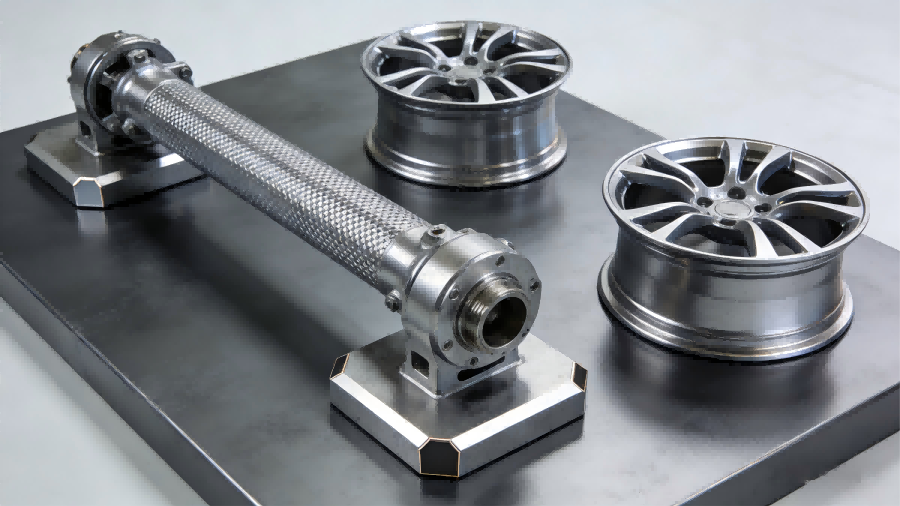
New energy vehicles generally prefer to use forged aluminum alloy wheel hubs, achieving the best balance in lightweighting, strength, and aesthetics.
IV. The synergy of the three components: How forgings + bases + wheel hubs empower new energy vehicles
1.Longer battery life and lightweight forged parts + forged base + forged wheels. The overall weight of the vehicle has been significantly reduced. Every 10kg reduction in weight can increase the battery life by approximately 3-8 kilometers. For high-end models, the overall range can be increased by 30-80 kilometers.
2.The safety is enhanced with the forged base that is resistant to impact and deformation; the forged wheel hub is less likely to crack upon impact; the high-strength forgings better protect the battery and the passenger compartment during collisions.
3.The more stable and lightweight hub reduces the sprung mass, making the suspension response faster, the steering more accurate, and the braking distance shorter.
4.The longer-lasting forged parts are resistant to fatigue and corrosion. The base and hub remain unchanged in shape and tightness during long-term use, significantly reducing maintenance costs.
V. Procurement and Selection: 3 Key Points to Avoid Mistakes
1.Choose the forging process with priority for die forging / precision forging. Reject low-strength castings. Especially, the base and the hub must be forged.
2.Material matching for electric vehicle operation conditions
Hub: 6061/6063 forged aluminum alloy, achieving lightweight and balance of strength
Base: High-strength alloy steel or forged aluminum alloy, combining rigidity with lightness
3.Inspection and testing report requirements: Provide material report, non-destructive testing (UT/MT), and mechanical performance report to ensure no internal defects.
Conclusion
The competition in the new energy vehicle sector has already reached the deep level of structural components and chassis manufacturing. The three-piece set of forgings, chassis, and wheels directly determine the range, safety level, handling quality and lifespan of an electric vehicle. Choosing high-quality forged structural components is like equipping a new energy vehicle with a lighter, stronger and more reliable "golden skeleton", achieving both range and safety in one step.