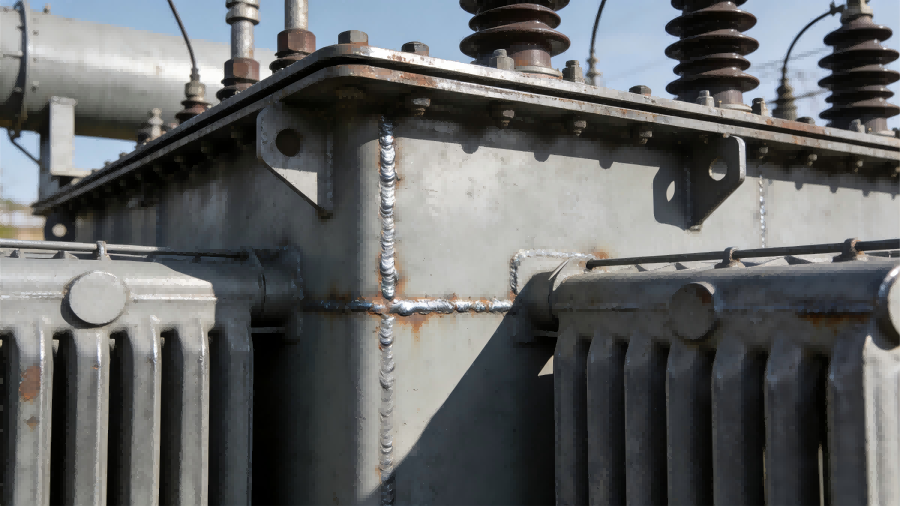
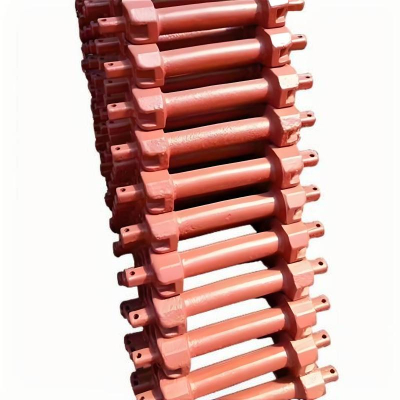
Why are high-quality welded components preferred for the outer casing of the transformer oil tank?
Why are high-quality welded components preferred for the outer casing of the transformer oil tank?
In scenarios such as power transmission, substation construction, and industrial power distribution, transformers serve as the core equipment for energy conversion. Their operational safety and durability are directly dependent on the core components - the transformer oil tank shell. The sealing, leak-proofing, structural load-bearing, and corrosion resistance of the oil tank shell are entirely determined by the quality and craftsmanship of the welding components. As the "protective armor" that encases the core components, the welding components not only form the basis of the oil tank shell but also are the core for resisting external impacts, preventing oil leakage, and ensuring the long-term operation of the equipment. Many power engineering purchasers and equipment operation teams often have questions: How should the welding components of the transformer oil tank shell be selected? What process requirements should high-quality welding components meet? This article breaks down the key role of the welding components in the transformer oil tank shell from three dimensions: core value, process standards, and selection guidelines.
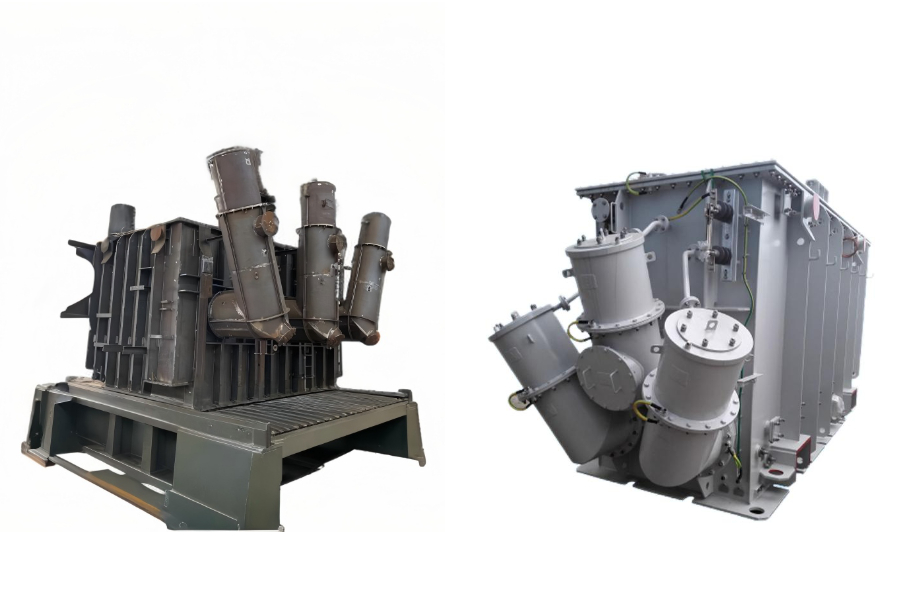
I. Welding Components: The "Safety Foundation" of the Transformer Oil Tank Shell
The core function of the transformer oil tank shell is to seal the insulating oil, protect the internal core components, and distribute the equipment weight. The welding components, as the core components of the shell, undertake three key responsibilities:
Sealing and leak-proofing core: The oil tank shell is formed by multiple welding components such as side plates, top plates, bottom plates, and flanges. The tightness of the weld seams directly determines whether there is an insulation oil leakage - high-quality welding components, after precise welding, can achieve zero leakage sealing, preventing the loss of insulation oil that leads to equipment short circuits or burns.
Structural load-bearing support: During transformer operation, the weight can reach several tons or even tens of tons. The welding components need to have sufficient structural strength to support the overall weight while resisting collisions and vibrations during transportation and installation, preventing the shell from deforming.
Corrosion resistance protection: Outdoor transformers need to withstand harsh environments such as wind, rain, high temperatures, and humidity changes. The material and welding process of the welding components directly affect the shell's corrosion resistance, avoiding rust and damage that would affect the equipment's lifespan.
Compared to ordinary stamping or casting components assembled separately, welding components are formed through integrated welding, with stronger structural continuity and no gap in assembly, significantly outperforming in sealing performance and load-bearing strength, making them the preferred solution for medium and large-sized transformer oil tank shells.
II. Core Processes and Quality Standards of Transformer Oil Tank Shell Welding Components
High-quality welding components are the prerequisite for the safety of the transformer oil tank shell. Their processes and quality must meet three core requirements:
1. Material selection: Adapt to different working conditions
General distribution transformers: Use Q235B carbon structural steel welding components, with moderate cost and balanced strength and toughness, suitable for indoor and outdoor regular environments;
High temperature / high humidity / coastal scenarios: Use 304/316 stainless steel welding components, resistant to corrosion and salt fog, avoiding rust in the weld seams due to humidity or salt;
Large-scale power transformers: Use Q355B low-alloy high-strength steel welding components, reducing weight by 20% while enhancing structural load-bearing and impact resistance.
2. Welding process: Ensure both sealing and strength standards
Core process: Use submerged arc welding, gas shielded welding, etc., for precise welding technology, with uniform weld formation, no pores, slag, cracks, etc., and a weld flaw detection rate of over 99.8%;
Key requirements: The weld seams must undergo water pressure testing (test pressure ≥ 1.5 times working pressure) for 30 minutes without leakage; at the same time, through ultrasonic testing (UT) and magnetic particle testing (MT), ensure there are no hidden defects inside.
Post-processing: The weld seams are treated with rust removal, grinding, and anti-corrosion coating spraying, and outdoor welding components are additionally treated with galvanization or passivation, with salt fog corrosion resistance exceeding 1000 hours.
3. Dimension accuracy: Adapt to modular assembly
The dimensional tolerance of the welded components should be controlled within ±2mm, and the flatness error of the flange welded components should be ≤0.5mm/m. This ensures precise connection with other components of the oil tank and avoids sealing failure caused by assembly gaps. At the same time, the surface roughness of the welded components should be Ra ≤ 6.3μm, reducing impurities adhering to the insulating oil and ensuring the insulation performance of the equipment.
III. Welding Component Selection Guide for Transformer Oil Tank Shell: 3 Key Points to Avoid Mistakes
1. Verify the Process and Inspection Reports
Priority choose suppliers with complete welding production lines, requiring them to provide weld flaw detection reports (UT/MT), water pressure test reports, and material analysis sheets to ensure that the welded components comply with industry standards such as GB/T 13448 "Transformer Oil Tank" and GB/T 985 "Basic Forms and Dimensions of Welding Grooves for Gas Welding, Hand Arc Welding and Gas Shielded Welding".
2. Select Materials and Processes Based on Operating Conditions
Indoor normal environment: Q235B welded components + ordinary anti-corrosion coating;
Outdoor / High-humidity environment: Q355B welded components + enhanced anti-corrosion coating;
Coastal / Chemical corrosion environment: 304/316 stainless steel welded components + passivation treatment;
Large transformers: low-alloy high-strength steel welded components + submerged arc welding process, enhancing structural stability.
3. Pay Attention to Manufacturer Capacity and Cases
Prioritize choosing suppliers with cooperation cases with State Grid, Southern Grid, and large power equipment enterprises (such as Terex Corporation, Xujin Group) to ensure that the welded components have undergone long-term operation verification. Also, confirm the manufacturer's customization capability to adjust the size and structure of the welded components according to the transformer model, capacity (10kV - 1000kV), and adapt to the requirements of different power equipment.
IV. Industry Trends: Upgrade of Welded Components to "Precision + Weather Resistance"
With the development of power equipment towards large-scale, intelligent, and outdoor applications, the welded components of transformer oil tank shells present two upgrade trends:
Process Precision: Use robot welding instead of manual work, with higher weld accuracy and stronger consistency, reducing human defects; simulate the welding process through digital twin technology to optimize the weld structure and improve sealing performance;
Material Weather Resistance: Develop special welding materials resistant to high and low temperatures and UV rays, suitable for extreme environments of -40℃ to 60℃, extending the service life of outdoor transformers;
Environmental Protection and Lightweight: Use high-strength lightweight alloy welded components to ensure strength while reducing the weight of the shell, reducing transportation and installation costs, and meeting the requirements of green power development.
Summary
The welded components of the transformer oil tank shell are the "core defense line" for equipment sealing, prevention of leakage, structural load-bearing, and corrosion resistance. Their quality directly determines the operation safety and service life of the transformer. In power equipment procurement, choosing welding components with qualified processes, suitable materials, and reliable quality is the key to avoiding equipment failures and reducing operation and maintenance costs.
If you need to know the adaptation schemes, material performance comparison tables for transformer oil tank shell welded components of different capacities, or obtain the welding component inspection standard manual, please feel free to contact us! We will provide you with high-quality welding component products and professional technical support in line with industry standards.