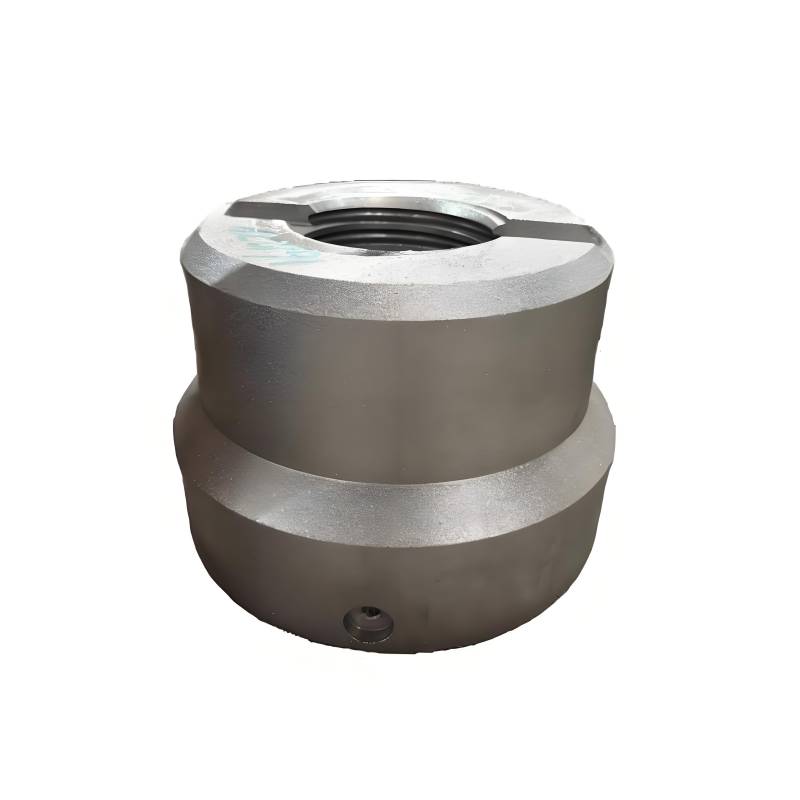
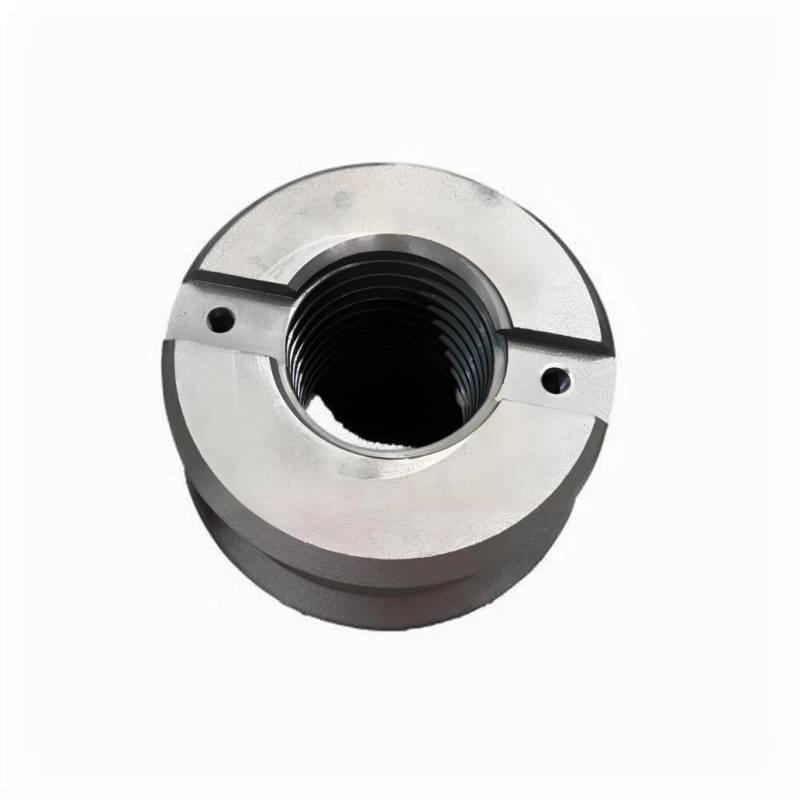
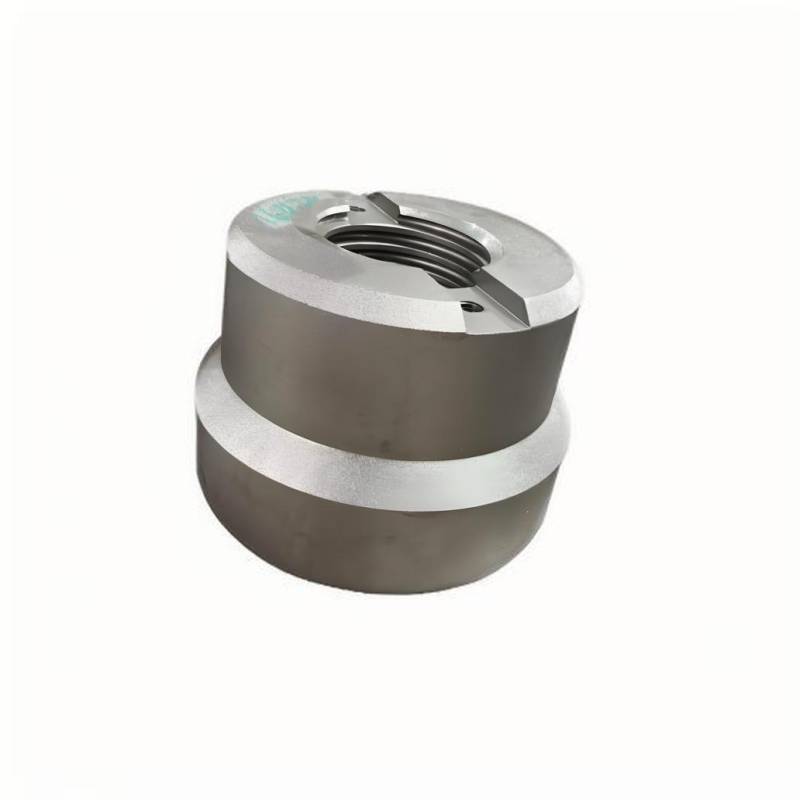
Components Of A Tower Crane
1.Material:45\35CrMo\42CrMo\30Cr2Ni2Mo
2.Machining accuracy:±0.1mm
3.Mold opening cycle:About 30days
4.Customization: We design and manufacture tailor-made products to your exact technical requirements.
5.Advantages:
Our strict process inspection ensures every product meets defect-free standards.
Streamlined one-stop processing delivers efficiency and cost savings.
From standard to custom, our wide product range solves all your needs.
6.Weight/Size:Material usage and end-product weight will be derived from the Client’s provided drawings.
Product Introduction:
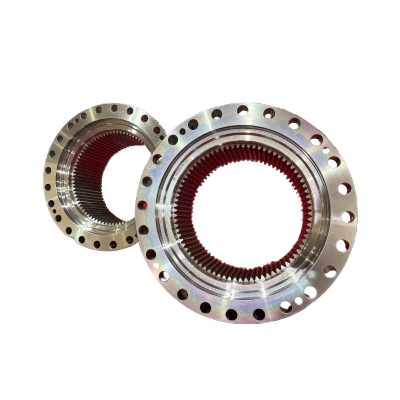
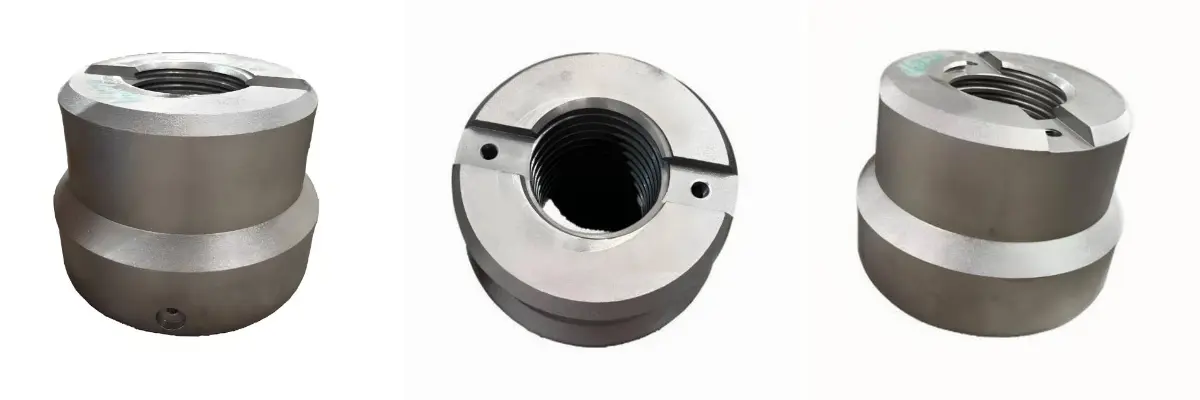
Though seemingly insignificant, the nut stands as a vital connecting component within the hook assembly. Compact in size, it shoulders the core responsibilities of securing critical joints and transferring loads—acting as an "invisible protector" that upholds the essential stability of the entire lifting system. On the hook assembly workstation, the nut’s primary function is to pair with bolts and threaded rods, fastening and joining key parts like pulley shafts, crossbeams, and hook bodies. This ensures no loosening occurs amid the vibrations and impacts inherent to lifting operations.
Product Advantages:
In the hook assembly, nuts are commonly used to invulnerable core elements such as the hook shaft, pulley shaft, and crossbeam. Through the preload generated with the aid of threaded connections, they tightly lock a number of elements together, stopping connection loosening triggered through vibration, impact, or swinging of heavy objects throughout lifting operations. The threaded sketch of the nuts approves for a sure vary of tightness adjustment, facilitating the adjustment of relative positions of elements throughout meeting or maintenance, making sure that all components of the hook block are in optimum cooperation. For factors that want to be often disassembled or replaced, the removability of nuts simplifies the upkeep method and improves the effectivity of tools inspection and repair.
Production Process:
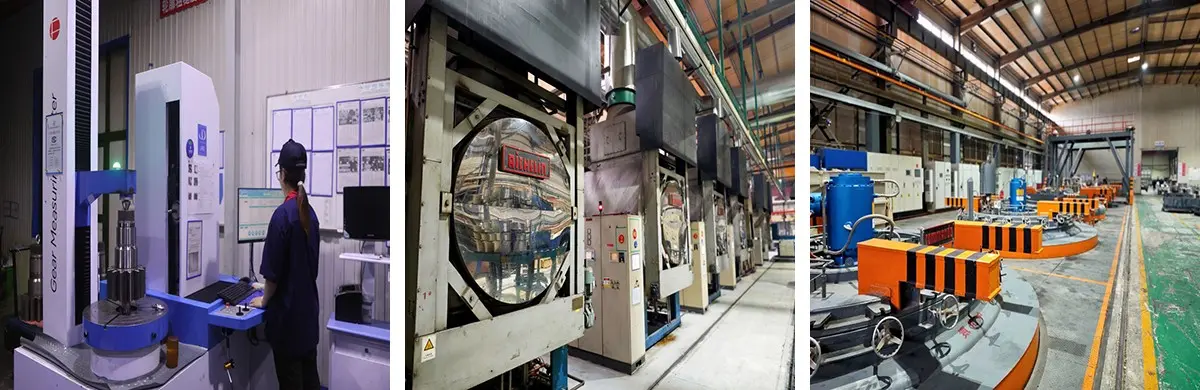
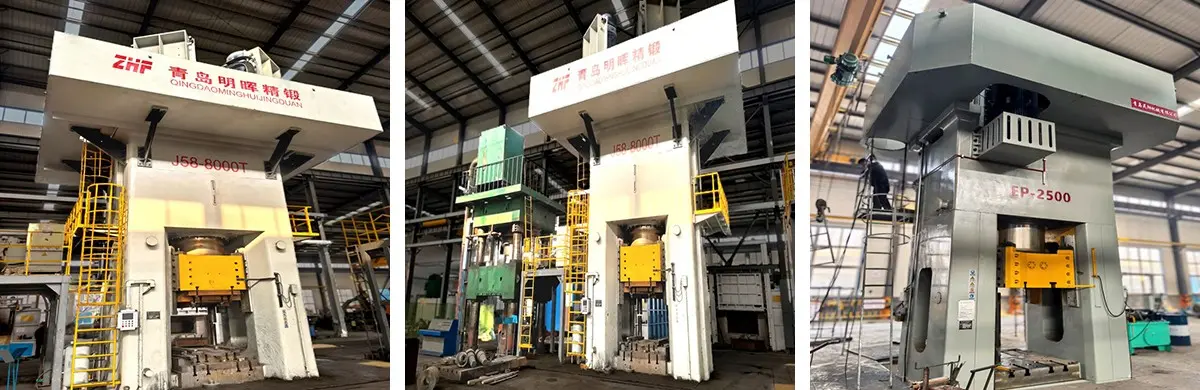
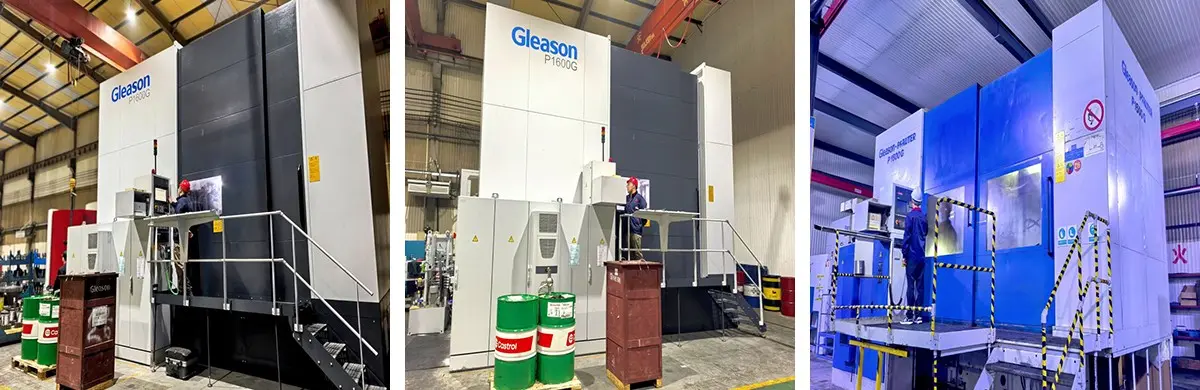
Raw material inspection → Cutting → Forging→ Normalizing → Rough turning →Quenched and tempered→MT+UT→ Finished turning→Milling groove→Drilling→Tapping → CMM/GMM → Shot peening→Coating →Cleaning packaging
Packaging And Shipping:
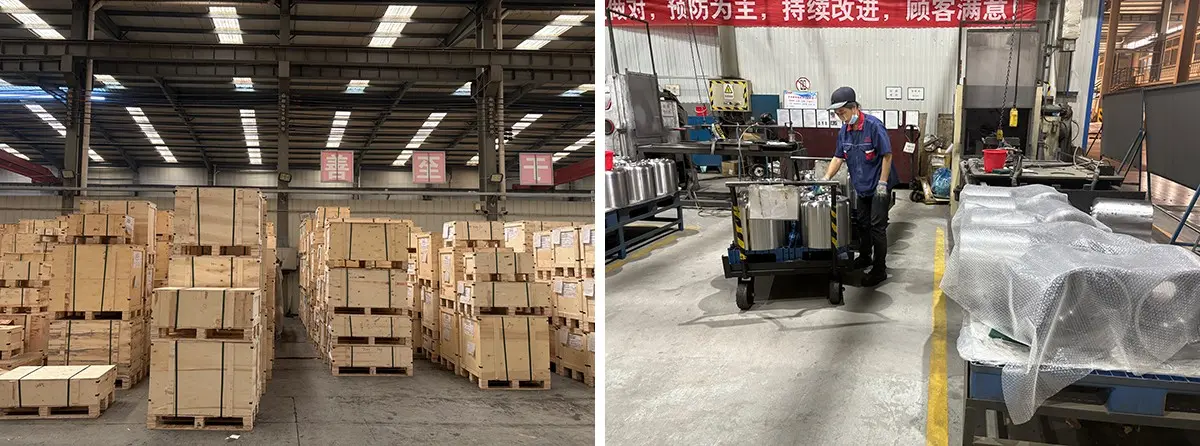
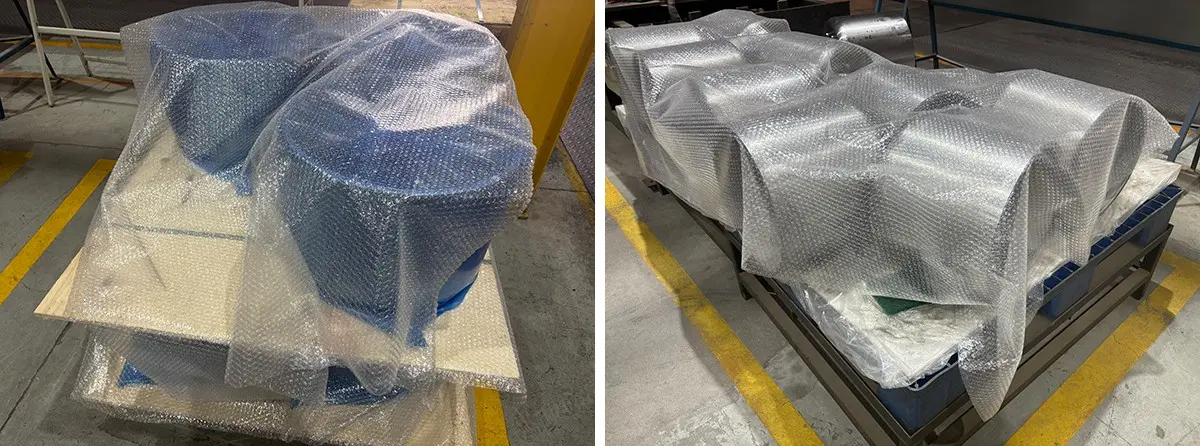
Our dedicated team follows a stringent quality control process for every single order. Prior to shipment, each product undergoes thorough cleaning, clear labeling, and comprehensive rust-proof treatment. We then conduct a rigorous final inspection to ensure impeccable quality standards are met. Finally, the products are professionally packaged and stored in our well-organized warehouse, keeping them fully prepared for prompt delivery at all times.
Company Strength:
Demonstrating its unwavering commitment to excellence, the company has successfully attained ISO 9001 Quality Management System, ISO 14001 Environmental Management System, and ISO 45001 Occupational Health and Safety Management System certifications—all accredited by the renowned TÜV Rheinland. Its exceptional management expertise has garnered widespread recognition from top-tier enterprises across the globe and domestic market alike, culminating in a collection of prestigious honors including "Outstanding Supplier" and "Best Quality Award" that underscore its industry-leading strength.