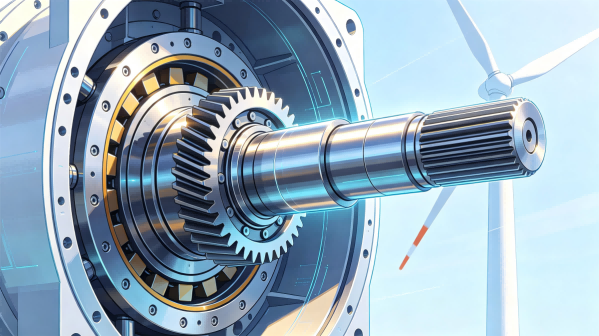
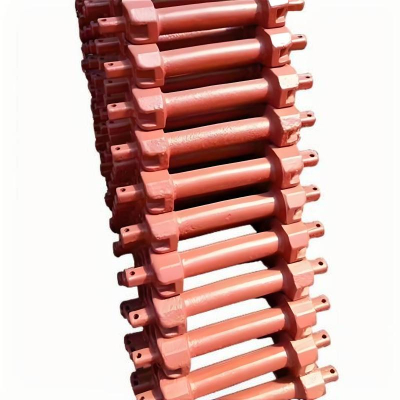
Forged Output Gear Shaft & Carrier Matching Solution for Stable Operation of Slewing Reducers Used in Wind Power and Construction Machinery
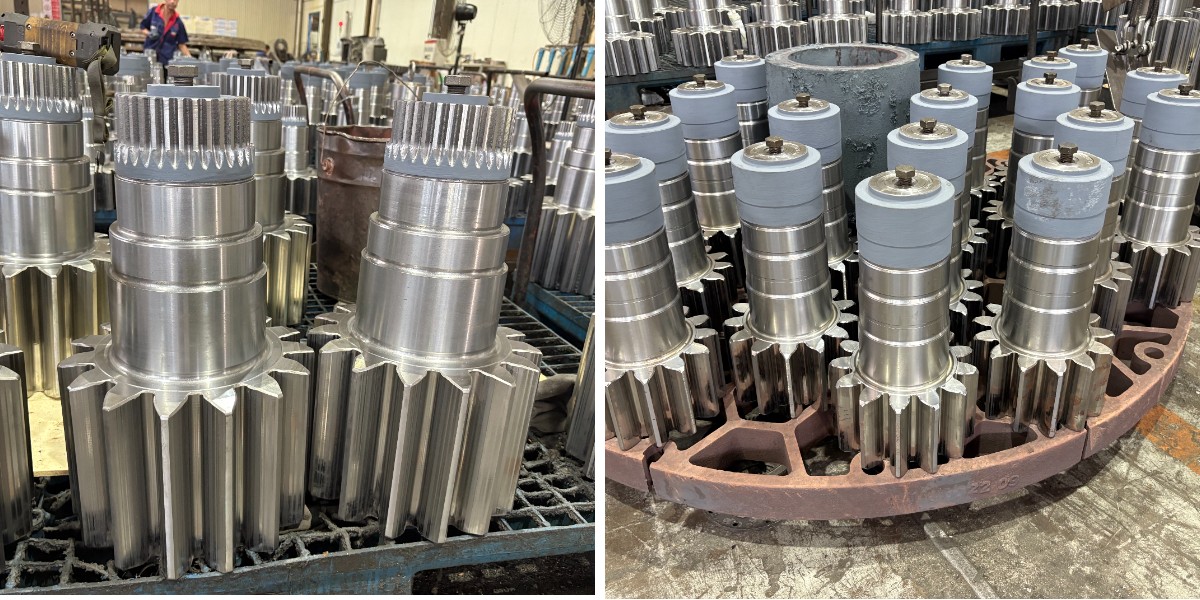
In wind power yaw and pitch systems, as well as in the transmission systems of construction machinery such as excavators and cranes, the slewing reducer is the core component responsible for power reversal, torque output, and slewing operations. The output gear shaft and planetary gear set, as the two major core load-bearing and transmission forging parts of the reducer, directly determine the bearing capacity, transmission accuracy, service life, and maintenance cost of the reducer. Compared to ordinary castings and machined profiles, the output gear shaft and planetary gear set made of integrated forging materials, with their complete metal flow lines, excellent torsional and compressive resistance, and resistance to fatigue and heavy loads, have become standard components for high-end slewing reducers in wind power and construction machinery.
I. Core structure of the slewing reducer: Explanation of the division of labor between the output gear shaft and the planetary gear set
In a standard planetary slewing reducer, the internal structure consists of a sun gear, planetary gears, planetary gear frame, output gear shaft, and housing, forming a closed transmission structure. The two components perform their respective tasks and work in coordination:
1. Planetary gear frame: The base for bearing the planetary gears, responsible for distributing the load, fixing the position of the planetary gears, ensuring the coaxiality of gear meshing, and buffering the alternating impact forces caused by the start and stop of the equipment. It is the load-bearing framework of the reducer;
2. Output gear shaft: The power output component at the end of the reducer, receiving the torque from the planetary gear set and transmitting the power outward, driving the slewing platform, wind turbine nacelle, and blades of the wind turbine to complete the rotational operation, and is the core forging part for power transmission.
These two components are exposed to heavy loads, frequent start-stop operations, and exposure to dust, water, and corrosion. Only forged parts made through the forging process can be adapted to harsh outdoor operating conditions and prevent shaft breakage, tooth surface cracking, and deformation of the planetary gear frame.
II. Why are forging output gear shafts and planetary gear sets preferred for wind power and construction machinery slewing reducers?
At present, low-end reducers in the market mostly use cast output gear shafts and cast planetary gear sets. They are cost-effective but have poor adaptability and cannot be adapted to the working conditions of large construction machinery and megawatt-level wind power equipment. The core advantages of forged parts are unparalleled:
1. Stronger mechanical properties, suitable for heavy-duty conditions
Using alloy steel such as 30CrMnTi, 42CrMo, and 20MnMo for hot forging, eliminating internal pores and shrinkage defects in the steel, the output gear shaft has high hardness on the tooth surface and meets the requirements for torsional strength of the shaft body, which can be adapted to large-tonnage excavators, crawler cranes, and megawatt-level wind turbine slewing reducers for ultra-large torque output, and when used with the forged planetary gear set, the overall load-bearing capacity can be increased by more than 35%.
2. Resistant to fatigue and wear, suitable for all-weather operations
Wind power equipment operates continuously 24 hours a day in the wild, and construction machinery sites have frequent start-stop operations and large impact loads. The metal structure of the forged part is dense and uniform, with tooth surfaces wear-resistant and shafts resistant to bending, compared to castings, the service life is increased by 2 times, significantly reducing the maintenance frequency of replacing the output gear shaft and planetary gear frame of the slewing reducer.
3. Controllable processing accuracy, lower transmission loss
The integrated forging blank + fine processing of the output gear shaft ensures that the tooth profile tolerance, shaft diameter coaxiality, and installation fit dimensions are controllable. When paired with high-precision forged planetary gear sets, the gear meshing clearance is uniform, the slewing reducer operates with low noise and low power transmission loss, and is more stable in operation.
III. Two core application scenarios of forging output gear shafts and planetary gear sets
Scenario 1: Sleighing reducer components for construction machinery
Widely compatible with a complete set of slewing reducers for excavators, truck cranes, rotary drilling machines, crawler loaders, and sand and stone transfer equipment. The engineering operation conditions are complex, with large load fluctuations and frequent sand and stone dust exposure. The customized forging output gear shafts and forged planetary gear sets can be adapted to various brands of domestic and imported slewing drive reducers, and are compatible with the main components of popular construction machinery such as Sany, XCMG, and Zongli Heavy Industry, as well as non-standard and standard series of reducer models.
Scenario 2: Sleighing reducer components for wind power
The wind power industry has the highest requirements for the safety and durability of components. The yaw reducer and pitch reducer of wind turbines, the exclusive forged output gear shafts for wind turbines, and the wind turbine-specific planetary gears all adopt anti-corrosion quenching and tempering heat treatment processes. They are resistant to high and low temperatures and outdoor rust, and are suitable for both onshore and offshore wind turbine units, as well as different power wind turbine reducers, meeting the 20-year long-term operation standards of wind turbines.
IV. Key Points for Selecting Output Gear Shaft & Planetary Frame Forgings
1. Material Selection: Light-load construction machinery uses Q355 and 45# forgings; heavy-load construction machinery and wind turbine reducers use 30CrMnTi and 42CrMo alloy forgings;
2. Matching Adaptation: The selection must match the module, number of teeth, and installation hole distance of the rotary reducer to ensure a perfect meshing of the output gear shaft and the planetary frame;
3. Process Selection: High-frequency heavy-duty conditions use forged parts by die forging, rejecting free forging and castings, ensuring structural stability;
4. Precision Requirements: The processing precision of wind turbine accessories is ±0.05mm, the precision of general construction machinery accessories is ±0.1mm, and custom processing tolerances are available as needed.
V. Manufacturer Strength: One-stop customized production of output gear shafts and planetary frames
Our factory has been deeply engaged in industrial forgings for over 30 years, specializing in the production of output gear shafts and forged planetary frames for all series of reducer transmission accessories. The entire series is compatible with various specifications of rotary reducers and focuses on the two core sectors of construction machinery and wind power.
✅ Production Capacity and Process: We have our own 5G intelligent forging production line, supporting integrated processing of die forging, heat treatment, and precision machining, and supporting non-standard customization based on drawings;
✅ Quality Inspection Guarantee: Equipped with Zeiss three-coordinate measuring instruments, phased array flaw detection equipment, and spectrometer analysis equipment, full-process flaw detection testing, with zero internal defects in finished products;
✅ Partner Customers: Long-term cooperation with domestic and foreign construction machinery manufacturers and wind turbine reducer manufacturers, with overseas export accounting for over 50%, supporting export anti-corrosion packaging and customized customs declaration materials;
✅ Delivery Services: Standard forged parts are quickly delivered, non-standard output gear shafts and planetary frame forgings have controllable mold development cycles, and the entire process follows the order delivery process.
VI. Conclusion
The operational stability of the rotary reducer is fundamentally dependent on the material and processing of the output gear shaft and the planetary frame. The preferred material is alloy forged parts, which is the most optimal solution for reducing costs in construction machinery and for the long-term maintenance of wind power equipment. Whether it is replacing components for standard reducers or providing non-standard matching for wind power and construction machinery complete units, you can contact our factory to obtain the exclusive matching solutions and quotations for the forged output gear shaft and planetary frame of the rotary reducer.