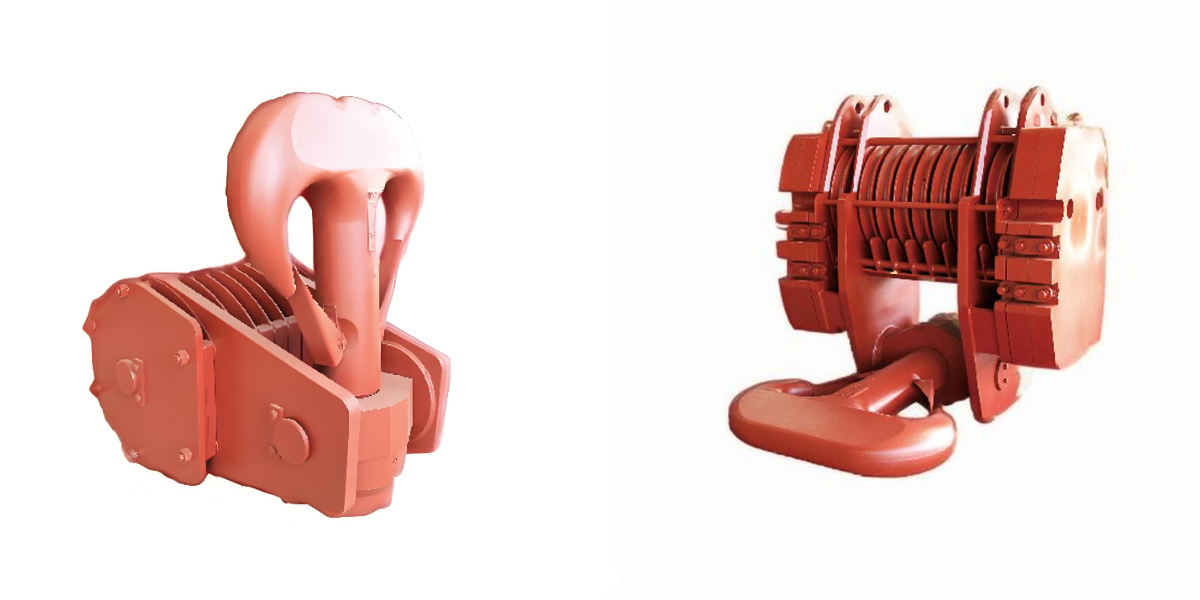
Crane Hook Assembly Having A Hook Weight Arrangement: The Core Of Lifting Empowered By Forging Process
Crane hook assembly having a hook weight arrangement: The core of lifting empowered by forging process
In fields such as lifting and transportation, port handling, and industrial manufacturing, the crane hook assembly is the core component that directly bears the load. The hook assembly with a hook load balancing device, with its advantages of balancing the load and enhancing operational stability, has become the preferred choice for heavy-load and high-precision lifting scenarios. Among them, the forging process, as the core manufacturing technology of the hook assembly, directly determines its structural strength, toughness and service life, and is a key support for ensuring the safety and efficiency of lifting operations. This article will comprehensively analyze the hook assembly of cranes with hook-load devices, and deeply explore the enabling value of forging processes, core structures, application scenarios, and key points for selection and maintenance.
I. Core Definition: What is the hook assembly of a crane with a hook load device?
1. Basic concepts
The crane hook assembly with a hook weight device is a lifting core component that adds a hook weight balance part on the basis of the traditional crane hook assembly. Its core function is to balance the weight of the hook itself and the weight of part of the load through the gravity compensation of the hook load device, reduce the force deviation of the lifting equipment, and improve the accuracy and stability of the hoisting operation.
2. Core structure composition
Hook body: The core load-bearing component is almost all processed through forging technology, and the material is mostly high-strength alloy structural steel (such as 20CrMnTi, 35CrMo, etc.), ensuring sufficient strength and impact resistance.
The counterweight device: It includes a counterweight block, an adjusting mechanism, and a connecting bracket. The counterweight can be adjusted according to the load type and working scenario to achieve load balancing.
Connecting parts and bearings: including lifting rings, crossbeams, rolling bearings, etc., need to be precisely matched with the forged hook body to ensure rotational flexibility and connection reliability.
Safety protection devices: such as anti-disengagement devices, overload protectors, crack detection sensors, etc., combined with the high-strength characteristics of forged hooks, form a dual safety barrier.
Ii. Forging Process: the performance cornerstone of the hook assembly with a hook-bearing device
Forging is the core manufacturing process of crane hook assembly. By applying high-pressure external force to the metal billet, it undergoes plastic deformation in the die to form a structural shape that meets the design requirements. Compared with casting, cutting and other processes, forging brings three core advantages to the hook assembly:
1. Enhance structural strength and toughness to adapt to heavy-load scenarios
During the forging process, the metal grains are refined and densified due to pressure, eliminating defects such as porosity, porosity and segregation in the raw materials, and significantly enhancing the tensile strength, yield strength and impact toughness of the hook body. The hook assembly with a hook weight device needs to simultaneously bear the combined force of the load and the hook weight. The high strength characteristics endowed by the forging process can ensure that it does not deform or break under hundreds of tons of heavy loads, meeting the heavy-load operation requirements of ports, steel mills, etc.
2. Ensure material uniformity and enhance structural stability
Forging process can make the microstructure distribution of metal materials more uniform and the stress distribution more reasonable, avoiding the local weakness problem of castings caused by uneven material. During the rotation and hoisting process of the hook assembly with a hook-load device, the force direction constantly changes. The uniform material structure can ensure that the connection and load-bearing parts between the hook body and the hook-load device are evenly stressed, reducing fatigue damage and extending the service life.
3. It is compatible with complex structural designs and meets the integration requirements of hook and counterweight devices
The structure of the crane hook assembly with the hook weight device is more complex than that of the traditional hook, and the installation interface, adjustment groove and other structures of the hook weight device need to be reserved on the hook body. Forging technology can precisely form complex structural details through custom molds without the need for extensive subsequent cutting processing. This not only ensures structural accuracy but also reduces material waste. At the same time, it makes the connection between the hook weight device and the hook body tighter, enhancing overall stability.
Iii. Core Functions of Hook-mounted Heavy Lifting Devices: Why Have They Become a Must-have in high-end Lifting Scenarios?
1. Balance the load and the self-weight of the hook to enhance the accuracy of hoisting
The traditional hook is mainly due to its relatively heavy weight. When performing light loads or high-precision hoisting, problems such as "hook sagging" and "load deviation" are prone to occur. The crane hook assembly with a hook weight device can adjust the weight of the counterweight block to offset part of the deviation between the self-weight of the hook and the gravity of the load, making the force on the lifting equipment more balanced and the load less likely to shake during hoisting. It is especially suitable for scenarios with high precision requirements such as the installation of precision equipment and container positioning.
2. Reduce the wear and tear of lifting equipment and extend the service life of the entire machine
The balancing function of the hooking device can reduce the force load on components such as the crane boom, steel wire rope and winch, and avoid local overload caused by unbalanced load. In combination with the high-strength characteristics of the forged hook body, the force distribution of the entire lifting system is more reasonable, reducing the speed of component wear and fatigue aging, and lowering the overall maintenance cost and failure risk of the machine.
3. Optimize operation efficiency and adapt to complex working conditions
The crane hook assembly with a hook weight device can quickly adjust the hook weight according to different load weights without the need for frequent hook replacement or adjustment of lifting parameters. It is particularly suitable for continuous operations with multiple batches and different weight loads (such as container handling in ports and billet transfer in steel mills). Meanwhile, the balanced load is easier to control, shortening the hoisting and positioning time and improving the overall operation efficiency.
Iv. Typical Application Scenarios: The adaptation fields of forging processes and hooking and weighing devices
The crane hook assembly with a hook weight device is widely used in scenarios with strict requirements for lifting safety, accuracy and efficiency due to its combination of high strength (forged empowerment) and high stability (hook weight device empowerment).
1. Port and shipping sector
In scenarios such as container handling and bulk cargo (coal, ore) hoisting, hundreds of tons of heavy loads need to be frequently dealt with, and the working environment is complex (sea breeze, vibration). The hook body made by forging process can resist heavy load impact and corrosion, while the hook load device balances the load offset caused by the shaking of the hull, ensuring a stable and safe hoisting process.
2. Steel and metallurgy fields
The hoisting of steel billets, steel coils and blast furnace equipment in steel mills involves heavy loads and high temperatures, which impose extremely high requirements on the high-temperature resistance and strength of the hook assembly. The hook body forged from heat-resistant alloy, combined with the balancing function of the hook weight device, can stably bear the load in high-temperature environments and avoid the risk of billet detachment caused by uneven load.
3. Architecture and Bridge Engineering
The hoisting of large bridge components, tower crane equipment and precast concrete components requires a balance between heavy load and precise positioning. The hook assembly of the crane with a hook weight device ensures structural strength through forging process. Meanwhile, the precise connection of components is achieved by adjusting the hook weight, thereby enhancing the efficiency and quality of the construction project.
4. Heavy machinery manufacturing field
The assembly and transportation of machine tools, generator sets and heavy equipment, with precise loads and uneven weight distribution. The hook weighing device can specifically balance the load deviation, and the forged hook body ensures that it does not deform under complex forces, protecting the precision equipment from damage.
V. Selection and Maintenance: Focusing on forging quality to ensure long-term reliable operation
1. Key points for selection
Give priority to forging process products: Confirm whether the hook body of crane hook assembly is integrally forged, and check the material proof (such as alloy composition, forging process report), and avoid choosing cast or welded spliced hooks (with insufficient strength and prone to breakage).
Match the hook weight adjustment range: Based on the commonly used load weight, select a product with adjustable hook weight to ensure that the adjustment range covers the actual operation requirements and avoid insufficient counterweight or overload.
Check the integrity of safety devices: Ensure that anti-disengagement devices, overload protectors, etc. are complete and effective, and that they are firmly connected to the forged hook body without loosening or deformation.
2. Key matters for daily maintenance
Regularly inspect the condition of forged components: Focus on checking whether there are cracks, wear or deformation in the hook body (forged part), especially pay attention to stress concentration areas such as the hook neck and hook tip. Stop using it immediately if any problems are found (cracks in forged parts will spread rapidly, causing safety accidents).
Maintain the counterweight device and connecting parts: Clean the oil stains and impurities on the counterweight blocks and adjusting mechanisms, check the wear of the connecting bolts and bearings, and lubricate them in time to ensure flexible adjustment and reliable connection.
Regular calibration and testing: Internal defects of forged hooks are identified through non-destructive testing (such as magnetic particle testing and ultrasonic testing), and the overload protector and hook weight balance accuracy are calibrated regularly to prevent performance degradation due to component aging.
Summary
The crane hook assembly with a hook load device is a core component in heavy-load and high-precision lifting scenarios, and the forging process provides indispensable strength and toughness support for it. The combination of the two not only addresses the pain points of unbalanced load and insufficient precision in traditional hook assemblies, but also ensures the long-term safety and stability of lifting operations through the material optimization of forging processes.
Under the trend of industrial lifting transforming towards high efficiency, precision and safety, crane hook assemblies with hook-load devices will be more widely applied in various high-end fields. Meanwhile, the continuous upgrading of forging processes (such as precision forging and new material forging) will further enhance their performance limits. During the selection and usage process, focusing on forging quality, adapting to the hook weight requirements, and conducting regular maintenance are the keys to bringing out its core value and also the core prerequisites for ensuring the safety and efficiency of lifting operations.