Optimal choice for excavator forgings: How does forging the seat ring adapt to the heavy-duty working conditions of construction machinery?
Optimal choice for excavator forgings: How does forging the seat ring adapt to the heavy-duty working conditions of construction machinery?
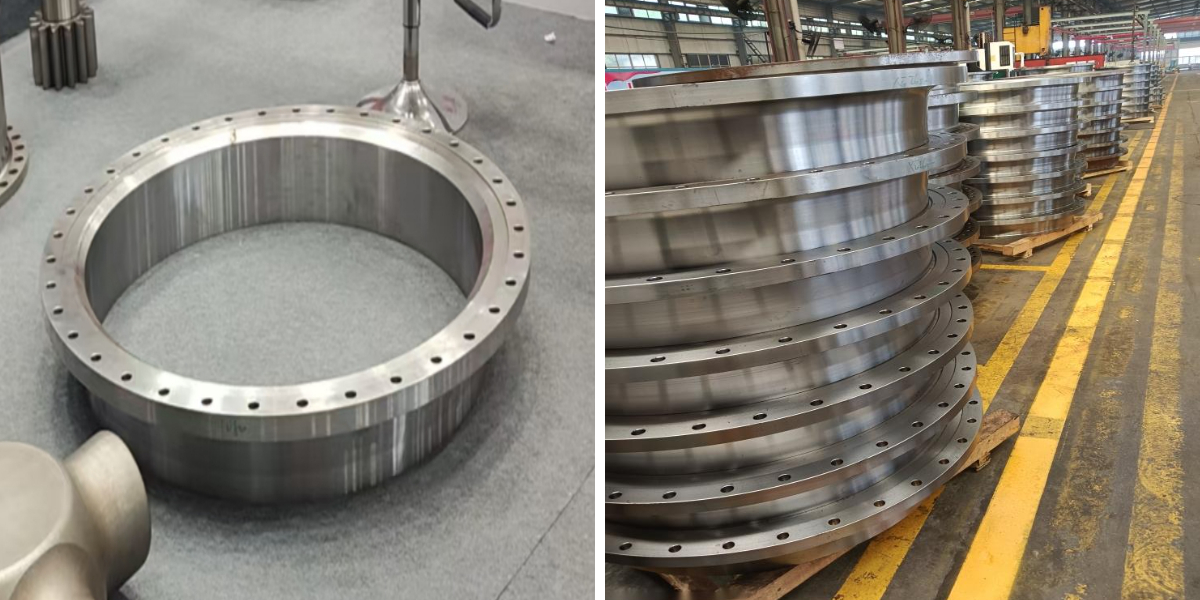
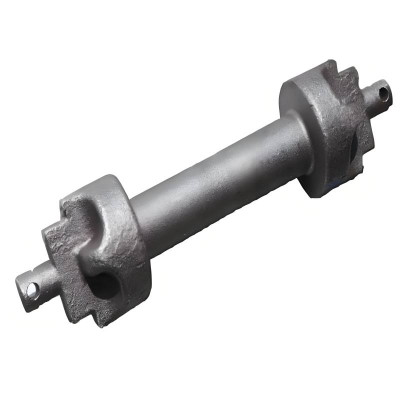
In the field of construction machinery, excavators are the core operating equipment, and their reliability directly determines the construction efficiency and project progress. The seat ring, as a key load-bearing component of the excavator's rotation mechanism and hydraulic system, belongs to one of the core excavator forgings and is responsible for supporting the machine body, transmitting heavy loads, and buffering vibrations. Forging the seat ring using the forging process, with its advantages of high strength, high wear resistance, and resistance to deformation, becomes the core guarantee for the stable operation of construction machinery (especially excavators) in complex working conditions, and is also the mainstream choice for high-end excavator forgings.
1. Forging process: Key to performance upgrade of excavator forging seat rings
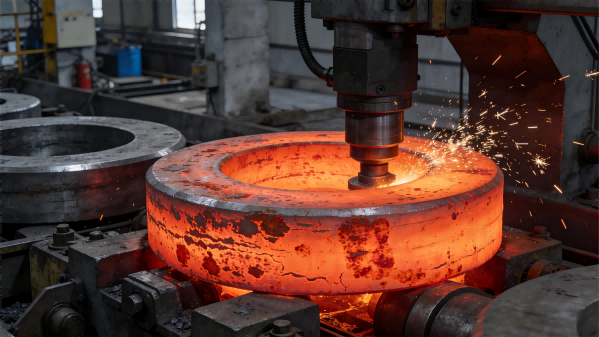
Commonly cast or machined seat rings are prone to issues such as grain porosity, internal air holes, and insufficient wear resistance, making them difficult to adapt to the heavy loads, high-frequency friction, and complex road conditions in mining and construction sites. However, forging seat rings, through high-temperature forging to reshape the metal grain structure, achieve three major performance leaps:
· Higher strength: After forging, the material density increases, and the torsional and compressive resistance far exceed those of ordinary processes, capable of withstanding the extremely large loads during the excavator's rotation, avoiding breakage and deformation;
· Stronger wear resistance: Through forging and subsequent heat treatment (such as quenching and tempering), the surface hardness can reach HRC50 or above, increasing wear resistance by 2-3 times, reducing wear and loss during excavator operations;
· Higher stability: The near-net-shape forming process combined with precise machining ensures precise dimensional tolerance, perfectly matching the excavator's swivel support, bearings, etc., reducing transmission noise and failure probability. As a core excavator forging, the forging process upgrades the seat ring from a "basic component" to a "heavy-duty durable part", fully meeting the strict reliability requirements of construction machinery.
2. Core application scenarios: Forging seat rings suitable for a full range of construction machinery excavators
As a key excavator forging, forging seat rings are applied throughout the core categories of construction machinery, especially indispensable in the excavator field:
· Small and medium-sized excavators (1-20 tons): Suitable for municipal construction, farmland renovation, etc., the seat ring needs to meet frequent steering, light to moderate load requirements, and the forging process ensures its flexibility and durability;
· Large excavators (20-80 tons): Used for mining and large-scale infrastructure, they need to withstand continuous heavy loads and impact loads, and the high-strength anti-fatigue property of the forged seat ring can prevent failure in the middle;
· Special excavators (wetland / mining excavators): Adapted to muddy, dusty, and highly corrosive working conditions, the forged seat ring, after anti-corrosion treatment, has stronger environmental adaptability and extends service life;
· Other construction machinery: In addition to excavators, it can also be adapted to the swivel mechanisms of cranes, loaders, rotary drilling rigs, etc., as a universal forging load-bearing component, ensuring the stable operation of the entire machine.
3. Selection criteria for excavator forging (forged seat rings) components
When choosing high-quality forged seat rings, it is necessary to focus on four dimensions based on the working conditions of construction machinery and excavator models:
· Process and material: Prioritize mature forging processes such as die forging and ring rolling, and select high-strength alloy steels such as 42CrMo and 20CrMnTi, combined with professional heat treatment, balancing strength and toughness;
· Dimensional accuracy: Must comply with the original factory installation standards, with inner diameter, outer diameter, and thickness tolerances controlled within ±0.05mm, ensuring seamless connection with the swivel support, shaft system;
· Wear resistance and corrosion resistance: The surface needs to undergo strengthening treatments such as quenching and nitriding, increasing hardness and wear resistance; for harsh working conditions, corrosion-resistant treatments such as galvanization and spraying can be selected to extend service life;
· Inspection and certification: Need to conduct non-destructive testing (ultrasonic, magnetic particle inspection) to check for internal defects, possess relevant quality certifications for the construction machinery industry, and comply with GB/T, ISO, etc. standards to ensure safety in use.
4. Industry Trends: The Forged Seat Rings Are Developing towards "Customization + Lightweighting"
As construction machinery upgrades towards higher-end and intelligentization, the forged parts for excavators also undergo technological innovations. The forged seat rings exhibit two major trends:
· Customization Adaptation: For different brands and models of excavators (such as Sany, XCMG, Caterpillar, etc.), provide personalized size and load adaptation solutions to meet non-standard working conditions;
· Lightweight Design: Utilize high-strength lightweight alloy materials and optimized structural design to reduce weight while ensuring the load-bearing capacity, thereby lowering the energy consumption and body load of the excavator;
· Green Manufacturing: Adopt environmentally friendly forging processes and waste heat recovery technology to reduce energy consumption and pollutant emissions, in line with the green development policies of the construction machinery industry.
5. Conclusion
In construction machinery operations, the quality of excavator forgings directly determines the equipment's availability rate and construction efficiency. The forged seat rings, as the core load-bearing components, their wear resistance, strength, and stability are crucial for excavators to handle heavy loads and complex working conditions. Choosing high-quality forged seat rings not only reduces the frequency of failures and maintenance costs, but also enhances construction safety and project progress. It is the optimal choice for construction machinery manufacturers and maintenance providers.
We focus on the research and production of high-end excavator forgings such as forged seat rings, with a mature forging production line, precise processing equipment, and strict quality inspection system. We can provide customized solutions based on the requirements of different construction machinery and excavator models. All products have passed industry standards certification, ensuring reliable quality. If you need to know product parameters, customization plans, or obtain samples, please feel free to contact us at any time!