Selection Guide for Core Components of Coal Mine Machinery: How Do Forgings, Pin Rails, Cylinder Bottoms, and Dumbbell Pins Ensure Efficient Underground Operations
Selection Guide for Core Components of Coal Mine Machinery: How Do Forgings, Pin Rails, Cylinder Bottoms, and Dumbbell Pins Ensure Efficient Underground Operations
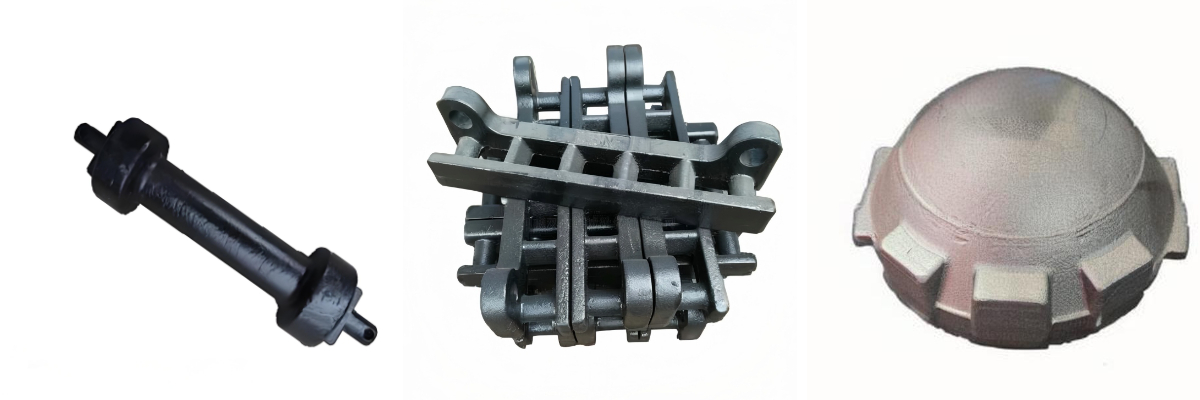
In the complex working conditions of coal mining, underground equipment needs to withstand high-intensity impacts, high-load rolling and high-corrosion attacks. The quality of its core components directly determines the mining efficiency and operation safety. Forgings, as the "strength cornerstone" of coal mining machinery, have given rise to key components such as pin rails, cylinder bottoms, and dumbbell pins, which are widely used in core equipment like scraper conveyors, hydraulic supports, and coal mining machines. Many practitioners are puzzled: What are the core functions of these four types of components? Why must high-quality forgings be selected for manufacturing? How do they work together to ensure the long-term and stable operation of coal mining machinery? This article will comprehensively break it down for you from three major dimensions: functional value, process requirements, and key points for selection.
I. Four Core Components: The "Main Force of Underground Operations" of Coal Mining Machinery
Forgings: The "source of quality" for all core components
Forgings are components formed by high-temperature forging processes from metal billets. Compared with castings and stamping parts, their internal grains are refined, the structure is dense, and there are no defects such as pores and sand holes. Their tensile strength and fatigue resistance are increased by more than 50%. In the field of coal mining machinery, pin rails, cylinder bottoms, and dumbbell pins are all made from high-quality alloy structural steel through forging processes, which is the core prerequisite for ensuring the impact resistance and wear resistance of components. It can be said that without high-quality forgings, there would be no core components of coal mining machinery that can adapt to the harsh working conditions underground.
2. Pin rails: The "power transmission lifeline" of scraper conveyors
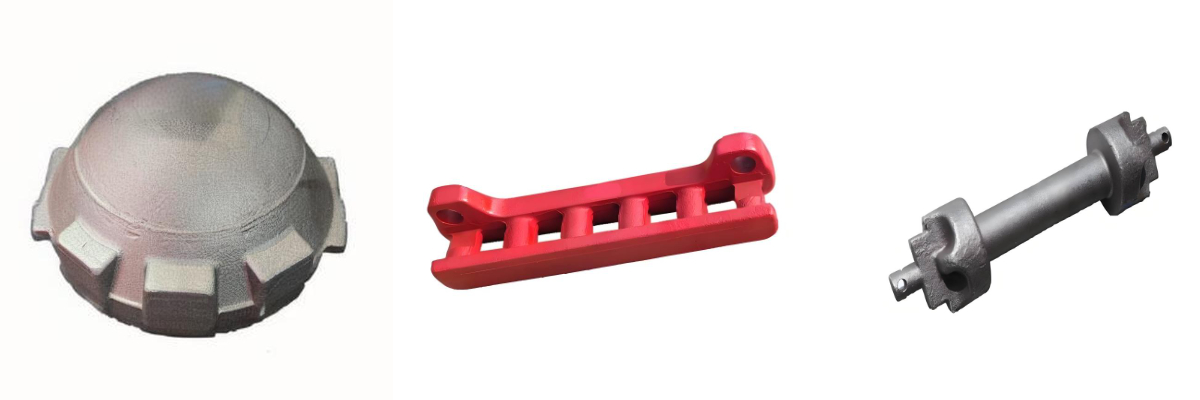
The pin rail is a key traveling component of the scraper conveyor and also the "running track" of the coal mining machine. It is mainly made of forgings. It transmits power and guides the coal shearer to move along the working face by meshing with the traction wheel of the coal shearer. In underground operations, the pin rails need to bear the self-weight of the coal shearer, the cutting resistance and frequent impacts. If inferior forgings are used for manufacturing, it is very likely that faults such as tooth surface spalling and fracture will occur, directly causing the conveyor to stop and affecting the progress of the entire coal mining face. The tooth surface hardness of high-quality forged pin rails can reach HRC58-62, which can maintain accuracy during long-term friction and ensure efficient and stable power transmission.
3. Cylinder bottom: The "Load-bearing protection core" of the hydraulic support
The bottom of the cylinder is the end pressure-bearing component between the hydraulic support column and the jack, and it is a typical thick-walled forging. As the "support guards" in underground coal mines, hydraulic supports rely on the extension and retraction of the columns to support the roof, while the bottom of the cylinder directly bears the huge pressure from the roof and the internal thrust of the hydraulic oil. The quality of the hydraulic support directly affects its support safety - poor-quality cylinder bottoms may undergo plastic deformation or rupture due to insufficient strength, leading to safety accidents such as roof collapse. High-quality forged cylinder bottoms, through reasonable structural design and heat treatment processes, can withstand loads of up to hundreds of tons, providing a solid safety defense line for underground workers.
4. Dumbbell pin: The "chain link connection hub" of the scraper conveyor
Dumbbell pins are the connecting components between the middle troughs of the scraper conveyor and are also made of high-strength forgings. Its core function is to closely connect multiple middle troughs to ensure the smooth operation of the scraper chain and absorb the vibration and shock during the operation of the conveyor. In underground operations, dumbbell pins need to withstand repeated tensile and shearing forces. If the material of the forging does not meet the standards or there are defects in the forging process, they are very likely to break, causing the scraper conveyor to disconnect and shut down. The shear strength of high-quality forged dumbbell pins far exceeds industry standards, enabling them to operate stably for a long time under high-load conditions and reducing the frequency of underground maintenance.
Ii. Forging Process: The "Core Code" for Adapting the Four Major Components to Underground Working Conditions
Underground coal mines are subject to the triple tests of high humidity, high dust and high impact. The pin rails, cylinder bottoms and dumbbell pins must rely on precision forging technology to meet the strict performance requirements. Its advantages are mainly reflected in three aspects:
Strengthen structural strength to withstand extreme impacts
Forging process, through repeated forging and pressing of metal billets, eliminates internal porosity and other defects, distributes metal fibers along the force direction of the component, and significantly enhances the impact resistance and fatigue resistance. For instance, after the teeth of the pin rail are forged and quenched, they can withstand the high-frequency meshing impact of the traction wheel of the coal mining machine. After the pressure-bearing surface at the bottom of the cylinder is forged into shape, it can evenly distribute the pressure on the top plate and avoid cracking caused by local stress concentration.
Enhance wear resistance and corrosion resistance to extend service life
High-quality forgings can further enhance their surface hardness and corrosion resistance through subsequent heat treatment processes such as carburizing and nitriding. For the humid environment in underground coal mines, the cylinder bottom and dumbbell pins that have undergone forging and anti-corrosion treatment can effectively resist rust, extending their service life to 3 to 5 times that of ordinary castings and significantly reducing the replacement and maintenance costs of equipment.
Ensure dimensional accuracy and enhance assembly compatibility
Precision forging technology can achieve "near-net forming" of components, with dimensional tolerances controlled at the micrometer level. Only a small amount of machining is required subsequently to meet the assembly requirements. For instance, the connection hole between the dumbbell pin and the middle slot needs to be precisely matched. The high precision of the forging can prevent the vibration and abnormal noise caused by excessive assembly clearance. The pitch accuracy of the pin rail directly affects the smoothness of the coal shearer's movement. The forging process is the key to ensuring this accuracy.
Iii. Key Points for Selection: A Guide to Avoiding Pitfalls in Purchasing the Four Core Components
For coal mining machinery manufacturers and mining enterprises, choosing the right forgings, pin rails, cylinder bottoms, and dumbbell pins is the core to reducing equipment failure rates and improving underground operation efficiency. Three key points need to be focused on:
Give priority to verifying the qualifications of forgings and refuse to pass off inferior goods as good ones
When making a purchase, it is necessary to require the supplier to provide material certificates of the forgings, forging process reports and non-destructive testing reports (such as ultrasonic flaw detection, magnetic particle flaw detection) to confirm that there are no internal defects in the components. At the same time, products made by die forging process should be given priority. The dimensional accuracy and structural strength of die forgings are much higher than those of free forgings, making them more suitable for the high-load requirements of coal mining machinery.
Match the working conditions and customize the material selection
Different underground working conditions have different requirements for component materials: In working faces with large impact loads, high-strength alloy forgings such as 42CrMo should be selected for pin rails and dumbbell pins. In highly corrosive environments, weathering steel forgings can be selected for the bottom of the cylinder and combined with anti-corrosion coatings. For the bottom of the hydraulic support cylinder, forgings of corresponding thickness should be selected based on the support load to avoid the situation of "a large horse pulling a small cart" or "a small horse pulling a large cart".
Pay attention to the detailed craftsmanship and ensure the coordination and compatibility
The roughness of the tooth surface of the pin rail, the flatness of the pressure-bearing surface at the bottom of the cylinder, and the surface treatment process of the dumbbell pin all directly affect the usage effect of the components. On-site spot checks are required during procurement: The tooth surface of the pin rail should be free of burrs and cracks. The threaded holes at the bottom of the cylinder should be precise and free of stripped threads. The connection surfaces at both ends of the dumbbell pins should be flat to ensure a tight fit with the middle groove. At the same time, it is necessary to ensure that the four major components come from the same quality system to guarantee the stability of the overall machine's coordinated operation.
Summary
Forgings, pin rails, cylinder bottoms and dumbbell pins, as core components of coal mining machinery, are interlinked and indispensable. Forgings are the foundation of quality, pin rails are the power link, the bottom of the cylinder is the safety barrier, and dumbbell pins are the connection core. Together, they form the "hardware support" for efficient underground operations in coal mines.
Under the trend of intelligent and efficient coal mining, choosing core components with high-quality forging processes is the key to enhancing equipment reliability, reducing operation and maintenance costs, and ensuring operational safety. If you need to know more about the customized forging solutions or underground application cases of the four types of components, please feel free to contact us at any time!