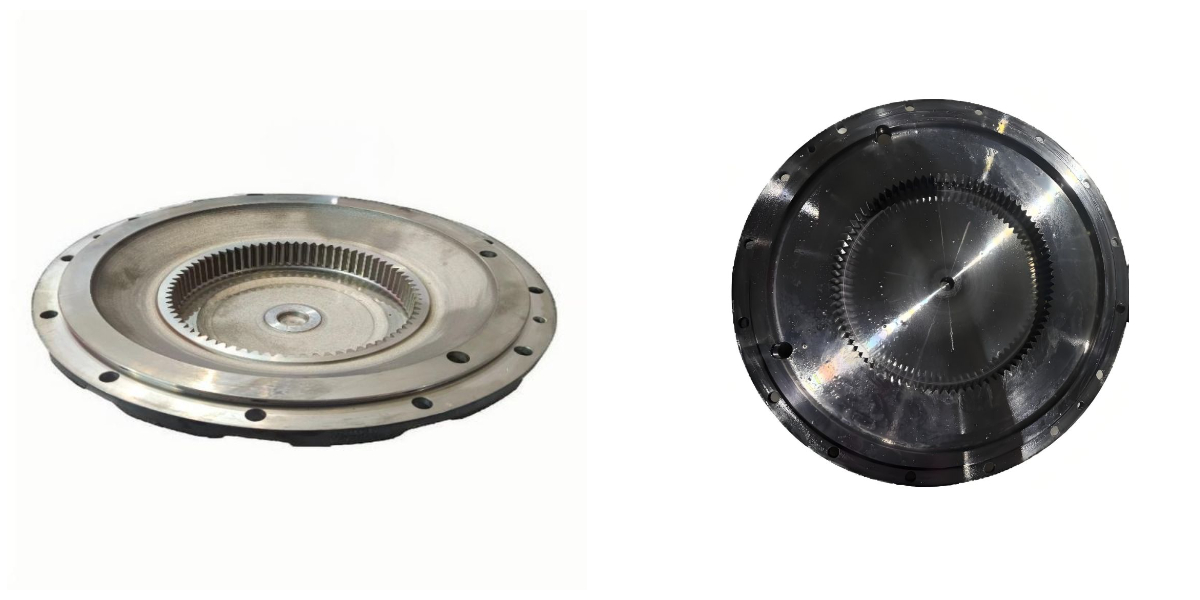
What's the point of an end cover?
What's the point of an end cover?
In the field of construction machinery, core transmission components such as slewing reducers cannot operate stably without seemingly insignificant but crucial components - end covers. Many people may wonder: "end cover is just a 'lid'. What's the point of its existence?" Why do the end covers of high-end slewing reducers prefer to be manufactured using forging process? How does it affect the reliability and service life of construction machinery under harsh working conditions? This article will break down the key values of end cover for you from three dimensions: core functions, process empowerment, and industry applications.
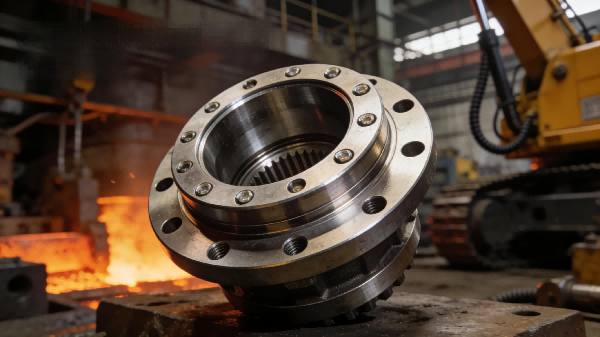
I. Core Value of end cover: The "Protection and Support Hub" of slewing reducer
In the slewing reducer of construction machinery, the end cover is by no means a simple "shielding component", but a key component with multiple core functions such as protection, support and sealing, which directly determines the operational stability of the transmission system:
Sealed protection, isolated from harsh environmental invasion
Construction machinery is often used in harsh environments with a lot of dust, water and impurities, such as construction sites, mines and infrastructure construction sites. End cover, as the "sealing barrier" of slewing reducer, can closely adhere to the reducer housing, prevent impurities such as dust, sand, rainwater and oil stains from entering the internal gear meshing area and bearing part, avoid gear wear and bearing rust, thereby protecting the core components of the reducer from damage and prolonging the service life of the entire machine.
Structural support ensures transmission accuracy
When the slewing reducer transmits torque, the internal gears and bearings will generate radial and axial loads. Through precise structural design, end cover provides stable installation support points for bearings, effectively dispersions loads, offsets vibrations, and ensures the coaxiality of gear meshing and transmission accuracy. If the end cover is not strong enough or installed unstably, it will cause the bearing to loosen and the gear to be misaligned, directly affecting the transmission efficiency of the slewing reducer and even causing equipment failure.
Positioning and fixation, optimizing assembly and maintenance
The end cover precisely connects with the reducer housing through bolts. It can not only fix the positions of internal components to prevent displacement during operation, but also simplify the assembly process. During subsequent maintenance, the end cover can be disassembled to conveniently inspect and repair internal components such as gears and bearings, reducing the maintenance cost and downtime of construction machinery.
Heat dissipation assistance, balancing the working temperature
Slewing reducer will continuously generate heat during the high-intensity operation of construction machinery. If the heat accumulates, it will lead to the failure of lubricating oil and the thermal expansion deformation of components. High-quality end cover, through optimized material and structural design, can assist in conducting internal heat. Combined with the heat dissipation system of the reducer, it achieves temperature balance, ensuring the stability of the equipment during long-term operation.
Ii. Process Empowerment: Enabling end cover to meet the demanding requirements of construction machinery
For the slewing reducer of construction machinery, the performance of the end cover is directly related to the operational reliability of the equipment, and the forging process is the core technology for improving the quality of the end cover. Compared with processes such as casting and stamping, The advantages are particularly significant:
Double the strength and withstand heavy load impact
The slewing reducer of construction machinery needs to withstand the instantaneous impact load caused by frequent start-stop and heavy-load operations. The end cover manufactured by ordinary processes is prone to cracking and deformation. The forging process forgings the metal billet through high temperature and high pressure, refining the metal grains and densifying the structure, completely eliminating defects such as pores and sand holes. The tensile strength and yield strength of the end cover created are more than 50% higher than those of the casting, and it can easily withstand the impact load during the operation of the slewing reducer. Avoid equipment shutdown caused by end cover failure.
Higher precision ensures sealing and compatibility
The sealing performance of slewing reducer depends on the precise fit between the end cover and the shell. Even a slight deviation may lead to sealing failure. The precision forging process can achieve near-net-shape forming of the end cover, with dimensional tolerances controlled at the micrometer level. Only a small amount of machining is required subsequently to meet the assembly requirements, ensuring a perfect fit with the reducer housing and bearings, and preventing impurities from invading and lubricating oil leakage. It is especially suitable for the harsh outdoor working environment of construction machinery.
Strong fatigue resistance, extending service life
The operation cycle of construction machinery is long and the working conditions are complex. The end cover needs to withstand vibration and cyclic loads for a long time. The end cover treated by the forging process has a uniform and orderly metal structure arrangement. Its fatigue resistance far exceeds that of products processed by ordinary processes. It can maintain structural stability during long-term high-frequency operation, reduce the maintenance frequency caused by fatigue damage, and lower the user's usage cost.
Iii. Key Applications of end cover in construction machinery: Taking slewing reducer as an Example
In construction machinery, the slewing reducer is the core component of equipment such as excavators, cranes, and rotary drilling RIGS, responsible for controlling the smooth rotation of the slewing platform, and the quality of the end cover directly affects the operational performance of these devices:
For excavators, the end cover of slewing reducer needs to withstand the huge torque and vibration during excavation operations. The end cover made by forging process can ensure the smooth rotation of the rotary platform and avoid the decrease in excavation accuracy or equipment jamming caused by the deformation of the end cover.
In crane operations, the slewing reducer needs to carry heavy objects for a long time. The high strength and sealing performance of the end cover can prevent the wear of internal components and ensure the safety and reliability of the lifting process.
Rotary drilling RIGS face complex geological environments in pile foundation construction. end cover can effectively prevent impurities such as mud and sand from entering the slewing reducer. Combined with the wear-resistant characteristics of the forging process, it ensures the continuous and efficient operation of the equipment.
Furthermore, the high-quality end cover can also enhance the overall protection level of the slewing reducer, enabling the construction machinery to adapt to different climatic conditions such as high temperature, high cold, and high humidity, and expand the application scenarios of the equipment.
Iv. Key Points for Selection: Three Core Points for Selecting construction machinery End Covers
For construction machinery manufacturers and purchasers, choosing the appropriate end cover is the key to ensuring equipment performance. The following three points need to be focused on:
Give priority to forging process products: For core components such as slewing reducer, end covers manufactured by forging process should be selected to ensure strength, accuracy and fatigue resistance, and avoid affecting the reliability of the entire machine due to the quality of the end cover;
Match working condition requirements: According to the working environment of construction machinery (such as dusty, water-rich, and heavy-load), select end cover with the corresponding sealing grade and strength grade. Customized design can be requested from the supplier when necessary.
Pay attention to material and inspection standards: High-quality end Covers are mostly made of high-strength alloy steel through forging and must pass strict tests such as non-destructive testing and dimensional accuracy testing to ensure compliance with industry standards and equipment assembly requirements.
Summary
The end cover seems to be a "small component" of the slewing reducer in construction machinery, but in fact it is a "key defense line" that ensures the stability of the transmission system, protects the internal core components, and prolongs the service life of the equipment. The empowerment of the forging process enables the end cover to have the advantages of high strength, high precision and high fatigue resistance, perfectly meeting the demanding operation requirements of construction machinery.
Whether it is the selection of equipment manufacturers or the maintenance and upgrade of end users, recognizing the core value of end cover and identifying the high-quality products of forging process can enable the slewing reducer of construction machinery to perform at its best and operate stably and reliably in complex working conditions.