Why Forged End Covers Prevent Slewing Reducer Oil Leakage and Cracking
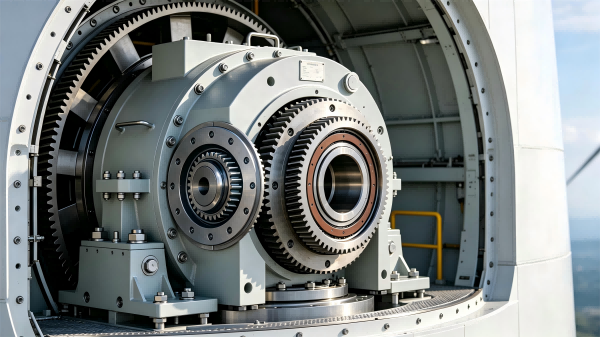
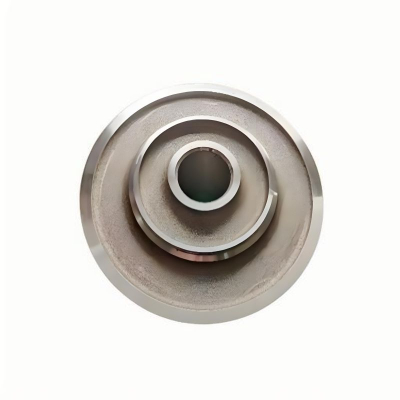
The end cover is an indispensable load-bearing and sealing component of the slewing reducer. It undertakes core functions including axial limit, pressure bearing, internal sealing and structural fixation, protecting gears, bearings and shaft parts from external dust, impact and vibration. Widely applied in wind power yaw & pitch reducers and construction machinery slewing devices such as excavators, truck cranes and rotary drilling rigs, the end cover’s structural rigidity and sealing stability directly determine the overall reliability of the slewing transmission system.
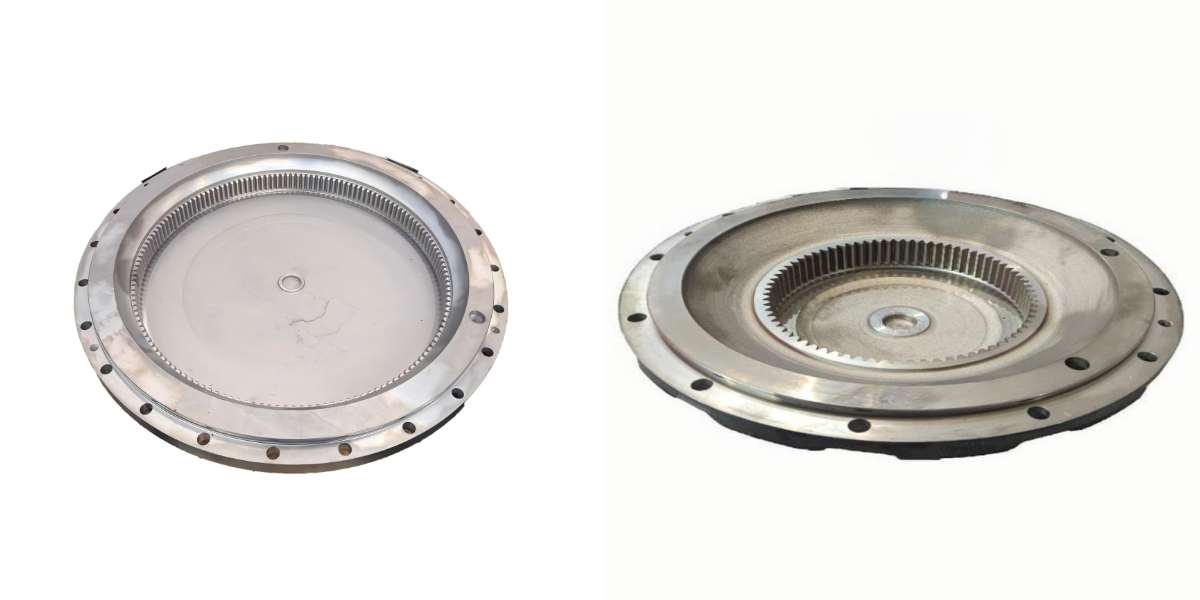
Most conventional slewing reducer end covers are produced by casting or ordinary stamping processes. Loose internal structure, poor compactness and low fatigue resistance easily cause cover deformation, flange cracking, oil leakage and loose bolt holes under long-term alternating torsion and heavy impact. To adapt to extreme outdoor working conditions, high-end wind power and engineering equipment fully adopt forging technology to produce high-performance forged end cover forgings, achieving higher strength, better sealing and longer service life.
1. Common Defects of Ordinary Cast End Covers
Wind power slewing reducers run 24/7 under variable wind loads and temperature differences, while construction machinery slewing systems face frequent rotation, heavy lifting and strong vibration. Ordinary non-forging end covers cannot withstand such harsh working environments and easily fail:
Low structural rigidity and easy deformation: Cast end covers have internal porosity and loose grains. Under continuous axial pressure and torsion, the flange surface deforms, resulting in uneven assembly gaps.
Fatigue cracking risk: Disordered metal structure cannot resist long-term alternating loads, causing microcracks at bolt holes and corners, which eventually expand and lead to component failure.
Poor sealing stability: Deformed end cover planes cause oil leakage, grease loss and dust ingress, further aggravating internal gear wear and reducing slewing reducer efficiency.
Short service life and high maintenance cost: Frequent replacement of end covers leads to equipment downtime and increases overall operation costs for wind power stations and engineering fleets.
Replacing cast parts with forged end cover forgings has become the standard upgrade solution for modern wind power and construction machinery slewing reducer systems.
2. Core Advantages of Forged End Cover & Forgings
2.1 Dense Forged Structure Without Internal Defects
Professional forging processing adopts high-temperature and high-pressure die forging to crush coarse grains and compact internal pores, looseness and microcracks. The finished forgings present uniform and dense metallographic structure with no weak stress sections. Compared with cast end covers, forged end covers have greatly improved tensile strength, hardness and impact resistance, perfectly adapting to heavy-load torsion and vibration of slewing reducer in wind power and construction machinery scenarios.
2.2 Continuous Metal Flow Line for Superior Fatigue Resistance
The forging process forms complete and continuous metal flow lines along the end cover flange and force-bearing direction. The grain flow is consistent with actual stress trajectories, effectively resisting cyclic fatigue damage caused by all-weather wind turbine operation and frequent slewing of engineering machinery. Forged end covers avoid hidden cracks and structural failure, maintaining long-term stable sealing and load-bearing performance.
2.3 High Flatness & Excellent Sealing Performance
Forged blanks feature low internal stress and stable structure without post-processing deformation. After precision CNC machining and flatness correction, the flange mounting surface achieves high flatness and precise bolt hole positioning. It ensures tight and uniform fitting, effectively preventing reducer oil leakage, dust and moisture ingress, greatly improving the working stability and service life of the entire slewing reducer.
2.4 Strong Environmental Adaptability
High-quality forgings maintain stable mechanical properties under low temperature, high humidity, coastal salt spray and strong wind conditions. They effectively avoid brittle fracture and deformation problems common in cast parts, perfectly matching the outdoor and offshore operation requirements of wind power equipment and open-air construction scenarios of construction machinery.
3. Standard Forging & Machining Process
We provide standardized full-process manufacturing for forged end cover forgings dedicated to slewing reducer:
High-quality alloy steel selection and uniform constant-temperature heating
Integral die forging forming to ensure uniform structural strength
Professional heat treatment for stress relief and toughness optimization
Nondestructive testing to eliminate internal forging defects
Precision CNC milling, grinding and hole positioning processing
Full dimensional inspection and flatness tolerance testing
All finished forged end covers feature high rigidity, high precision and strong interchangeability, supporting standard batch supply and non-standard customized production.
4. Application Scenarios
Wind Power Industry: Forged end cover forgings for wind turbine yaw and pitch slewing reducer systems
Construction Machinery: Heavy-duty forged end covers for excavators, truck cranes, tower cranes and rotary drilling rig slewing reducers
Heavy-Duty Rotary Equipment: Custom forging end covers for large slewing platforms and planetary reduction transmission devices
5. Conclusion
The end cover is a key structural and sealing component that guarantees the long-term stable operation of slewing reducer equipment. Traditional cast end covers have obvious defects such as easy deformation, cracking and oil leakage. Adopting high-quality forging technology and high-strength forgings is the most reliable way to improve reducer safety, sealing performance and service life for wind power and construction machinery applications.
If you need custom forged end covers, precision forging parts or bulk slewing reducer components, feel free to contact us. We support drawing customization, old part mapping, sample trial production and global bulk export, providing one-stop high-quality forging solutions for wind power and construction machinery transmission equipment.