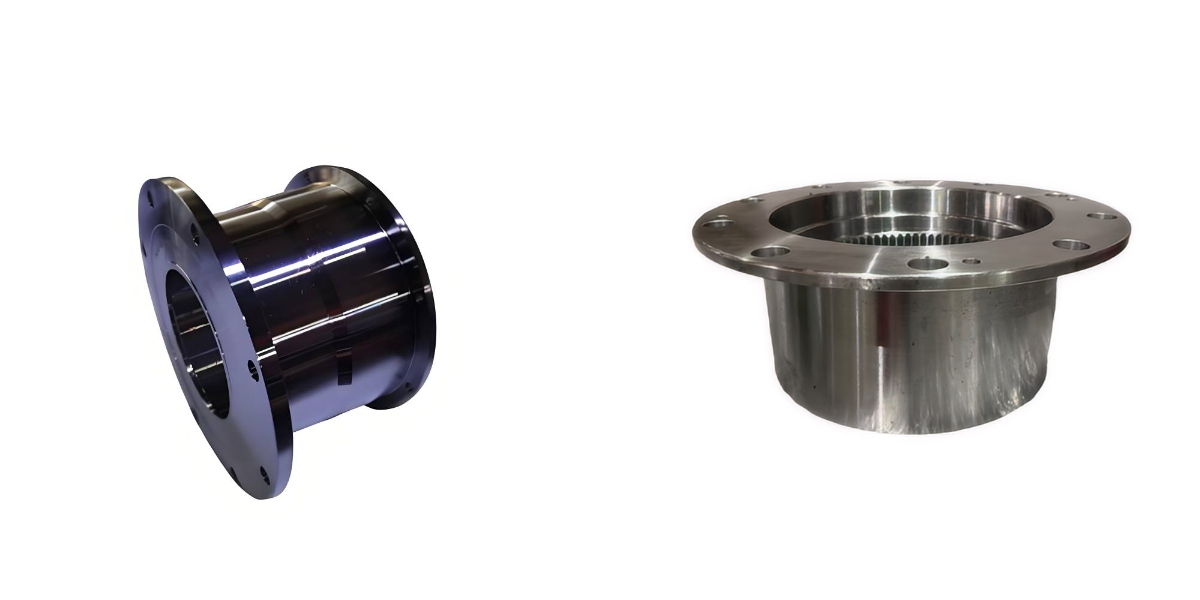
Railway Couplers & Connections: Train Couplers and the core of track connection empowered by forging processes
Railway Couplers & Connections: Train Couplers and the core of track connection empowered by forging processes
In the rail transit system, railway couplers & connections are the key core components that ensure the safe formation and stable operation of trains. Among them, train coupling serves as the core carrier connecting locomotives and vehicles, as well as vehicles and vehicles, directly undertaking important functions such as traction force transmission, braking synchronization, and safety protection. Meanwhile, the forging process, with its ultimate optimization of material properties, has become the core technical support for the manufacturing of high-end train couplers. This article will comprehensively analyze the types, core functions, application value of forging processes, typical application scenarios and industry development trends of railway couplings and connection devices, demonstrating their key role in the field of rail transit.
I. Core Definition: What are Railway Couplers & Connections?
1. Overall concept and system composition
Railway couplers & connections is an integrated connection system, with the train coupler as the core, and is equipped with components such as buffers, coupler tail frames, traction rods, and connection parts, jointly realizing the mechanical connection, traction force transmission, braking signal synchronization and impact buffering functions of the train. This system not only ensures the connection reliability of trains under complex line conditions such as straight tracks, slopes and curves, but also has to withstand the instantaneous impact force during start-up, braking and meeting. It is the "lifeline" for the safe operation of rail transit.
2. The core positioning of train coupling
Train coupling is the core executive component of the connection system and mainly has three major functions:
Connection function: Achieve rapid and precise docking between locomotives and vehicles, as well as between vehicles, to ensure the efficiency of formation.
Force transmission function: Transmits the traction force and braking force of the locomotive to ensure the overall synchronous operation of the train.
Safety features: Equipped with an anti-disengagement design, it prevents the vehicle from separating during emergency braking or unexpected impact. At the same time, it works in conjunction with a buffer to absorb impact energy, protecting the vehicle structure and the safety of the cargo.
Ii. Main Types and Structural Characteristics of Train Couplings
According to the different demands of rail transit scenarios (conventional railways, high-speed railways, freight railways, urban rail transit), train couplings are mainly classified into the following three categories, and the core components all rely on forging processes to ensure performance:
1. Automatic coupler: Mainstream application type, suitable for large-scale operation
Structural features: It adopts an automatic locking mechanism, which can complete the connection and unlocking without manual intervention. It is widely used in conventional passenger and freight trains as well as high-speed railway trains. The core components (hook head, hook body, and hook tongue) are all processed through forging techniques to ensure high strength and impact resistance.
Representative types: Zhan's couplings (mainstream for conventional railways in China), close contact couplings (dedicated for high-speed railways and subways). Among them, the forging accuracy requirements for close contact couplings are higher, ensuring that the mating gap is less than 10mm to achieve "seamless connection".
2. Semi-automatic couplings: Manually assisted unlocking, suitable for special scenarios
Structural features: The docking process is automatically completed, while unlocking requires manual operation. It is suitable for shunting operations and dedicated railway vehicles (such as industrial and mining railways, port railways). The hook body is formed by forging in one piece to avoid welding defects and enhance structural stability.
Core advantages: It strikes a balance between connection efficiency and operational flexibility. The high toughness of the forged material can adapt to the impact loads brought about by frequent shunting.
3. Manual coupler: Fully manual operation, suitable for niche scenarios
Structural features: Both docking and unlocking need to be done manually. The structure is relatively simple and is mainly applied to vehicles running at low speeds and short distances (such as internal transfer vehicles in factory areas and track cranes).
Process characteristics: Despite its simple structure, the key load-bearing parts still adopt forging technology to ensure no deformation or fracture occurs under heavy load conditions.
Iii. Forging process: the performance cornerstone of train coupling
Train coupling, as the core load-bearing component of the train, needs to withstand traction and impact forces of up to several hundred kilonewtons and meet the service life requirement of more than 20 years. Forging process is the core guarantee for achieving high performance and has irreplaceable advantages compared with processes such as casting and cutting processing:
1. Enhance the mechanical properties of the material to adapt to heavy-load impact
During the forging process, the metal billet undergoes plastic deformation under high temperature and high pressure, with the grains refined and densified. This completely eliminates defects such as porosity, porosity and segregation in the raw materials, significantly enhancing the tensile strength, yield strength and impact toughness of the couplers. For instance, the couplings forged from 40CrNiMoA alloy steel have a tensile strength of over 1000MPa, which can easily withstand the instantaneous impact loads during train start-up and braking, thus avoiding the risk of breakage.
2. Ensure structural integrity and enhance connection reliability
The core components of the train couplings, such as the hook body and tongue, are formed by an integral forging process without any welding seams. This structurally eliminates the safety hazards caused by welding defects (such as cracks and incomplete penetration). The integral forged structure can make the stress distribution more uniform, and it is less likely to develop fatigue cracks under long-term alternating loads, ensuring that the train remains reliably connected throughout millions of start-stop cycles.
3. Adapt to complex structural designs and meet the requirements of functional integration
Modern train couplings need to integrate complex functions such as locking mechanisms, buffer interfaces, and signal transmission channels, and their structural designs are becoming increasingly refined. Forging technology can achieve precise forming of complex structures through customized molds without the need for extensive subsequent cutting processing. This not only ensures structural accuracy (dimensional tolerance controlled within ±0.05mm), but also reduces material waste. At the same time, it makes the connection of each functional component of the coupler tighter, enhancing the overall operational stability.
4. Optimize wear resistance and extend service life
After the forged coupler parts undergo quenching and tempering treatment (quenching + high-temperature tempering), the surface hardness can reach HRC35-45. Combined with subsequent processes such as surface nitriding and shot peening, the wear resistance and corrosion resistance can be significantly improved. This enables the couplings to maintain good performance in frequent connection, separation and harsh outdoor environments (rain, snow, salt spray, temperature differences), extending the maintenance cycle and service life, and reducing the operating costs of rail transit.
Iv. Typical Application Scenarios of Railway Couplers & Connections
1.The application scenarios of railway couplings and connection devices cover all types of rail transit. Their performance requirements and forging process selection need to be adapted to the core demands of different scenarios:
Conventional railway: It can be used for both passenger and freight transportation, emphasizing heavy load and durability
Application requirements: It is necessary to balance the smoothness of passenger trains and the heavy-load capacity of freight trains (with a single train load capacity of over 10,000 tons).
The type of coupler: The main type is the Zhan's automatic coupler. The coupler body is forged from medium carbon alloy steel and is equipped with a buffer to absorb the impact brought by heavy freight loads, ensuring the reliability of long-distance operation.
2. High-speed railways: High speed and efficiency, with an emphasis on precision and safety
Application requirements: The train's operating speed reaches 350km/h. It is necessary to ensure that the coupler connection is seamless, the braking synchronization is strong, and it can withstand the impact of high-speed air flow at the same time.
Coupler type: Close-fitting coupler. The core components are manufactured by precision die forging technology, with forging accuracy reaching the micrometer level. This ensures that the longitudinal clearance of the train after connection is less than 5mm, avoiding vibration and noise during high-speed operation, and simultaneously enhancing the braking synchronous response speed.
3. Freight railways: Heavy-haul dedicated lines, emphasizing strength and load-bearing capacity
Application requirements: Transportation of bulk goods such as coal and ore, with a single train load capacity of over 20,000 tons, and the couplings need to withstand extremely large traction and impact forces.
Coupler type: Heavy-duty dedicated automatic coupler, forged from high-strength alloy steel. The cross-section of the coupler body has been optimized in design (mostly I-shaped or box-shaped cross-section) to further enhance the load-bearing capacity. The forging process must pass non-destructive testing (UT, MT) to ensure there are no internal defects.
4. Urban rail transit: Frequent starts and stops, emphasizing flexibility and stability
Application requirements: Metro and light rail trains need to start and stop frequently (hundreds of times a day), and the couplings need to be adapted to frequent connection and unlocking, while ensuring passenger comfort.
Coupler type: Semi-permanent close-fitting coupler, made by lightweight forging process (mostly high-strength aluminum alloy or alloy steel materials), reduces weight while ensuring strength, and is equipped with an elastic buffer device to absorb the impact caused by frequent starts and stops, enhancing ride comfort.
V. Selection and Maintenance: Focusing on forging quality to ensure track safety
1. Key points for selection
Give priority to forging process products: Confirm whether the core components of the train hook (hook body, hook tongue) are integratedly forged. Check the material certificate and forging process report to avoid using cast or welded parts (with insufficient strength and toughness).
Match the scene requirements: Based on the track type (conventional rail, high-speed rail, urban rail), load grade, and running speed, select the corresponding type and material of couplings. For example, precision forged close-fitting couplings should be used for high-speed rail, and heavy-duty forged couplings should be used for freight dedicated lines.
2. Key matters for daily maintenance
Regularly inspect the condition of forged components: Focus on checking whether there are cracks, wear or deformation in forged parts such as the hook head, hook tongue and hook tail frame of the coupler. Pay special attention to stress concentration areas (such as hook tongue pin holes and hook shoulders). Stop using and replace immediately if any problems are found.
Maintain connection and buffer components: Clean the oil stains and impurities on the coupler mating surface, check the flexibility of the locking mechanism, and lubricate the rotating parts (such as the coupler tongue pin and the traction rod joint) in time to ensure smooth mating and unlocking.
Regular non-destructive testing: For heavy-haul trains and high-frequency start-stop urban rail train couplings, ultrasonic or magnetic particle testing should be conducted every 1-2 years to identify internal fatigue cracks in forged components and prevent the accumulation of potential hazards.
Vi. Industry Development Trends: Upgrading of Forging Technology and Intelligence of Connection Systems
With the transformation of rail transit towards "high speed, heavy load and intelligence", Railway Couplers & Connections also presents three major development trends, and the upgrading of forging technology is the core support:
1. Balancing lightweight and high strength
By combining new forging materials (such as high-strength aluminum alloys and composite materials) with precision forging processes, the weight can be further reduced while ensuring the strength of the couplings, lowering the energy consumption of train traction and meeting the lightweight requirements of high-speed and urban rail trains.
2. Intelligent integrated design
Sensors (stress sensors, temperature sensors, displacement sensors) are integrated into the forged coupler to monitor the force state, wear degree and connection status of the coupler in real time. Data is transmitted to the operation and maintenance platform through the Internet of Things to achieve fault early warning and predictive maintenance, reducing downtime losses.
3. Digital upgrade of forging processes
Introduce digital twins, industrial robots and intelligent inspection equipment to achieve digital control of the entire process of train coupe forging, from billet heating, forging forming to heat treatment and non-destructive testing. The entire process is precisely monitored to enhance the consistency and stability of forging quality and meet the large-scale production needs of rail transit.
Summary
Railway Couplers & Connections is the core connection component of the rail transit system, and train coupling, as the key execution unit among them, its performance directly determines the safety and efficiency of the train. The forging process, by enhancing material properties, ensuring structural integrity, and adapting to complex designs, provides indispensable performance support for train couleys and serves as the "quality cornerstone" of high-end rail transit connection systems.
From the heavy-load transportation of conventional railways to the high-speed running of high-speed railways, from the frequent start and stop of urban rail transit to the bulk transfer of freight dedicated lines, the train couplers and connection devices empowered by forging technology have always been the core force ensuring the safe, efficient and stable operation of rail transit. In the future, with the digital upgrade and intelligent integration of forging technology, Railway Couplers & Connections will further adapt to the development needs of rail transit and inject strong impetus into the upgrade and iteration of global rail transportation.